Kalshi had easily its biggest weekend ever during NFL Week 1, breaking its volume record Saturday and then breaking it again — by a narrow margin — Sunday.
Volume on Saturday was $2.426 billion, topping the all-time high reached the previous Saturday, Sept. 5. On Sunday it was ever so slightly higher, at $2.433 billion.
Like on Sept. 5, college football’s week 1, parlays were a huge driver of activity, making up more than half of total volume. Parlay volume on Saturday was $1.47 billion, and on Sunday it was $1.48 billion, also breaking records. Straight bets on football made up a large portion of the remaining volume, with $328.7 million on Saturday and $409.9 million on Sunday.
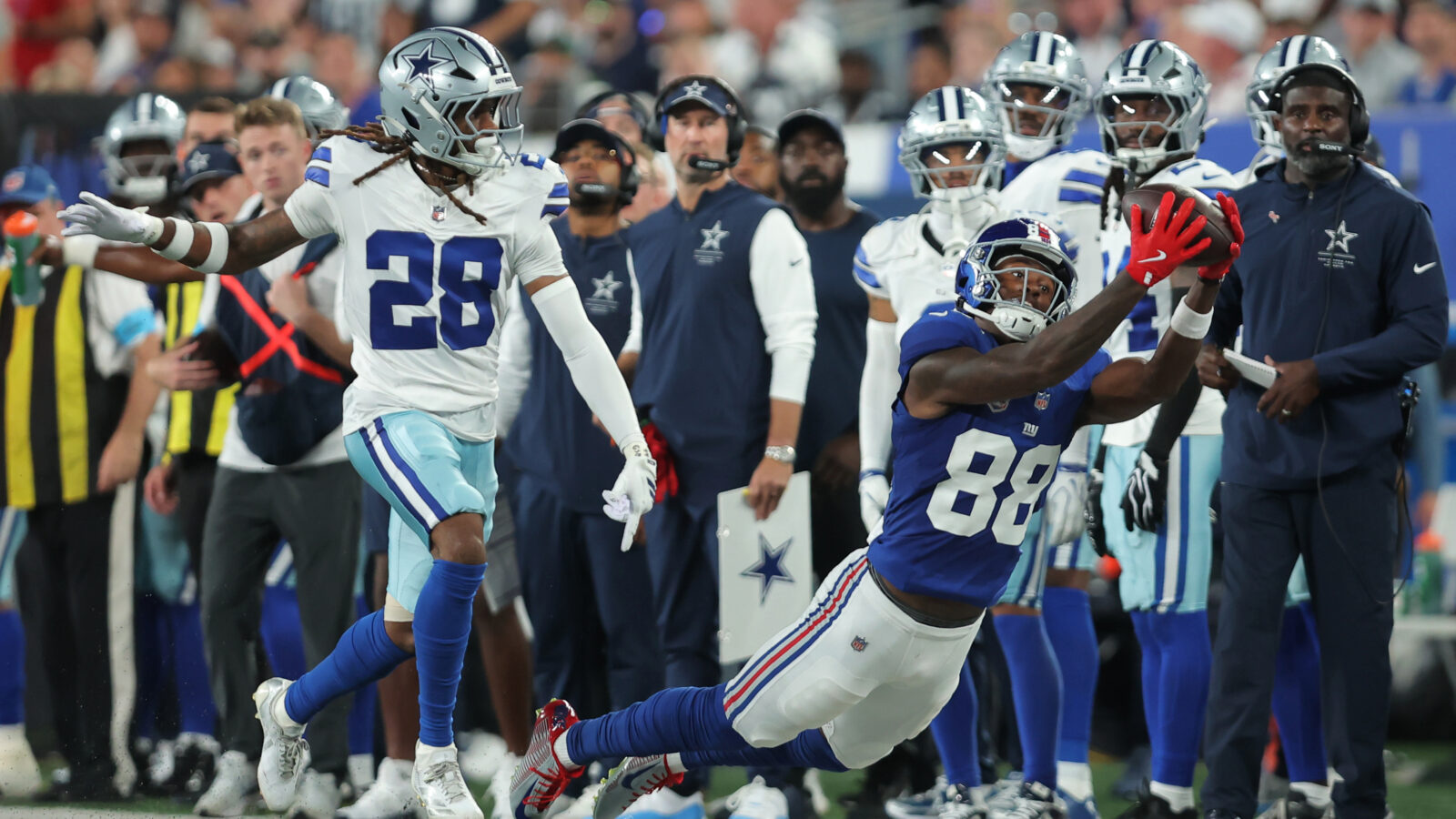
The single biggest market for Kalshi on the weekend was the Sunday Night Football game between the Dallas Cowboys and New York Giants, with $56.3 million on the game winner. Another $16.3 million was bet on the spread for that game. On Saturday, $52.1 million was bet on the college football matchup between Ohio State and Texas.
Total volume is not a true like-for-like with sports betting handle, and can arguably be misleading when it comes to parlays in particular. Kalshi counts the money put up by both the taker and maker side for every trade towards volume, but market makers — especially for parlays — tend to be professional traders or institutions. Given that most parlays are at long odds, the maker side represents the vast majority of volume.
Total taker-side volume — a closer, though still inexact, proxy for sportsbook handle — was high on Saturday and Sunday, but again fell short of Kalshi’s record of $640.3 million, set July 11. On Saturday, taker-side volume was $555.7 million and on Sunday it was $596.7 million.
With much of the volume coming on long-odds parlays, Kalshi’s fees were also just short of a record. Kalshi charges higher fees per contract for trades at close to 50/50 odds and lower fees for the biggest underdogs and favorites. It also has different fee systems for takers compared to makers.
Kalshi’s fees on Saturday were $15.99 million, and on Sunday were $16.02 million. On July 11, Kalshi took in $17.1 million in fees. Over the week (Monday-Sunday) as a whole, Kalshi averaged $12.1 million in fees per day. If it were to do that over three months, that would represent a billion-dollar revenue quarter.
Narrow losses for Kalshi takers
The success of favorites and the number of high-scoring games ensured that the results were better for takers — who are generally closer to recreational bettors — than normal, but not good enough for them to make a profit on the day. Takers lost $2.1 million before fees, or $15.2 millon after fees.
On parlays, takers lost just $200,000 before fees, or $4.1 million after.
Citizens analysts Jordan Bender and Isabelle Slavin noted that Kalshi’s odds during NFL Week 1 were typically better than those at FanDuel and DraftKings.
“Kalshi pricing was better than DraftKings and FanDuel in Week 1,” they wrote in a Monday note to clients. “We tracked odds and implied vig (operator pricing) across the Week 1 NFL slate for FanDuel, DraftKings, and Kalshi, covering moneyline bets and over/under (28 data points). We tracked pre-game pricing on Friday (9/11) afternoon, with Kalshi offering 3% lower implied vig than FanDuel and 4% lower than DraftKings across these games.
“As liquidity grows and spreads tighten, prediction market pricing is becoming increasingly competitive with traditional sportsbooks, creating a virtuous cycle in which better pricing attracts additional trading activity, which in turn further improves liquidity and pricing.”
However, this was not the case for parlays, they wrote.
“We tracked combos on Kalshi by taking the average odds and implied vig for 1) the over, and 2) the favorite across every NFL game, representing 14 data points,” Bender and Slavin wrote. “Kalshi’s implied vig was 23.8%, 8% worse than the 22.0% implied vig at DraftKings and FanDuel, before accounting for transaction fees. Kalshi pricing last season was worse on average, and we are watching to see if Kalshi’s implementation of a combo market making fee in August will impact spreads (and the vig) for market makers.”
Who’s behind big parlay block trade?
Among the big trades Sunday were two “block” trades — a trade negotiated off-exchange and then recorded on Kalshi — on a three-leg parlay, on the Cowboys, Las Vegas Raiders and Philadelphia Eagles all to win. The two trades were worth a combined $3.7 million, with the taker putting up exactly $1 million. That is the largest sum staked on the “yes” side of a parlay in Kalshi’s history, and the trades are the only known instances of a parlay that Kalshi has recorded as a block trade.
Block trades are almost always made by institutions hedging risk, not simply large bettors. The parties involved in this trade are not known. Sportsbooks would appear to be among the most likely entities to hedge a parlay on Kalshi. Kalshi has a rebate program for sportsbooks hedging risk.
The parlay lost as the Giants beat the Cowboys after the first two legs hit.