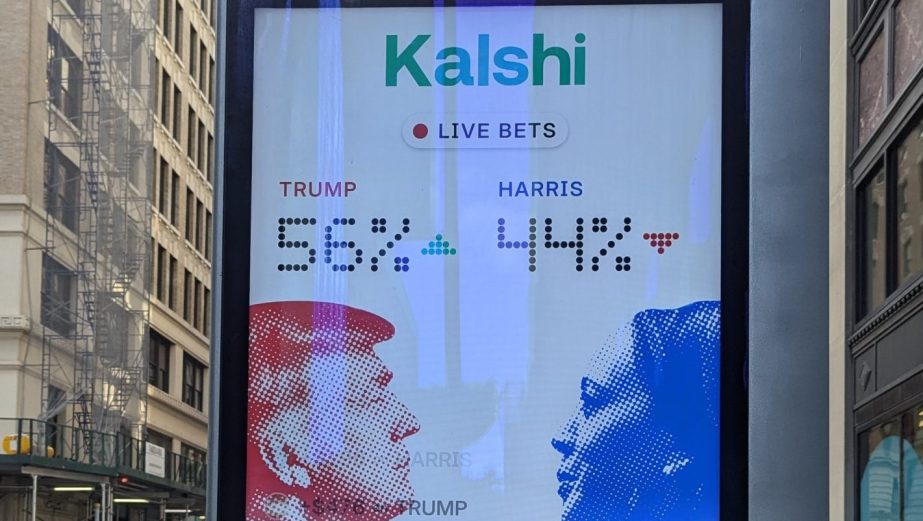

When news began surfacing last month that at least one federally recognized Indian tribe had partnered with Kalshi, some tribal representatives questioned the move, and many wondered aloud what a deal would look like.
Now that five tribes — though one seems to be in question — have Kalshi deals, gambling stakeholders are openly questioning what both sides get out of the agreements. And national Indian voices say that just because the deals exist doesn’t mean sports event contracts meet the industry-accepted definition of legal sports betting.
“It’s mypoic, it’s short sighted,” tribal attorney Scott Crowell said on a webinar last week. He referred to the deals as “Plan B,” should the U.S. Supreme Court ultimately consider and rule in favor of prediction markets. The tribes think if Kalshi does “win in the Supreme Court, well, then, we want to be in prediction market gambling, as well.”
Sources say there are more deals coming.
Key questions from stakeholders are: How will these partnerships work? Will the tribes have to register with the Commodity Futures Trading Commission (CFTC)? What is the financial benefit to a tribe?
It does not appear that the tribes will have to apply for licenses with the CFTC, and a Kalshi spokesperson explained that the deals are the extension of a March CFTC decision to provide “relief to one software developer, allowing it to passively enable trading in regulated derivatives without registering as an introducing broker. [In September], it took the step of extending that relief to every passive software provider — technology-neutral, expressly not limited to crypto, and available to providers affiliated with tribal and state governments on identical terms, while ensuring the Commission’s jurisdiction remains enforceable.”
Per a press release from the Tunica-Biloxi Tribe in Louisiana, its new tribal subdivision SaltTrade Derivatives “will not be registered with the CFTC, in reliance on conditional no-action relief issued by the staff of the CFTC.” The tribe was the first to announce a deal with Kalshi.
The Kalshi spokesperson also told InGame that the standard “guardrails” in place at Kalshi would still be in effect — “registered onboarding, customer assets at the clearinghouse, joint liability, registrant-level marketing standards.”
The agreements, Kalshi said, are structured for revenue sharing.
“The Tribe owns the mobile app and controls the customer-facing part of the business: the brand, the marketing, the application, and the relationship with users,” the Kalshi spokesperson said. “Kalshi provides the regulated exchange infrastructure underneath it (matching, clearing, custody, surveillance), the way a payments processor sits underneath a bank’s app without owning the bank. The Tribe isn’t paid a flat fee for use of its name; it owns and operates an ongoing business.”
What’s the payoff for tribes?
It’s not clear how a tribe — or any entity operating in partnership with Kalshi — would draw business away from the primary Kalshi app or any national platform offering sports betting or prediction markets. All you have to do is watch a live sporting event to see that ads for DraftKings, FanDuel, Kalshi, Polymarket, and now Novig are ubiquitous. The tribal apps, each with their own unique name, have far less reach or brand recognition, similar to smaller sportsbooks or prediction markets.
“Don’t think for a minute that you’ll be able to compete in a mobile gaming market against those giants,” said Crowell. The challenge of how to capture market share and revenue is a common theme in the gambling industry, as smaller operations have fewer marketing dollars to spend, making it harder to woo customers.
That challenge begs the question of what Kalshi-partnered tribes will be able to net in terms of revenue. An Alabama-Quassarte Tribal Town resolution of the partnership does not include any financial information, and Kalshi did not disclose any.
All five tribes reportedly signed away some of their sovereign rights to make the deals with Kalshi. The question in the rest of Indian Country is whether or not these decisions will hurt the tribes in the end.
“I hope the tribes that signed up with them and had to sign a waiver of tribal sovereign immunity … you’re opening yourself up for future lawsuits because this is all illegal activity,” said Indian Gaming Association Executive Director Jason Giles. “I asked a tribe about that — ‘Why would you sign something like that?’ ‘Oh, it’s just limited,’ they said.”
How Kalshi benefits
The payoff for Kalshi won’t necessarily be in dollars earned from a tribal-owned platform. One source told InGame the benefit will be that the company can point to its tribal partners in court. From an optics standpoint, Kalshi now has the ability to say that while it is fighting against tribes and states, there are at least five tribes in its camp.
Major sportsbooks have used a similar playbook. In 2022, when BetMGM, DraftKings, Fanatics Sportsbook, FanDuel, and other national operators were running an online sports betting initiative in California, they partnered with three smaller tribes. The move only served to galvanize the rest of California Indian Country.
“They’re being played, and those tribes that are in economically desperate situations, I understand the motivation,” Crowell said. “But even there, you have to think long term, and the only way that gaming is going to continue to be an asset for tribes and for states like Nevada is for the integrity of the product to be preserved.”
That integrity is a big part of the Kalshi vs. state or Kalshi vs. tribe lawsuits. States and tribes argue that Kalshi and other prediction markets are violating their sovereignty, while also arguing that the stringent know-your-customer and responsible gaming protections they require are not in place. In addition, all the lawsuits point to myriad insider trading situations that have arisen.
Kalshi is in court with three tribal groups and more than a dozen states. The prediction platform has argued that it can operate anywhere in the U.S. because of its CFTC license, and that federal law preempts state law and the Indian Gaming Regulatory Act. Kalshi further makes an argument that sports event contracts are financial products, not sports bets.
So far, the Sixth Circuit and Ninth Circuit have sided with states, and prediction platforms are banned in Michigan, Nevada, and Washington. In a separate case, the Ninth Circuit also sided with Blue Lake Rancheria in California, sending that case back to a district court. In its decision, the Ninth Circuit determined that the Blue Lake Rancheria and Chicken Ranch Rancheria of Me-Wuk Indians are likely to win on the merits of the case.
Wednesday, Judge Jacqueline Scott Corley of the U.S. District Court for the District of Northern California held a status conference, and both parties were instructed to sort out an issue with geofencing to keep Kalshi from being offered on tribal land. In addition, Corley approved a plaintiff request to file an amended complaint and add the Buena Vista Rancheria of Me-Wuk Indians of California to the complaint. The next status conference is set for Nov. 4, the same day the amended complaint is due.
Kalshi’s lawsuit with Wisconsin’s Ho-Chunk Tribe is set for trial in district court beginning next May, but Kalshi has also appealed to the Seventh Circuit. The company’s lawsuit with New Mexico’s Mescalero Apache Tribe is in a holding pattern as the court considers a motion to dismiss and request for a preliminary injunction.
Who’s in charge?
The Tunica-Biloxi Tribe was the first tribe to announce a partnership with Kalshi. The news surfaced in mid-September. At that time, Tunica-Biloxi Chairman Marshall Pierite said in a press release, “This partnership represents exactly the type of opportunity Indian Country should be pursuing where Tribes are owners, innovators, and leaders, not just participants.” The tribe owns and operates the Paragon Casino Resort in Marksville.
On Oct. 7, Kalshi announced partnerships with four more tribes — three in California and one in Oklahoma. Only one, the Alturas Indian Rancheria of California, offers gambling. None of the states where the Kalshi-partnered tribes are located are in court with Kalshi, but California is part of the Ninth Circuit, which ruled that states could enforce their gambling laws. A Kalshi request for review has put that ruling on hold, but should it stand, the state would have the right to ban the platforms. In that case, it’s not clear how or where a tribe would be able to launch a prediction platform.
As a sideshow to the agreements, Kalshi’s partnership with the Oklahoma Alabama-Quassarte Tribal Town has exposed a rift in tribal leadership. So far, the Bureau of Indian Affairs, a federal court, and the U.S. Postal Service have weighed in, and all say it’s not their problem to sort out a leadership dispute.
As it stands, according to Front Office Sports, there are two men who claim to be the tribal chair for the Alabama-Quassarte Tribal Town: Samuel Marshall Jr. and Wilson Yargee. The tribe does not have a gaming compact with the state, and the Bureau of Indian Affairs acknowledges two tribal chairs.
It is Yargee, who was voted out as tribal chair in October 2021, who signed a deal with Kalshi. The tribe’s administrator told FOS that Yargee does not have the right to enter into any agreement on behalf of the tribe. In signing a deal with Kalshi, Yargee didn’t just agree to work with the prediction market operator, he agreed to waive “on a limited basis, sovereign immunity from suit of Redhawk Holdings, LLC,” the tribe’s commercial economic development arm.
How the Alabama-Quassarte leadership dispute plays out will determine if Kalshi is down one tribal partner.