DraftKings and FanDuel continue to stake an effort to bring legal online sports betting to Nebraska — the pair added an additional $7 million to support a November referendum, according to the latest state campaign financing data through Sept. 29.
Those contributions and an additional $250,000 from BetMGM on Sept. 18 bring the sportsbook operators’ total amount backing the campaign to legalize to more than $14 million. FanDuel contributed $3.5 million on Aug. 28 and DraftKings contributed $3.5 million on Aug. 26.
The Nebraska Accountability and Disclosure Commission released the data Monday.
For comparison, proponents of legal sports betting in Missouri spent about $43 million against about $15 million from opponents to get an initiative passed there in 2024.
A pair of items — one constitutional amendment to legalize online sports betting and one initiative with a framework for it — will be on Nebraska’s November ballot. Voters must pass both in order for online sports betting to be legal. In-person wagering has been live since June 2023 after voters approved it on the November 2020 ballot.
Early voting started in Nebraska late last week, and a spokesperson from proponents of the measures told InGame Wednesday: “With early voting now underway ahead of the November 3rd general election, our outreach program is showing strong support for Initiative 440 and Initiative 441 among the households we’ve reached.”
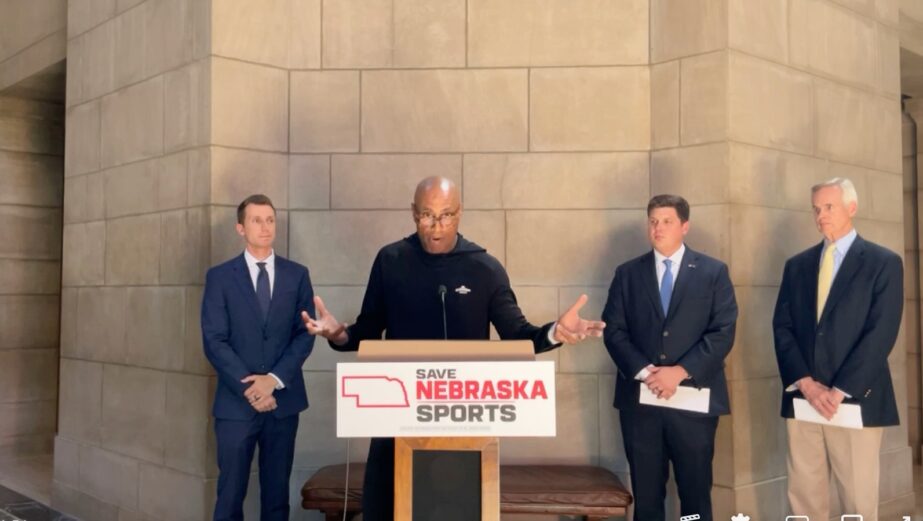
The campaign for online legalization, called Tax Relief Nebraska, is promising $166 million in property tax relief over 10 years. The initiative has opposition from a group called Save Our Sports, backed by the Nebraska Family Alliance, Nebraska football legend Tom Osborne, the state auditor, the state treasurer, and a Nebraska football assistant coach. The group held a press conference last month, in which the theme was that the promise of meaningful property tax relief is a “scam” and that “putting a casino in every Nebraskan’s pocket” is a recipe for disaster.
All six of Nebraska’s border states offer some form of legal sports betting, including regulated mobile wagering in Colorado, Iowa, Kansas, Missouri, and Wyoming.
The tax rate in Nebraska would be 20%, each approved facility would be allowed up to two online betting partners, and the gaming regulator would be required to promulgate rules by June 1, 2027.
Developments in Pennsylvania, Georgia
As campaigning goes on in Nebraska, here’s a look at some other legislative happenings:
Pennsylvania: A state lawmaker is proposing that gambling companies be mandated to send gamblers a monthly financial statement. Citing an Australian study that found that such statements “helped the most severe problem gamblers make a positive change in their behavior,” Rep. Joe Webster is seeking support for a proposal to require such statements.
Webster is shopping a memo about the bill around Harrisburg and planning to file legislation, the Times-Observer reported last Friday. Webster said that since sports betting and online casinos were launched in Pennsylvania in 2019, there has been an “increase in self-reported problem gambling.” He said calls to Pennsylvania’s problem gambling hotline about online sports betting or gambling were up 300% between 2021-24.
Pennsylvania’s legislative session runs through Nov. 30 and bills do not carry over from 2026 to 2027. Webster’s term runs out Nov. 30, and he is running for reelection.
Webster isn’t the only one to see value in the financial statements. New York lawmakers earlier this year approved a similar proposal, but the latest action shows an updated version of the bill has been sent back to the Assembly.
Georgia: The biggest state without legal sports betting other than California or Texas will try again in 2027. But given that Rep. Matt Hatchett introduced a bill early in the 2026 session that would have legalized without a constitutional amendment, it seems lawmakers are still at odds about how to proceed.
Hatchett’s bill would have allowed for up to 18 online sports betting platforms, including eight tethered to professional sports teams or leagues and one for the Georgia Lottery Corp. That proposal would have made the lottery the regulator, taxed operators 25% of adjusted gross revenue, and imposed an annual $1.5 million licensing fee. Operators would also have paid a $100,000 application fee.
Other bills over the last few years would have allowed for fewer platforms and with a lower tax rate. But key to the process will be state lawmakers agreeing on where funding will go and whether legalization can take place via the legislature or should go to statewide vote in a referendum.