The most famous football coach in Nebraska is not a fan of legal sports betting or any kind of gambling. When commercial operators ran a ballot initiative in 2020 that ultimately allowed for in-person wagering, Tom Osborne was front and center on the “no” side. And when the state legislature again considered an expansion of gaming to add online betting in 2024 and 2025, Osborne was there.
Osborne, 89, has been less publicly visible as a pair of ballot measures that could legalize online sports betting move forward. But his beliefs remain the same — “Putting a sportsbook on every phone will only increase that pressure and expose more young people to gambling addiction,” Osborne said via a statement this month. “That is not sportsmanship, that is not healthy competition, and it is not the Nebraska way.”
The current package — a constitutional amendment and an initiative — is backed by commercial operators frustrated at the legislature’s inability to expand gambling. DraftKings and FanDuel head up the group of operators, which got approval in late August for the initiatives to be on the Nov. 3 ballot.
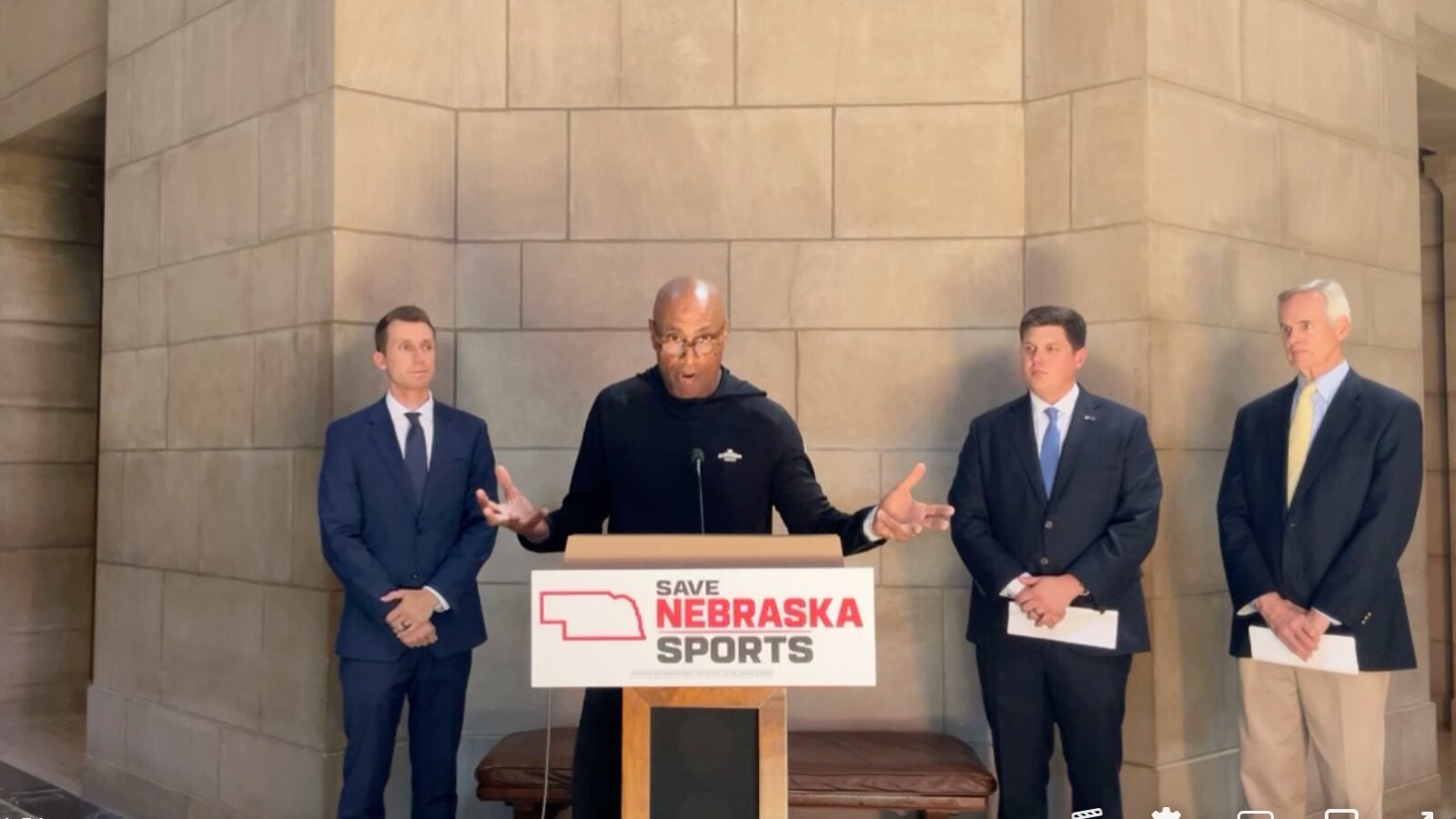
At a press conference Sept. 10, Ron Brown, an assistant coach for the Huskers this season who said “I do not represent any other entity today other than my Lord and Savior Jesus Christ and God’s word of the bible,” made his feelings plain.
He said that online betting conjures memories of what “the cat dragged in [when I was young] — it was often a bloody rat. The bloody rats, to me, in this issue, are the consequences of gambling and online sports betting. The sharp claws of these endeavors have sadly dragged in the filth and disease of greed.”
Suffice to say, the effort to legalize online sports betting in Nebraska will be contentious.
Passing an initiative isn’t always easy
Since the Professional and Amateur Sports Protection Act was overturned by the Supreme Court in May 2018, voters in seven states, including Nebraska, have legalized some form of wagering at the ballot box. In two of those states — Colorado and Missouri — the margin of victory was slim. Missouri’s initiative, which was approved in November 2024, won by 2,961 votes.
Other efforts have not been successful. In California in 2022, tribal interests opposing a commercial-led online sports betting initiative effort defeated Proposition 27 with 82.28% of voters saying “no,” making it the worst initiative defeat in state history. Alongside that, Indian Country sacrificed its own retail-only initiative, losing that one by 33 percentage points. That same year, commercial operators withdrew an initiative effort in Florida before it got to the ballot.
In addition to Brown, State Auditor Mike Foley, Nebraska Family Alliance Executive Director Nate Grasz, and State Treasurer Joey Spellerberg spoke at the press conference last week. Grasz called online sports betting a “massive policy failure” across the country and read Osborne’s statement. Foley promised to travel the state to educate voters.
Though Nebraska is not considered part of the Bible Belt like Missouri is, the Nebraska initiative is facing the same sort of opposition. “Save Nebraska Sports” is a coalition of mostly religious based anti-gambling figures, standing on the platform that not only would there “be a casino in every Nebraskan’s pocket,” which would lead to gambling harm, but that the state will lose potential gambling revenue by allowing out-of-state operators in.
The operators Save Nebraska Sports is referring to are DraftKings and FanDuel, primary sponsors of the proposals. The two companies have made more than $7 million in campaign contributions to “Tax Relief Nebraska,” the campaign supporting the proposals.
The initiative package was approved for the ballot despite an investigation into signature-gathering fraud. It would allow for statewide online sports betting with platforms tethered to horse racing facilities. Wagering on college games played in Nebraska would be banned, just as those bets are for in-person wagering. Nebraska residents regularly visit neighboring states to bet on the biggest sports franchise in the state, the Cornhuskers.
All six of Nebraska’s border states offer some form of legal sports betting, including regulated mobile wagering in Colorado, Iowa, Kansas, Missouri, and Wyoming.
The tax rate in Nebraska would be 20%, each approved facility would be allowed up to two online betting partners, and the gaming regulator would be required to promulgate rules by June 1, 2027.
Property tax relief won’t be much
A key pitch for legalization is that 70% of state sports betting revenue will be earmarked for tax relief. Sources say support for legal online sports betting is higher when information about property tax relief is included in polling.
How much revenue would online sports betting bring to Nebraska? A 2025 fiscal note for LB421, which was considered by the state legislature and had a 20% tax rate in it, projected $9.2 million in 2026 and $20.4 million in 2029, the final year projected. Proponents have put the number at about $30 million.
Per 2025 U.S. Census Bureau numbers, Nebraska has about 2 million residents, and about 67% (1.34 million) of residents own their homes. If legal online sports betting brings in $10 million in revenue in its first year, every homeowner would see a property tax credit of about $5.22. At $30 million in state revenue, the property tax relief credit would be about $15.67.
At the press conference, Foley said Nebraskans are being “scammed” by the promise of property tax relief. He said Nebraskans last year paid $5.5 billion in property tax, and could expect about $12 million per year in relief. “I don’t think that’s going to work,” he said, calling property tax relief a “false promise” that would amount to “pennies.”