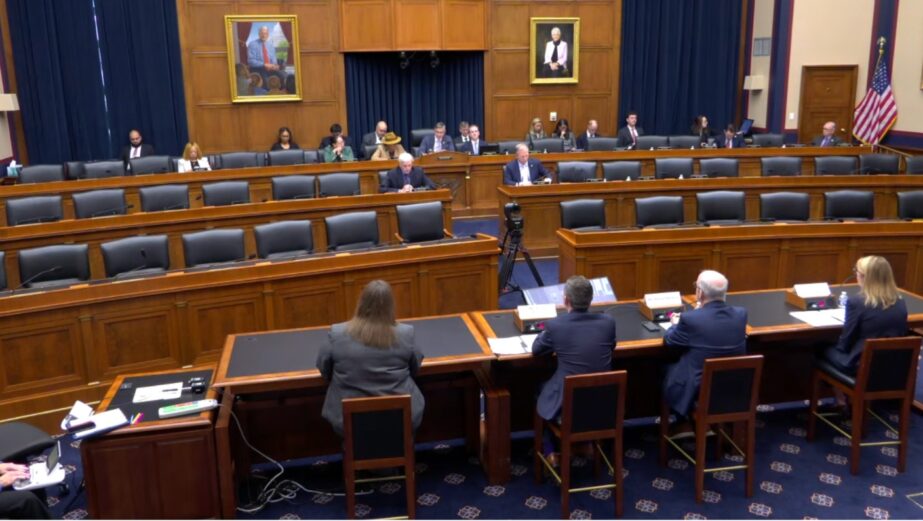
Let’s begin with the hearings, because there will be more Congressional hearings centering on prediction markets. But whether they are merely theater and posturing, or precursors for actual policy changes and fresh lawmaking, place your bets.
Following a midterm wave election that will usher in a new Congress in January 2027 with Democrats taking control of the Senate by a 55-44 margin (and likely 56 with still-counting Alaska favoring Democrat Mary Peltola), and the House by a 255-169 margin (with 11 seats still undecided), key committees including Agriculture in both chambers, and Banking in the Senate, will welcome new chairpersons, new agendas, subpoena powers, and control over which bills come up for vote. But those powers do have limits.
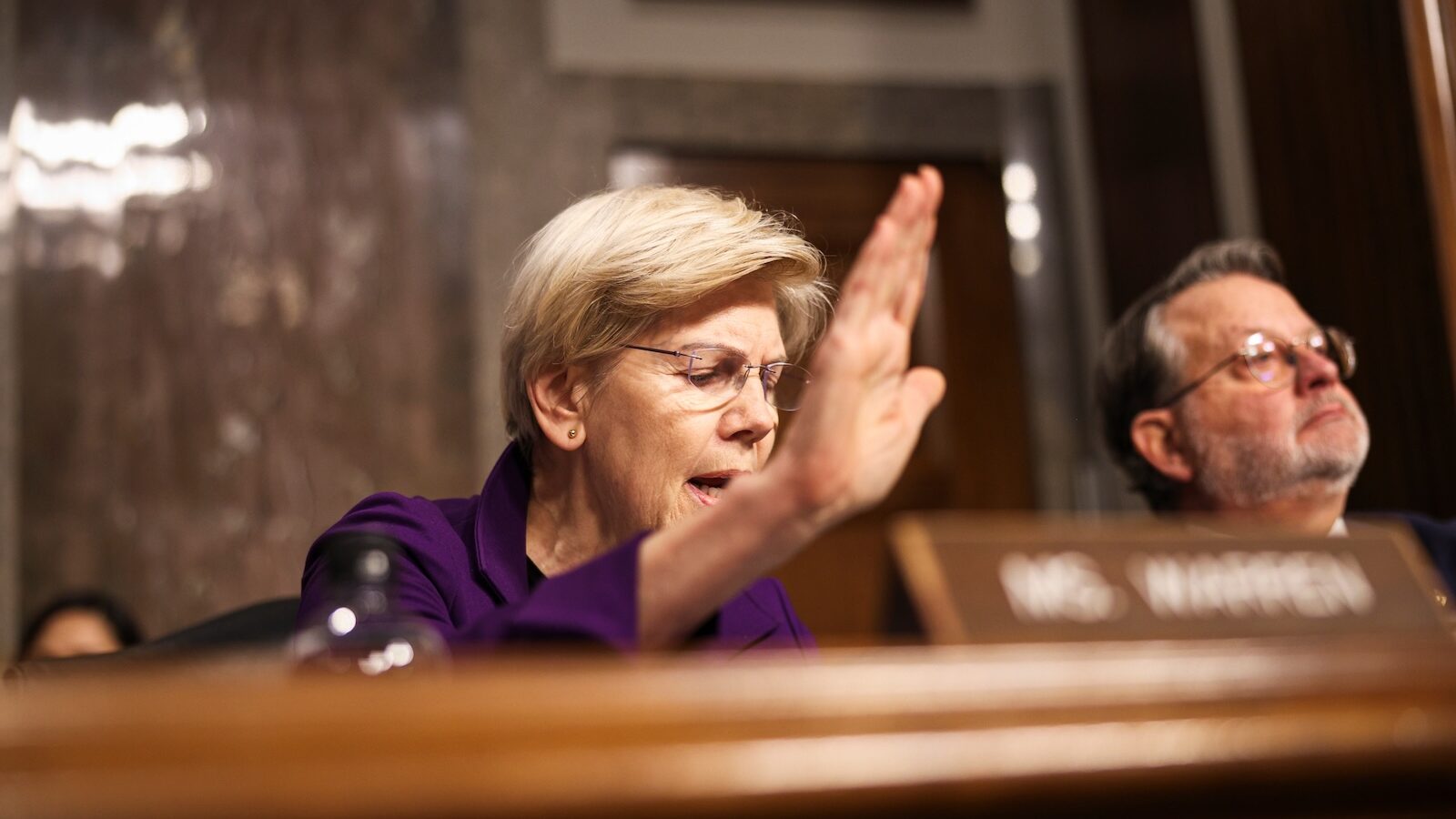
Among the lawmakers eager to examine prediction markets and their regulation is longtime Massachusetts Senator Elizabeth Warren who, prior to the midterms, addressed the CEOs of Kalshi and Polymarket on a range of issues, including election-related contracts and “gambling-style event contracts.”
“Our concerns about the legitimacy and regulation of such wagers are not resolved merely because they are offered on an exchange, and we remain concerned about jurisdictional conflicts with applicable state and tribal gaming authorities,” wrote Sen. Warren alongside Sen. John Curtis (R-UT).
In addition, Politico reported that an aide for Warren said she “is looking to end the current wild west-style lack of oversight in this area, with corrupt insiders profiting,” while The Block similarly reported a Warren aide identified prediction markets among her top focuses, alongside affordability, artificial intelligence, a looming potential financial crisis, and accountability.
An ever-growing pile of lawsuits in state and federal courts will continue to untangle foundational questions about federal preemption and the Commodity Exchange Act (CEA), plus the balance of state sovereignty and police policies with respect to gambling regulation. Meanwhile, modified rules and regulations from the federal prediction markets regulator, the Commodity Futures Trading Commission (CFTC), are taking effect or nearing final form, and those will factor into the ongoing litigation.
One CFTC rule that excludes casino-style products from the definition of a swap took effect immediately in October as an interim final rule. A companion proposal that would define sports and other event contracts as swaps could be finalized soon after comments close Nov. 18. Both could also face scrutiny under the Congressional Review Act. More on that later.
The wild cards remain: What are the priorities for the incoming Congress; will bipartisan consensus materialize in the realm of prediction market regulation; and will veto-proof majorities coalesce for certain legislation that could survive the veto of President Trump if he is not on board with certain reforms?
“[Congress] can beat up on the CFTC, but nothing necessarily changes because of that,” David Aron, special counsel at Lowenstein Sandler who previously served in several roles at the CFTC, told InGame. “I expect a lot more hearings that are possibly a little more heated, with a little more focus.”
“Democratic chairs can launch investigations and issue subpoenas, but that’s a relatively weak tool for changing actual agency policy,” said Seton Hall law professor Ilya Beylin, whose research focuses on derivatives regulation. “It might be unpleasant, but it does little to change what the agency is doing. And some of that can be just for politics and headlines.”
A similar sentiment was echoed by Peter Sanchez Guarda, a Washington, D.C.-based attorney specializing in prediction markets and derivatives regulation who spent nearly 22 years at the CFTC including as special counsel, all while government shutdowns and scrutiny of the agency unfolded on Capitol Hill.
“From my experience, hearings have not been very disruptive to agency work,” Sanchez Guarda told InGame. “They’re used to draw attention to issues the legislators find important. So there could be hearings about insider trading, or the fact that the number of enforcement actions is down considerably, and they don’t have staff to bring new enforcement actions. They could bring attention to that issue, but I don’t think for the day-to-day staff it’s going to be very disruptive.”
Lame ducks and budget cuts
While the safer bet in the current political environment is against sweeping reform for the remainder of the current Congress, it’s still not a lock.
“One thing could still provide momentum: there are a lot of lame-duck Republicans who might vote their conscience, which could produce bipartisan veto-proof majorities,” Aron said. “But I doubt Congress has the appetite, time, or bandwidth to dive into the details.”
Aron also faulted Congress for handing the CFTC what amounted to carte blanche in the 2010 Dodd-Frank Act, though he acknowledged lawmakers were focused at the time on the global financial crisis and probably weren’t thinking deeply about how the gambling and derivatives worlds might collide. The law named “contracts involving gaming” among the categories of event contracts the CFTC may prohibit as contrary to the public interest, but it never defined the term and left the decision to the agency.
In Aron’s view, a simple fix would have worked: “If it involves gaming – which Congress should have defined – it’s unlawful. Full stop,” he said.
“Congress delegates to the agency, and agency heads can change. I don’t know why, when Democrats were in control of Congress when they passed Dodd-Frank, they didn’t just say, if it’s based on gaming, it’s unlawful. And then define gaming. But they didn’t, and I don’t know if they’re going to delve into the details now.”
Fast forward to 2026, when leading CFTC-licensed exchange Kalshi has been processing tens of billions of notional dollars in trades in recent weeks, much of it via sports event contracts, which arguably involve gaming.
Defining gaming and managing the interpretative aftermath may be the hard part. Sanchez Guarda separates sports contracts with a plausible commercial purpose from those without one. A team’s Super Bowl run “could affect how much the team gets for broadcast rights. It could affect ticket sales, it could affect merchandise sales,” he said. “But for other things, like whether the first pitch is a ball or a strike, or individual player stats, like will this guy have six rebounds or five rebounds, there’s no commercial hedging purpose you can point to.”
So what may actually change what the CFTC is doing and how it operates, during the pendency of the litigation that is likely at some point in 2027 or 2028 to reach the Supreme Court? While new legislation probably would be the most impactful and enduring reform mechanism, there are other levers in play that could trigger change across prediction markets.
First, consider appropriations and Congress’s power of the purse. While Congress can’t easily rewrite the CEA, it could tell the CFTC what it may and may not spend money on. There’s precedent for using that lever against a financial regulator. Since late 2015, Republicans have used appropriations riders to block the Securities and Exchange Commission (SEC) from finalizing a rule that would require public companies to disclose their political spending. The rider has been renewed year after year, so the SEC has effectively been kept from acting on the issue for more a decade without any change to securities law.
Seton Hall’s Beylin pointed to that episode as a model for what a Democratic Congress could attempt with the CFTC – an appropriations rider that could bar the agency from spending money to support exchanges in their legal fights with states, or from finalizing particular rulemakings. But he was quick to add that such an outcome is “far from obvious,” and the reason is timing.
“The CFTC is likely to finish its rulemakings and finish much of the action before the next appropriations cycle,” Beylin said.
Part of the reason the CFTC has been able to move quickly: It is currently led by a single commissioner, Chairman Michael Selig. Aron finds it “more efficient this way. You get a lot more done.”
While some members of Congress want to see a full panel of bipartisan commissioners appointed, Aron noted that under the statute, one commissioner constitutes a quorum, so the CFTC “can act indefinitely with just a chairman.”
The timelines also depend in part on what the outgoing Congress does in the coming weeks. The federal government is currently running on a stopgap spending bill, known as a continuing resolution, which expires Dec. 11.
If the lame-duck Congress passes full-year spending bills, the new Democratic majorities won’t get to write the CFTC’s budget until fiscal year 2028, which begins Oct. 1, 2027. That’s long after the agency’s pending rules are expected to be final. But observers increasingly expect another short-term continuing resolution, which could push major spending decisions into the new Congress. That would give Democrats an earlier opening, possibly in the first months of 2027, to attach conditions to the CFTC’s funding. Either way, House and Senate appropriations will draft the fiscal 2028 bills in the spring and summer of 2027, so any proposed CFTC riders would surface well before October.
And even then, a rider is only as strong as the bill that carries it.
“Any spending limit still needs the president’s signature, and Democrats lack veto-proof majorities,” Aron noted. “CFTC funding is usually all wrapped up with other stuff, so the outcome depends on whatever else rides in that bill.”
Democrats have about 55 or 56 seats in the Senate and at least 255 in the House. Those are big margins, but still well short of the two-thirds needed in each chamber to override a veto. And a standalone bill restricting the CFTC would very likely be vetoed, which is why riders usually travel inside larger spending packages. Whether a prediction markets provision survives depends on what else is in that bill and how much each side is willing to trade for it. A prohibition on CFTC litigation support could become a bargaining chip in a broader budget fight, or theoretically it could be dropped as the price of keeping the government open.
Budget pressure also has costs inside the agency. Aron pointed out that Congress can threaten to slash the CFTC’s budget, but deep cuts fall on rank-and-file staff, and the CFTC is understaffed as it is, while its broad remit in derivatives regulation only continues to grow. Those cuts could slow the very enforcement and oversight that critics of prediction markets say is lacking.
Sanchez Guarda commented on the dynamics when Congress can’t pass a budget and moves to a continuing resolution, operating under the prior year’s budget.
Under these circumstances, “there wouldn’t be any new hiring, and the initiatives [the agency] want[s] to do would sort of be on hold until a new budget is passed,” he said. “And then if there is a shutdown, that is very disruptive, because staff is sent home, and until a budget is passed, or even a temporary one, the work keeps piling up, but there’s no one there to do it.”
Congressional Review Act
Another possible lever identified by our panel of authorities on the CFTC involves the Congressional Review Act (CRA). The CRA lets Congress overturn a newly finalized agency rule with a joint resolution of disapproval. In the Senate, those resolutions are fast tracked and can’t be filibustered, so a simple majority is enough. The CRA’s look-back window covers rules submitted in roughly the last 60 days Congress is in session, counted in legislative or session days rather than calendar days.
The law’s reach is fairly broad. As a Congressional Research Service report explains, the CRA’s definition of “rule” covers guidance documents and policy statements, not just formal regulations.
That said, the CRA route has the same weakness as an appropriations rider — the resolution needs the president’s signature. That’s why the law has mostly been used when a new president and a Congress of the same party unwind the previous administration’s late rules, which happened in 2017, 2021, and 2025. A Democratic Congress could vote to overturn the CFTC’s revised event contract rules, but Trump would almost certainly meet that with a veto. Congress might send up any number of such resolutions or laws for symbolic veto (assuming there are insufficient votes for an override), but symbolism is not really change.
The interim rule that excludes casino-style products from the definition of a swap took effect in October, while Congress was mostly out of session for midterm campaigning, so that one would likely fall within the review act’s “look-back” window. That would give the new Congress a fresh chance to disapprove it in 2027. If the CFTC finalizes the event contracts rule next year (defining event contracts, including sports and political contracts, as swaps), that would face the new Congress’s ordinary review window. Either way, of course, a disapproval resolution would need Trump’s signature.
Also bear in mind, not everything the CFTC does or produces is a “rule” within the purview of the CRA.
“The CFTC might act through staff actions, which may fall outside the Congressional Review Act,” Aron said. Much of the agency’s recent work around prediction markets has come through staff letters and advisories, and whether the CRA reaches those is unsettled.
The impartial-access advisory
The CFTC, meanwhile, has pushed further into the legal fight and new territory. Its recent advisory may urge exchanges to resume operating in states where courts have ordered them to stop, on the theory that impartial access as described in Core Principle 2 requires it.
“The entire time I was at the CFTC, the CFTC never sued states or other federal regulators directly,” said Sanchez Guarda. “There have been jurisdictional disputes, like with the SEC, but normally what happens is somebody else sues and the CFTC files an amicus brief.”
He reads the advisory as procedural. As he explains it, states have increasingly turned to criminal cases against Kalshi et. al. and its principals, which are harder to remove to federal court. Under the Younger abstention doctrine, federal courts generally won’t interfere with ongoing state prosecutions. The advisory, he said, lets exchanges argue they’re in an untenable position: “we either violate state law or we violate federal law.”
Beylin was less charitable about the CFTC impartial access edict. “It’s less something that seeks a well-functioning marketplace,” he said, “and more something that is just responding to the litigation.”
For now, the safer bet is that the real action stays in the courts and at the CFTC, not on Capitol Hill. The likeliest exception is some policy change centering on insider trading.
“It’s a hard position to be against,” Sanchez Guarda said. “No one’s in favor of insider trading, and no one loves Ponzi schemes, so it’s a pretty easy position to take.
“And if there are more hearings about high-profile cases of insider trading, like the soldier who was betting on military action, or the insider at Google who was using prediction markets Google search results, that’s something I think both sides can agree on.”