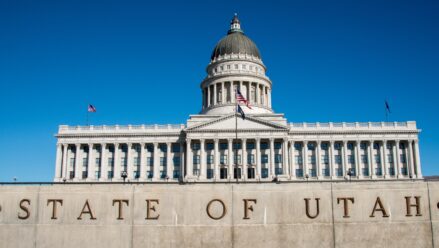
Nebraska Sen. Pete Ricketts pulled his support from a Republican legislative candidate over the weekend after it came to light that District 38 candidate Tim Anderson’s campaign had taken campaign dollars from Tax Relief Nebraska, proponents of a pair of legal online sports betting initiatives on the ballot.
Besides that, supporters on both sides of the issue have used workarounds to purchase cheaper advertising. Sources in Nebraska told InGame that ads opposing the online sports betting ballot measures began appearing in mid-October. Those ads were purchased through state Treasurer Joey Spellerberg’s campaign, but the funding originated from a non-profit that promotes conservative policy solutions. Proponents of online sports betting have been running ads, and advertising time was purchased through Anderson’s campaign. Candidates — both the treasurer and Anderson — can buy advertising time at a cheaper rate than a ballot question campaign can.
The Plains-Sentinel reported late Sunday that Anderson’s campaign took a $750,000 contribution from ballot question committee Tax Relief Nebraska that was used to finance advertisements in support of Initiatives 440 and 441. The initiatives would make it legal to place online sports bets, as is already the case in all of Nebraska’s border states. In-person wagering in Nebraska has been live since June 2023, and the initiatives’ approval would mark the second time in six years Nebraskans have approved gambling expansion.
Voters in five other states have legalized some form of wagering at the ballot box since 2018, with at least two doing so by narrow margins. But a California legal online sports betting measure failed in 2022, and that same year, commercial operators pulled an attempt in Florida when proponents could not meet the signature threshold.
Located in south-central Nebraska on the Kansas border, District 38 has about 41,000 residents. It has been a Republican stronghold since 1987. The incumbent senator has term-limited out, and Anderson is running against another Republican, Janell Anderson Ehrke, for the seat. Ricketts said he will now take a neutral stance on the race.
While it is not legal for a ballot question committee to give candidates direct contributions, it is legal for a ballot question committee to buy goods or services, like advertising air time, through a candidate committee. Under federal law, candidate committees are charged a lower ad fee — called a lowest unit charge — than ballot question committees for 60 days preceding a general election.
Tangled trail
Tax Relief Nebraska bought airtime from the Anderson committee. The paper trail is clear: The biggest backers of initiatives 440 and 441 — one a constitutional amendment to legalize, the other a framework — are DraftKings and FanDuel. The two contributed a combined $22.5 million to Tax Relief Nebraska through the end of October, the last reporting date available. And Tax Relief Nebraska contributed $750,000 to Anderson’s campaign for the air time.
BetMGM and Fanatics Sportsbook have made smaller contributions, and local racinos are also behind the measures. BetMGM, DraftKings, Fanatics, and FanDuel, along with bet365, are members of the Sports Betting Alliance.
“This campaign is about giving Nebraskans the opportunity to turn an emerging online sports wagering market into a new source of property tax relief,” said Jordan McGrain, petition sponsor for Tax Relief Nebraska. “Initiatives 440 and 441 will legalize and regulate an activity that we know is happening, protect consumers and student athletes, and generate $166 million in additional property tax relief over the next decade.”
The trail from the non-profit Restore the Good Life Nebraska to Spellerberg’s campaign is longer and more convoluted, though the principal is the same — it’s likely the opposition purchased ad air time through Spellerberg’s campaign. Spellerberg opposes legal online sports betting and is part of the Save Our Sports campaign.
The money trail originates with Restore the Good Life Nebraska, which contributed $1.025 million to Save Nebraska Sports on Oct. 14. On the same day, Save Nebraska Sports sent a $975,000 contribution to the Common Sense Nebraska Political Action Committee, and Common Sense Nebraska sent contributions of $465,000 and $500,000 to Spellerberg’s campaign.
It’s not clear where the money from Restore the Good Life Nebraska originated.
Republicans split on issue
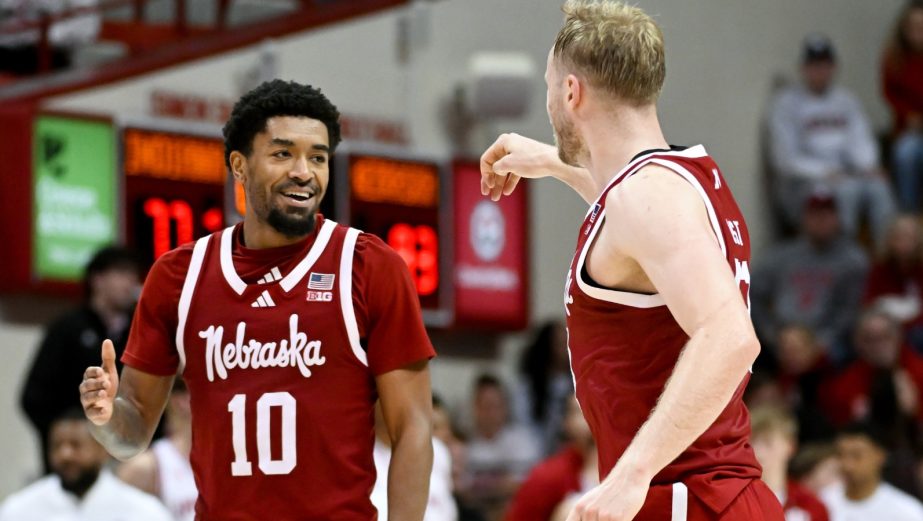
Anderson’s decision to take funds from sports betting proponents cost him Ricketts’ and Spellerberg’s support, as well as state Auditor Mike Foley’s, who is also aligned with Save Nebraska Sports. Nebraska football icon Tom Osborne is also an outspoken part of the opposition group, which announced its existence in mid-September and has been vocal ever since. The Nebraska Family Alliance and Nebraska fullbacks and returners coach Rob Brown are also opposed.
Republican Gov. Jim Pillen has publicly said he supports a gambling expansion, and he has backed bills for online sports betting in the state legislature.
“When I first had conversations with Tim, he had not decided on what he was gonna do with regard to the online sports gambling,” Ricketts told The Plains-Sentinel. “But clearly he’s made a decision to prioritize the out-of-state sports gambling interests over our young people and our college sports, and so I can no longer support that.”
Spellerberg said, “I want to send a message not only to Tim, but to others across the political spectrum, we cannot have this in our state,” while Foley questioned the claim of tax relief to Nebraskans should online sports betting be legalized.
Tax Relief Nebraska is promising $166 million in tax relief over 10 years, or about $16.6 million per year. A 2025 fiscal note from the last time the legislature considered legal online sports betting projected $9.2 million in tax revenue in 2026 and $20.4 million in 2029, the final year projected. The proposed tax rate for that bill was 20%, the same rate that is used in the ballot package. Those numbers would work out to less than $20 off a Nebraska property tax bill.