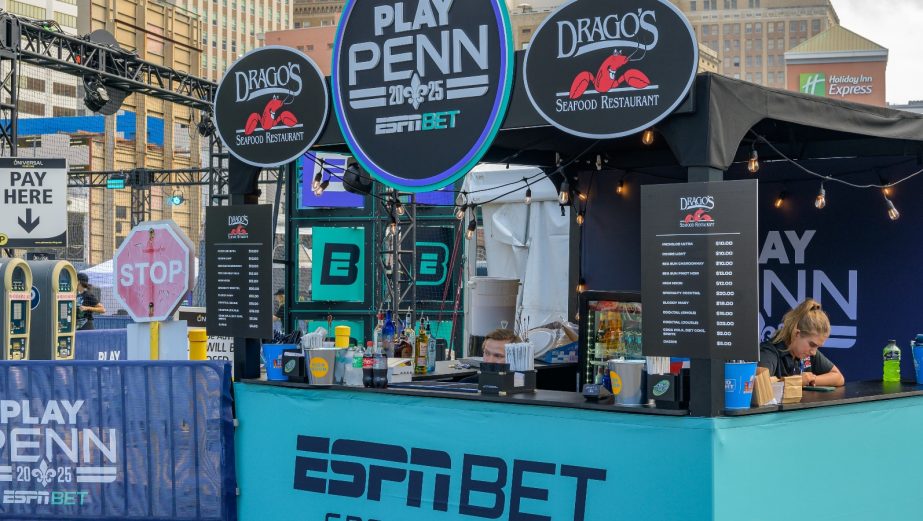
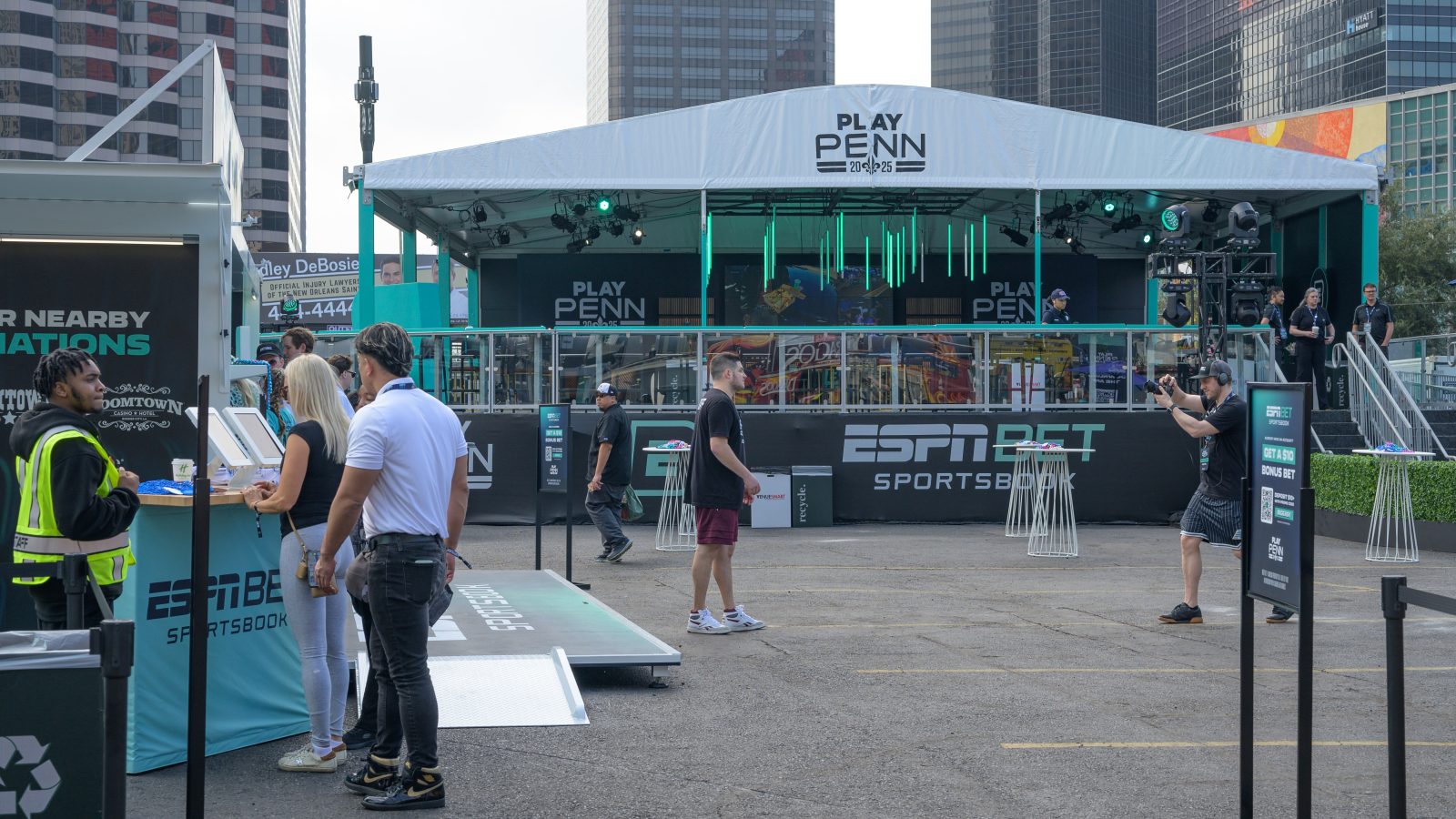
Penn Entertainment is spending less on its sports betting arm, but making more revenue in return since rebranding ESPN Bet to theScore Bet, CEO Jay Snowden said Thursday.
In the company’s full-year 2025 earnings call — the first since the Dec. 1 rebrand — Snowden said theScore Bet’s performance is “right where we want to be.”
Penn ended its deal to license the ESPN brand early, canceling the $2 billion partnership two years in after struggling to crack even 3% of the U.S. online sports betting market.
The call followed Penn’s 2025 results. The business sustained a net loss of $73.4 million during the year, compared to a $133.8 million loss a year earlier.
The interactive arm reported a loss in terms of adjusted earnings before interest, tax, depreciation, and amortization, and rent (EBITDA) of $267.5 million. Snowden said that this arm of the business is expected to break even in 2026.
Strong first two months for theScore Bet
Penn provided additional insight into how theScore Bet had performed since launching on Dec. 1 and how that compared to ESPN Bet.
In December 2025 and January 2026, online sports betting revenue was double the figure recorded in the same two-month period of 2024-25, though handle was 24% lower. Snowden acknowledged that some of the difference came from sports results, but also said that Penn expects to see better net margins on sports betting now, after the business cut its promotional spend and was focusing on the highest-value customers.
“We sort of break it down into eight categories in terms of worth. The top four are unchanged in engagement and the lowest-worth segments are where there’s a difference,” he said. “Pulling back on investments at the low-worth means we can focus on the higher-worth and VIP customers, so you’ll see NGR [net gaming revenue] growth, despite some handle declines in 2026.”
The improvement looks even more significant when accounting for the fact that Penn also slashed its advertising spend after ending the ESPN deal. Instead of running large national campaigns as it did with ESPN Bet, it now mostly focuses ads on select states or customer cohorts.
Total marketing spend for Penn’s interactive arm was down 65% year-on-year in the first two months since rebranding. That meant that the adjusted contribution profit for Penn Interactive — defined as revenue minus variable costs and marketing spend — almost quadrupled.
Snowden added that the rebranded sportsbook had lived up to management’s expectations. “We’re feeling good about the first couple of months post rebrand,” he said.
“It’s actually quite rare that when you go through a rebrand, and you make assumptions, we’ve been really close to what we assumed we’d be from both a retention and a new-user perspective.
“In terms of being two and a half, close to three months post-rebrand, we’re right where we want to be.”
He added that going forward, Penn hoped to reactivate some former ESPN Bet users who might have placed some bets soon after its initial launch in 2023, but didn’t become loyal customers.
“We also have a great opportunity for reactivation,” he said. “People that signed up, maybe took advantage of a promotion, and they’re maybe inactive, dormant, not as frequent players with us.
“All of that feeds into the P&L story. It’s going to be a very efficient business for us and one that is going to generate a much higher return long-term.”
Playing offense against prediction markets
Snowden also discussed the rise of prediction markets. While online-first sportsbook businesses like DraftKings, FanDuel, and Fanatics have all launched prediction market products, including sports event contracts in certain states, Penn, like other brick-and-mortar casino companies, has not done so. And Snowden reiterated his stance that Penn would not risk its gaming licenses by getting involved with the new product.
“I laid out a lot of my thoughts on the last call and those thoughts haven’t changed,” he said.
“It really puts the Penns and the MGMs and the Caesars of the world in a really awkward position. Our gaming licenses are the most important assets we have, but there are those that are able to do it and do it in other states. It’s confusing. We’re obviously not going to put our licenses at risk. We’re going to stay close to our regulators.”
Snowden also said that the casino industry needed to start playing “offense” against prediction markets.
“I think the best defense is offense. We’ve got to figure out how to play more offense here, and I’ve got ideas,” he said. “I’ve shared that with some of my counterparts, and we continue to discuss those ideas with our regulators, as well as lawmakers, on how we can play more offense as an industry and turn this into a win for them, meaning the states, and also for the operators like us.”
Penn ends HG Vora dispute
The earnings results came three days after Penn ended its long-running dispute with activist investor HG Vora over seats on its board. HG Vora, Penn’s largest single shareholder, had been unhappy with Penn’s strategy and nominated three candidates to Penn’s board in order to exert greater control. However, Penn shrunk the size of its board, leaving only two seats available for HG Vora’s candidates to fill. HG Vora argued that the move was unlawful and sued Penn.
On Monday, Penn agreed to add three HG Vora-backed candidates — Heather Ace, Jeffrey Fox, and Fabio Schiavolin — to its board and HG Vora withdrew the lawsuit.
“I’m also excited to welcome our three new board members, Heather, Jeff, and Fabio, who bring a wealth of new experience to our board,” Snowden said on the earnings call.
Penn shares soar
Wall Street was very happy with Penn’s results. Shares soared by as much as 14% to $14.39 at 11:15 a.m. ET, erasing the losses experienced over the previous month. However, the shares are still down almost 90% from their peak in early 2021 and are down 3.8% for the year to date.