The Super Bowl has long been a communal magnet. Friends gather over massive trays of food they have no hope of finishing, and buckets of beer they just might. They shell out $5 for a Super Bowl square despite a sketchy knowledge of how the grid thing works.
Now eight Super Bowls since the repeal of the Professional and Amateur Sports Protection Act (PASPA) in 2018, and with legal sports betting available via mobile and online in 33 United States jurisdictions, partygoers who come for the food or judge the commercials or halftime show have another outlet for a group experience without even knowing who’s playing in the game.
They can bet. Not on the game, but on the ancillary events around it. Gatorade color. First song of halftime. National Anthem length.
The volume of these markets in mainstream sportsbooks, and, increasingly prediction markets, underscores the public interest in them. As states tabulate the amount wagered on these markets, the gambling industry regroups for the next event when most Americans become gamblers, perhaps without even realizing it as they log on to websites to fill out NCAA March Madness brackets.
But maybe, Anika Howard, the president and CEO of Wondr Nation, gambling/entertainment company that uses tech and trends to create new experiences for players, told InGame, these gambling companies should be working harder to keep these tent-pole event dabblers dabbling more often. In an era when the periphery is bettable, and online interaction is a social staple, an opportunity is being missed, she said.
“You have this really, really big spike, and then in terms of market, it levels off, then you see kind of a drop. But the big opportunity is the other things that you can offer that tie in,” said Howard, whose clients include the Mashantucket Pequot Tribal Nation in Connecticut. “I think some of that drop is really where the opportunity lies, because there’s this big build-up, and everyone’s doing all these things for the Super Bowl, but no one’s really actively doing or investing, or kind of being as intentional after that.”
Where do the occasional bettors go?
Some of the exodus, Howard believes, is due to gambling companies retrenching financially and creatively after an exhaustive Super Bowl preparation. With the NCAA men’s basketball tournament about a month away and MLB spring training beginning, energy is diverted to markets — particularly basketball — that drive more revenue for a longer duration.
But what can be done to keep at least some of the newcomers — many of them in the coveted 21-to-35-year-old demographic — engaged? Pop culture, she said.
“I’m obsessed with the parasocial relationships that come not from sports, but come from a lot of these reality TV shows, like Traitors, or Love Island, or even now you’re looking at Netflix, where they are kind of rebooting Star Search,” she said. “You have live events there, so it’s about how you tie [gambling] to that next big cultural thing.
“I think if you can align some of the content and some of the messaging, that could be interesting, but once again, it can’t be a one-and-done thing.”
The key, Howard said, is continuing to build relationships over time, in essence stringing together a series of events in the way a sports season generates multiple opportunities for a bettor to partake.
“It’s not about getting them for this one big [event], and then kind of dropping them,” she said. “I think it has to be a little bit more intentional, to say ‘this is the audience that we’re trying to reach, this is community that we’re going for, here are the things that we have for them at different places,’ and really almost planning in advance. What’s that communication cycle? What are the things that are complementary, that then you can move to?”
Some sportsbooks are trying. Hard Rock recently unveiled its “I Bet I Will Survive” campaign for the upcoming 200-plus-day football drought.
“This is the kind of idea that only works if you truly understand fan culture,” said Peter Hughes, group creative director of the 72andSunny NY firm that created the ads. “While everyone else fights to be louder during the game, this waits for the final whistle hangover and turns the end of football into the start of something new to love.”
Prediction markets and the pop life
Gambling companies could keep this group engaged, Howard said, by giving it the kind of pop culture-centric bets they patronize around events like the Super Bowl. Multiple sportsbooks posted popular Taylor Swift props before Super Bowls in 2024 and 2025 as she’d become a regular attendee of Kansas City Chiefs games because of her relationship with now-fiance Travis Kelce. Sportsbooks had raked in bets on whether she would be shown on screen during regular season games. In February 2025, the NFL reported a 53% increase in viewership among teenage girls, a 24% jump in women aged 18-24, and a 34% boost among women aged 35 and older.
“There’s lots and lots of research on the real kind of Taylor Swift effects, where you can see that it drove millions new users on some of these platforms as first-time bettors,” Howard said.
The phenomenon waned when Swift stopped attending so many games.
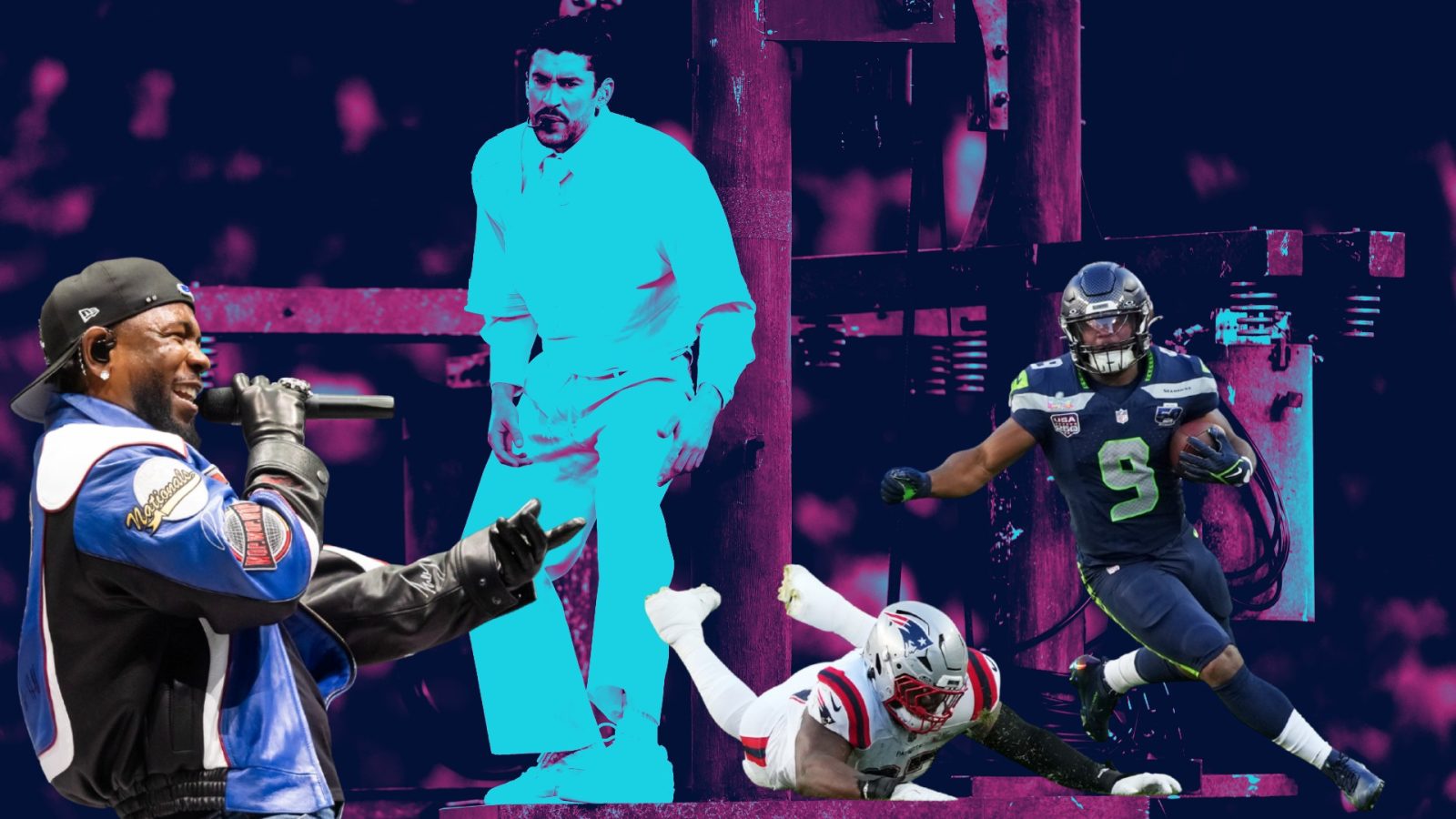
Prediction markets, Howard said, might be more ideally suited to capitalize than traditional sportsbooks. Kalshi reported that more than $1 billion was wagered on the Super Bowl there, and the pop culture punch was evidenced by $113 million being bet on which song Bad Bunny would open with at halftime. In addition, more than $23.7 million was wagered at Kalshi on whether New England Patriots fan Mark Wahlberg would attend.
For comparison, regulators in only three states — New York, New Jersey, and Illinois — consistently report that all operators combine for $1 billion in handle per month, and no individual operator has reported $1 billion in Super Bowl bets since PASPA was overturned in 2018. In many states, traditional sportsbooks do not take bets on pop culture markets related to the game.
“With prediction markets, they kind of started [with non-sports], and then expanded into some of these other areas,” she explained. “And in some cases, the interface is more straightforward. I think that’s why they’ve been such a big disruptor in the sports betting market, and why [the American Gaming Association], tribal casinos, and sites like that are concerned.
“But there is a strong appeal because it’s direct, very easy access. And then from there, when you’re already doing some of those traditional pop culture relevancies, it’s easy to kind of say, ‘OK, now there’s this linkage between pop culture and sports betting.'”
Social bettor flies with his/her friends
Encouraging social interaction was an initiative by multiple sportsbooks and daily fantasy app companies this year. PrizePicks even added a functionality to allow players to post and copy each others’ lineups with “The Feed.”
“We’ve heard a lot of feedback through our research,” PrizePicks Senior Vice President of Product Dylan Cooper told InGame. “People don’t love the pre-made stuff. We’ve played around with it. We have a little bit in the app. But it feels like the house is kind of putting that in front of you. So, we thought it’d be more valuable to really just essentially let the community create everything.”
DraftKings Chief Product Officer Corey Gottlieb told InGame that he believes that his company’s “proprietary social engine” would be a differentiator in keeping bettors engaged with the app.
“We have this unique sort of social infrastructure, whether it’s the ability to tail bets, the ability to join big groups of your friends or other bettors around a particular event,” he said. “This whole notion of FOMO and knowing where other people’s opinions are is a huge part of this idea of discourse and narrative and the speed of sports. And so that layer is super critical for us, too.”
Howard isn’t sure if that will ultimately be a part of binding players to the apps for longer periods.
“I do feel like being able to find ways to tap into that is going to be critical,” she said. “I think people are seeing more and more that it’s less about the transaction and more about the connection and kind of that community. Companies that can effectively blend that are going to be the leaders.
“I think what happens is that once you’ve created these other communities where you have TikTok and you have all of these other social channels, where you have these authentic and parasocial relationships, you don’t want to feel like it’s facilitated within a corporate structure.”
It has to feel like a party.