SAN DIEGO — As the legal sports betting industry absorbs tax increase after tax increase — five states have hiked their rates since May 2025 — panelists at the National Council of Legislators from Gaming States (NCLGS) Summer Meeting warned lawmakers to beware.
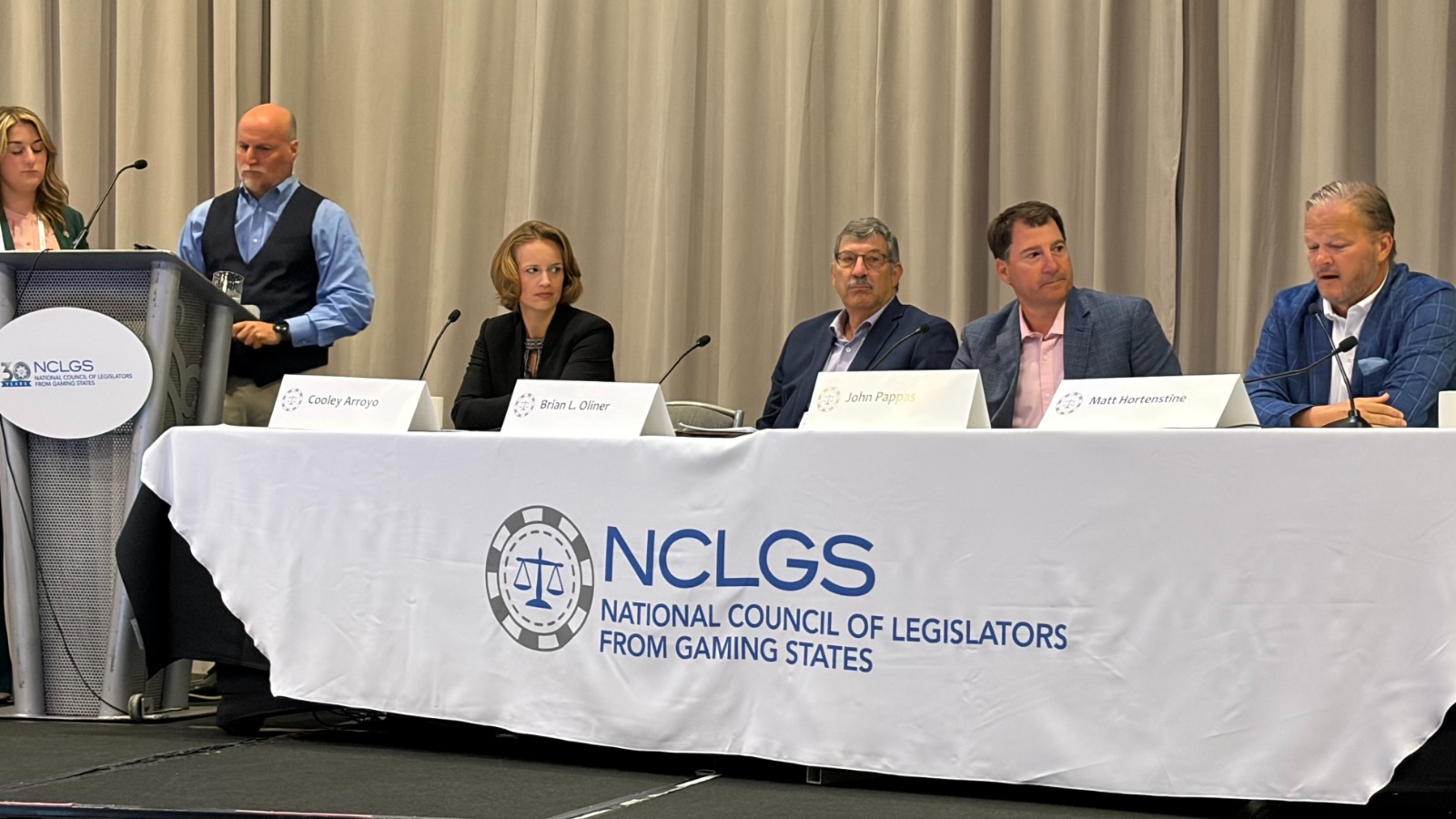
“A high tax rate constricts how much the industry can reinvest in their products,” Matt Hortenstine, general counsel for video gaming operator J&J Gaming, said Saturday. “I think if you strangle the golden goose too much, it will stop laying. I think the industry and the lawmakers need to have better conversation about that.”
Hortenstine was joined on the panel by Cooley Arroyo, chief compliance officer for the New Hampshire Lottery Commission; Brian L. Oliner, general counsel for the Federation of Tax Administrators (FTA); and consultant John Pappas, state advocacy director for the industry group iDEA Growth. New Hampshire Sen. Tim Lang and Oklahoma Rep. Emily Gise were the moderators.
The premise of the panel was to explore balancing revenue, managing competition, and finding ways to keep sports betting and iGaming sustainable. From an industry standpoint, that can be a challenge. Pappas pointed out that operators have had to constantly adjust after being promised a particular tax rate in one state, only to have it escalate, sometimes with little warning.
In Maryland, lawmakers upped the rate from 15% to 20% in May 2025. The following month Louisiana added an increase from 15% to 21.5% and New Jersey lawmakers bumped their rate from 13% to 19.75%.
In Illinois, lawmakers — who had ramped up the flat tax of 15% to a sliding scale of between 20%-40% in 2024 — added a per-wager tax in June 2025 and the city of Chicago followed suit with its own per-wager tax effective Jan. 1, 2025. The effective tax rate in Illinois has jumped from 15% at go-live in 2019 to more than 50% now.
Last week, North Carolina Gov. Josh Stein signed a budget bill that bumps that state’s tax rate from 18% to 23%.
“It’s a difficult thing for the industry to deal with, when states change the whole dynamic,” Pappas said. “It affects the whole [gambling] ecosystem.”
Consumers also getting squeezed
Pappas said that a tax increase often results in operators renegotiating contracts with suppliers. And as operators have to contend with higher and higher rates, their offerings may become less attractive. Beyond that, Pappas pointed out that bettors now have to contend with changing tax codes that, in some cases, will result in paying taxes on losses.
He said the new IRS guideline, which limits consumers to writing off up 90% of their winnings rather than 100%, “most certainly is going to drive behavior.” He wondered aloud why professional gamblers “would ever go to a site that requires them to file a W9 when they could go to an offshore site where that is not required.”
North Carolina bettors also have to contend with a change in how wagering losses should be deducted on personal tax returns, as the budget bill Stein signed also includes a new provision.
Oliner said the FTA is tasked with helping states figure out how to enforce or administer tax rates. Instead of just raising taxes in response to budget shortfalls, he said, states should consider working more with operators to grow their products and bring in more revenue that way. He also suggested more regular discussion with the FTA to ensure that all taxes are being collected and paid properly.
Biggest picture, the panelists urged state lawmakers to take a more comprehensive look at the potential implications of a tax hike, such as forcing operators to make personnel cuts (jobs lost), slow innovation, or offer an inferior product. All of those factors could result in an unintended consequence — and one that Oliner said has already happened in the alcohol and cannabis sectors.
“If the rates are wrong, then it’s going to drive the consumer into a black market,” he said.
“You don’t want to drive people out of legal gaming into illegal gaming, because then the revenue isn’t there.”