
“On a Thursday evening in September, I excused myself from the family dinner table and slipped into my bedroom. I didn’t want my kids to see what I was about to do.”
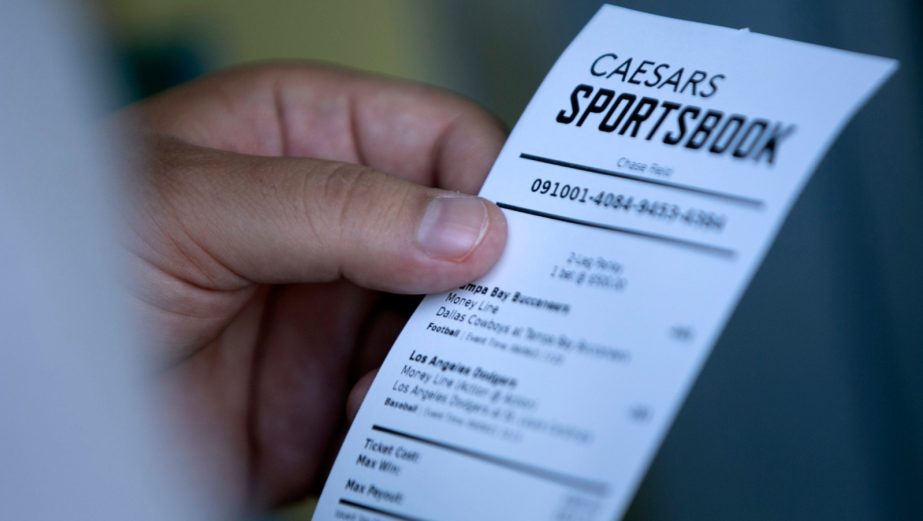
That was how McKay Coppins began his ridiculous piece of “journalism” for The Atlantic, which dropped Thursday. Titled “Sucker,” it detailed Coppins and a $10,000 bankroll the magazine gifted him for the purpose of a dive deep into the world of sports betting.
It was horrible. I’ll let the folks at Unabated sum it up:
Another sports betting hit piece, and this one is the gold medal winner.
Even worse? Maybe this is just a wild coincidence, but his opening two lines are exactly, word-for-word, the beginning to a story I’ve been working on, presented here for the first time. Please read responsibly.
First sips
On a Thursday evening in September, I excused myself from the family dinner table and slipped into my bedroom. I didn’t want my kids to see what I was about to do. I was about to down a Coca-Cola.
What happened was this: I was finding myself quite unable to work post-lunch. My bosses would send me a press release concerning the American Gaming Association’s latest findings on March Madness, and I’d wake up, two hours later, forehead pressed into the keyboard.
Doctors were consulted. Deep dives into the bowels of the internet looking for answers. Hypnosis was considered.
And then … “Why not just have a second cup of coffee?” one of the higher-ups mentioned in a Slack message.
A second cup? I scoffed. I would need to have a first cup. Heck, I would need to have some caffeine to begin with.
That’s right: I, Jeff Edelstein, adult male, had never had a sip of caffeine. Went against my religious customs.
Of course, when I mentioned this, it was met with shock. But then, came understanding. No wonder I couldn’t stay awake. While the whole country has been getting zipped and zowwee’d on coffee ever since the Boston Tea Party, I have abstained.
Which leads me to my bedroom, and a 12-ounce can of Coke. My gateway drug. See, my bosses here at Third Planet thought it would be a good idea — journalistically speaking — to run an experiment. Give me $10,000 to spend on caffeine and report back for this very website.
It seemed like a good idea. I asked my rabbi about it. His response was direct and to the point.
“Why the hell are you asking me this? Go drink as much caffeine as you like. Schmuck.”
So I cracked open the can of Coke. It hissed and sizzled. I brought it to my lips. I took a sip. And then another. It felt good. Two gulps later, it felt great.
Later that evening, watching television with my wife, she noted I was wide awake, not the slobbering mess I usually am, asleep on the couch. When I told her about the Coke, and the experiment, and the $10,000, I expected her to be horrified.
She wasn’t. She saw a silver lining.
“If you’re so awake, go empty the dishwasher. I’m going to bed.”
I emptied that dishwasher with a fervor I did not know existed. I met caffeine, and I liked it.
First purchase
The next morning I went to Target and bought a $17 Mr. Coffee machine and some Maxwell House. I brewed it, drank a cup, and then spent the next 20 minutes running up and down the stairs in my house. I was alive!
My morning went pretty much as planned after that, though I will note I managed to rewrite four press releases and post two tweets. That was nearly double my average output.
By 1 p.m., I felt the familiar stupor of post-lunch. I brewed a second cup of java, and … oh baby. It felt good. My head never came within an inch of the keyboard.
I had, within 24 hours, discovered the allure and the joy and the beauty of caffeine. No wonder everyone gorges on it. No wonder there are lines at Starbucks. No wonder why there are Starbucks across the street from Starbucks.
Nate Filter
I needed to find out more. I needed to do a deeper dive. So I contacted a professional coffee taster, and I found him in Nate Filter, America’s most famous statistics nerd of coffee. Filter first made a name for himself as the founder of FiveThirtyBeans, a website that rated every roaster in the country using a proprietary algorithm.
Before our first call, I sent him photos of my setup. After that first triumphant week of caffeine, I had been feeling pretty good about myself. Filter pulled up my photos when we got on the phone, and began to audibly react as he scrolled. “OK … Oh … oh no.”
“Maxwell House?” he scoffed. “Mr. Coffee?” he scolded. He said the words the way a sommelier might say “Boone’s Farm.” Perhaps sensing my humiliation, he tried to soften the blow.
“Look, the nice way to put it is that you’re drinking like a recreational coffee drinker,” he said. “You’re working against yourself at every stage of the process. You are, in effect, brewing against people who live 20 seconds in the future.”
Before we hung up, I asked Filter what kind of cup would make this a successful experiment. He seemed confused by the question.
“If you can taste the difference between a natural-process Ethiopian and a washed Colombian, that would put you ahead of 98 percent of people,” he answered.
I needed to up my game.
I went out and purchased a Technivorm Moccamaster KBGV Select for $359. Then I ordered some Harrods Hayma Dakhilya Coffee Beans for $140.
Nobody told me I needed a grinder. This was getting pricey.
So I plunked down another $150 for a Baratza Encore.
Espresso!
From here, I really got into it. I was enjoying a cup of coffee upon waking, a second cup when I sat down at my desk, a third cup after lunch.
By 6 p.m., I was crashing. I needed to keep this buzz going.
Enter espresso. I quickly convinced myself that what stood between me and joy was a $4,500 La Marzocco Linea Micra.
So I bought it.
“That seems excessive,” my wife mentioned, as I set it upon the kitchen counter.
“LEAVE ME ALONE IT’S FINE NOT OUR MONEY ANYWAY ENOUGH ALREADY.”
She looked hurt. I was stunned by my own outburst. I immediately apologized.
“You’re not the same man on caffeine,” she said.
“I’m fine,” I said. “I can stop anytime. Remember, this is journalism.”
Kids and caffeine
It was also starting to have an effect on my children. My 16-year-old wanted to open his own coffee account at the local coffee shop. My 12-year-old now knows the difference between arabica and robusta. My 10-year-old asks “what are we brewing?” every morning.
I was supposed to take my youngest to her lacrosse game. And we almost got there. Car was loaded with her equipment, everything. It was a gorgeous autumn Sunday.
Halfway to the field, my phone buzzed. A Japanese documentary about pour-over techniques just dropped on YouTube.
“I gotta pull over for a second,” I told my daughter.
Some 45 minutes later, she was in tears. The game had started without her. And there I was, parked on the side of Route 33, getting smarter about coffee. Something had to give.
“Can you walk the rest of the way?” I asked.
Dr. Oz
I was beginning to feel things might be spiraling a bit, so I reached out to America’s top doctor on everything: Dr. Mehmet Oz.
I met Dr. Oz in his office, where he greeted me with the firm handshake of a man who has stated his opinion on every ingestible substance known to humanity. When I told him about my experiment, he nodded gravely.
“Caffeine hijacks your adenosine receptors,” he said. “Your body thinks it’s resting, but it’s not. You’re essentially lying to your own nervous system.” He compared my morning cup to “a legal speedball,” paused for dramatic effect, and then, without any transition, began telling me about a high-altitude Peruvian mushroom blend that could deliver “clean, sustainable focus without enslaving your adrenal glands.” It retailed for $74 a bag and was available exclusively through his website.
I bought two bags.
They tasted like dirt. I went back to espresso within the hour.
No sleep
By November, the $10,000 was vanishing at an alarming clip. In addition to the machinery, I was now spending $80 a week on single-origin beans from a roaster in Brooklyn who had a man-bun.
And that’s before we even get to what I was spending at coffee shops, which I had begun visiting the way some men visit strip clubs — on the sly, all the time, and with no intention of telling my wife.
My wife was not happy about any of it.
“You ground beans at 4:15 this morning,” she said.
“I was trying to be quiet.”
I started to explain that the Baratza Encore was actually one of the quieter grinders on the market, and that if she wanted to talk about noise she should hear what a flat burr —
“I don’t care about burrs, Jeff.”
“You’re right. I’m sorry.”
“You had an espresso at 11 p.m. last night.”
“It was a macchiato.”
“You had a macchiato at 11 p.m. last night.”
“It was a small one.”
“You were awake until 2 a.m. watching that Japanese documentary about pour-over techniques again.”
“I can stop anytime,” I told her.
I think I even believed it.
Back to Nate
Nate Filter did not approve of where things were headed.
“You’re chasing the buzz,” he said. “Classic mistake. You’re not tasting anymore. You’re just consuming.”
I asked him, hypothetically, what warning signs a caffeine enthusiast should watch for. He rattled off a list.
Are you going to sleep and waking up thinking about your next cup? Are you drinking past 6 p.m.? Are you hiding consumption from your spouse? Are you brewing in the bathroom so your family doesn’t hear the grinder?
I answered in the affirmative to all the questions. He paused.
“Have you started eating the beans?”
“Define ‘eating,’” I said.
Sean Poury
I want to tell you about the influencer.
His name was Sean Poury, and he has 400,000 followers on Instagram.
“Coffee,” Poury liked to tell his followers, “is the highest-paying hobby in the world.”
This made no sense. But I was intrigued.
I tracked him down at a coffee expo in New York, where he arrived with an entourage that included his girlfriend, his mother, a content manager, and a French Bulldog named Beansy.
“If you’ve got a Keurig, sell the Keurig!” he bellowed, holding up a bag of beans that cost $180 per pound. “If you’ve got a Mr. Coffee, throw the Mr. Coffee in the trash. I’ve got the bean that will change your life.”
I followed him around the expo for two hours. He told me one of his followers had “completely transformed his mornings” using his recommended setup. Another had spent $11,000 on equipment based on his posts. Did he ever worry that his followers might take his recommendations too literally?
“They know I’m performing,” he said. “Look, sometimes people go overboard. They’ll buy a $6,000 espresso machine when they should’ve started with a French press. That’s not my fault.”
It’s over
My family was still asleep upstairs. The gray winter light seeped through the cracks in the blinds. I sat at my kitchen counter, alone, at 4:45 a.m. The La Marzocco hummed beside me. I had a double shot in my hand.
I thought about Nate Filter telling me I was chasing the buzz. I thought about my daughter, crying on the side of Route 33. I thought about my wife, asleep upstairs, who had stopped asking me what I was brewing because she already knew the answer was “too much.”
I opened my laptop. In the Google search bar, I typed the words: “caffeine addiction treatment New Jersey.”
Then I closed the laptop, because the espresso was ready, and it smelled incredible, and I figured one more cup couldn’t hurt.
[Editor’s note: Gambling addiction is real, and it is serious; this article is intended to lampoon The Atlantic’sattempt to “experience the phenomenon” and ascribe broader meaning to it.]