Both chambers of North Carolina’s General Assembly on Wednesday passed a conference report of its budget bill, which includes an online sports betting tax increase, a tax on prediction markets, and a change in how gambling losses may be deducted on personal tax returns. SB 257 will now be sent for approval to Gov. Josh Stein, who has 10 days to sign or veto. If he does neither, the bill will become law.
Should Stein sign the budget, licensed sports betting operators will pay nearly four times as much in taxes as prediction markets, which will not fall under state regulation. It’s not clear how or if the state will be able to enforce the tax on prediction markets, which are regulated by the federal Commodity Futures Trading Commission (CFTC).
Both chambers passed the $34 billion budget on second reading Wednesday.
Per the bill, prediction markets would be taxed at 6% of net trading fee revenue, but the definitions provided in the bill do not define prediction markets or the sports event contracts they offer as gambling. Because of that, the platforms would not have to adhere to the same regulations around know-your-customer, responsible gaming, and more that state-licensed sports betting operators must. The tax on online sports betting operators would increase from 18% to 23%.
North Carolina would be the only state this year to raise taxes on sports betting operators, though Illinois, Louisiana, Maryland, and New Jersey added or increased taxes last year.
The legislature, which has not passed a comprehensive budget since 2023, was aiming to pass a budget by June 30. The text of the bill reads that it would go into effect July 1, though it had not been approved by then.
Harrison: Bill ‘harms’ tribal, legal wagering
The House passed the bill on third reading, 88-21. Democratic Rep. Pricey Harrison, who said she’d vote against the budget, told her colleagues that she believes that the prediction market tax “seems to undermine our ability to govern and regulate sports gambling. … It seems to harm tribal casinos and legal sports betting, and it seems to give them some veracity in our state.”
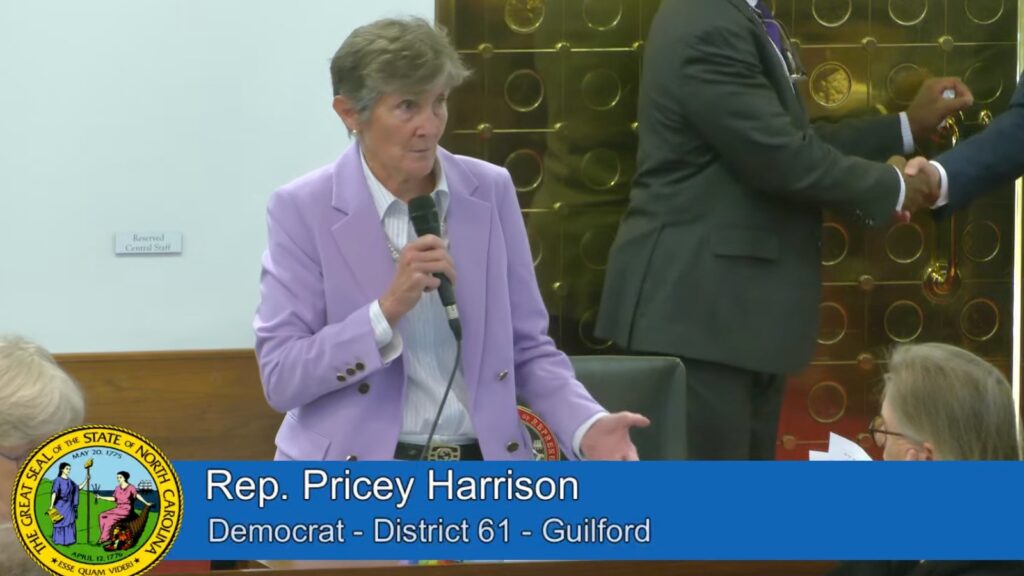
Harrison also pointed to the difference in the legal sports betting tax, which, under the new budget, will be raised to 23%, and raised concerns about “conceding the power to the Commodity Futures Trading Commission” while prediction markets are “in highly contentious litigation.”
The CFTC and Kalshi are battling in federal and state courts with more than a dozen states and tribes. Stakeholders expect the case to land at the U.S. Supreme Court, and according to the Press of Atlantic City, the state of New Jersey last week requested an extension from the Supreme Court to file with it. Thursday, a federal court judge held a hearing in the CFTC’s case against the state of Minnesota.
A highlight of discussion in both North Carolina chambers this week was the issue that Republicans wrote the budget with no Democratic input and distributed it for review only 24 hours before the first votes. In the House, the bill passed with four fewer votes on third reading than second.