
The Commodity Futures Trading Commission (CFTC) took aim at some prediction markets’ promotion and incentive schemes with a new letter warning against promotions based “on pure chance,” as well as rewards programs that could incentivize wash trading.
The CFTC sent a letter Wednesday to registered designated contract markets about the self-certification of incentive programs. Though the title of the letter concerned the certification process, the contents revealed the CFTC took issue with some incentives being offered by certain exchanges.
The CFTC said that some filings about incentive programs it had reviewed were “procedurally or substantively deficient.” It said that incentive programs — most commonly offered to market makers, but also offered to other traders at times — should be transparent and allow anyone to receive the incentives as long as they fulfill the criteria required.
CFTC says some programs reward improper behavior
The commission said that “certain incentive program designs can inadvertently incentivize improper trading behavior.” It noted that “volume-based rewards with steep tiers or threshold bonuses can encourage participants to trade solely to reach volume targets, heightening risks of wash-trading, pre-arranged trading, or other fraudulent, manipulative, or disruptive trading practices.” Wash trading is the practice of coordinated parties buying or selling assets between one another in order to give the appearance of legitimate trades happening.
The CFTC added that “selectively offering retention bonuses or providing non-cash incentives of unspecified or varying value are likely to have exclusionary effects inconsistent with Core Principles.”
It specifically highlighted “Sweepstakes-like or randomized rewards programs or prizes based, in whole or in part, on pure chance, rather than pre-defined performance metrics.” Kalshi has promoted a bonus offer of “up to $500,” where the size of the bonus is “left to chance.”
It also said that “DCMs should likewise ensure that they do not introduce unequal trading conditions through selectively available perks, such as faster market data or enhanced application programming interface access.”
Last year, Crypto.com submitted a rulebook change to the CFTC that would apply a three-second delay to most traders but allow market makers to continue trading in real time. The CFTC rule was intended to prevent courtsiding.
Promotional push around NFL season
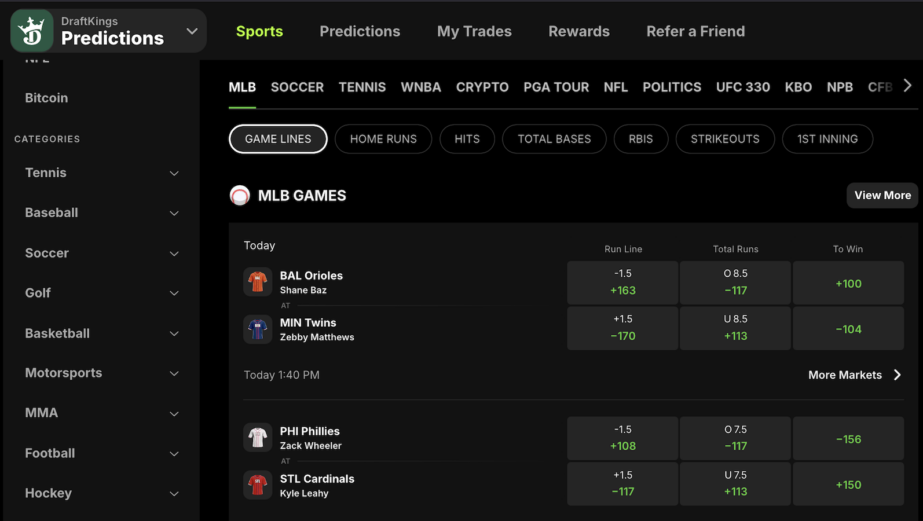
The letter comes as prediction markets gear up for a big promotional push around the start of the NFL season. The exchange model makes it more difficult to offer the kinds of promos that sportsbooks do, however, so prediction markets might seek creative ways of giving out bonuses.
In FanDuel owner Flutter’s second-quarter earnings call last week, company CEO Peter Jackson noted “the inability to offer generosity through an exchange platform.”
“The person that needs to provide the generosity is effectively the market maker, and they can’t be confident they’ll get the next bet from a customer if they’ve offered them some generosity back,” he said.
Active few weeks for CFTC
The CFTC letter is the latest in a flurry of messages to prediction markets. Most of the other moves the regulator has made recently appeared to be part of efforts by the CFTC to defend what it sees as its “exclusive jurisdiction” over the products. In contrast, the incentive programs letter appears to be a more straightforward attempt to engage in regulating the offerings of some prediction markets.
Last week, the regulator warned prediction markets against displaying “American-style” odds — similar to those of traditional sportsbooks — instead of contract prices or percentages.
On Monday, it issued an emergency order telling Kalshi that if a New York court issues a ruling that forces the platform to shut down, it could make the prediction market defy the ruling and keep trading. In response to that order, Kalshi filed a letter with the U.S. Court of Appeals for the Second Circuit, arguing that the CFTC’s emergency order “highlights the irreconcilable conflict between federal and state law.”