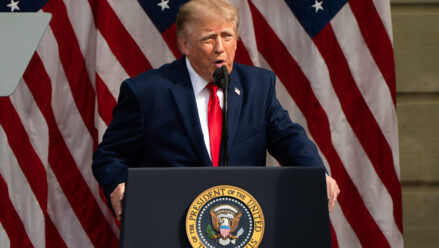
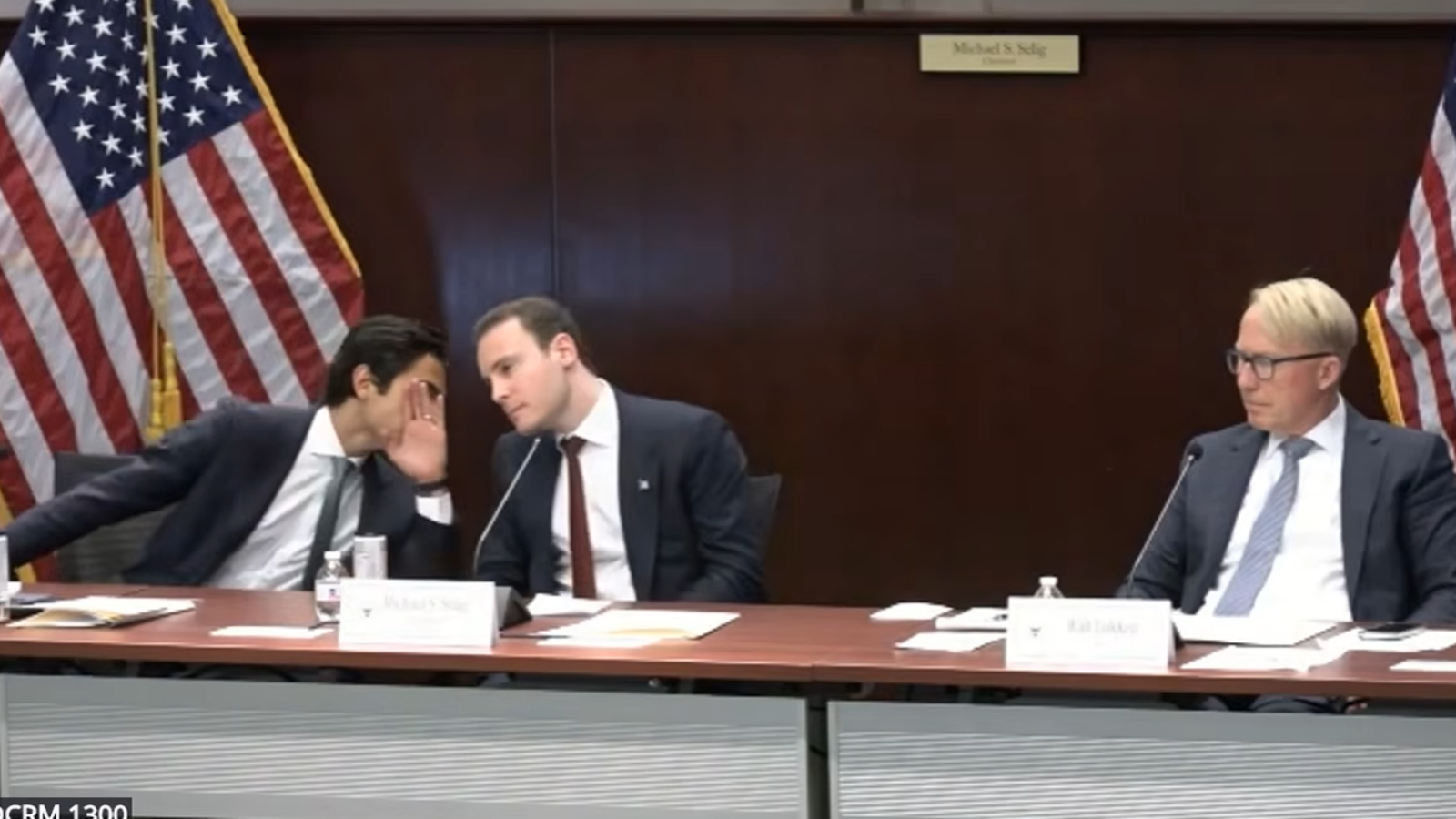
Commodity Futures Trading Commission (CFTC) Chair Michael Selig appeared unfamiliar with the products he is regulating during a Thursday panel event, incorrectly claiming that contracts such as the “mention markets” that President Donald Trump’s former teleprompter operator traded were not offered by U.S.-regulated exchanges.
The CFTC held a meeting of its Innovation Advisory Committee Thursday with panels on cryptocurrency, AI, and prediction markets.
The most energetic parts of the day came when CME Chief Executive Terry Duffy, who will retire from that role in March, spoke. He raised complaints about a number of prediction market contracts currently on offer from CFTC-regulated platforms. Duffy clashed with both Selig and Kalshi co-founder Luana Lopes Lara.
CME offers prediction markets, mostly focused on straight sports outcomes. It has self-certified parlays but never offered them, and in an earnings call last month, Duffy said parlays were “not markets ” and an example of “not something that we want to be a part of participating in right now.”
Echoing his letter in response to the CFTC’s proposed rulemaking on prediction markets, Duffy said that certain markets fail to meet the CFTC’s core principle of being relatively susceptible to manipulation. In that letter, he highlighted mention markets as a problematic market, due to manipulation risks.
At the Innovation Advisory Committee meeting, Duffy referred to mention markets and sports contracts, as well as contracts on military action, as those that may be at risk of manipulation.
“If you look at the Maduro situation, if you look at the Trump teleprompter situation, there’s a lot of things that are susceptible, there are some sporting events that are not just outcome based, they’re individual based and definitely being manipulated,” Duffy said. “That is not good for our industry. That is horrible for our industry. We are not a bunch of carnival barkers at the circus.”
Selig attempted to correct Duffy, but he may have in fact raised more questions.
“I just want to correct the record there,” Selig said. “Those products are not listed in the United States. They never were. Those were offshore and that’s fake news.”
In fact, it was Selig’s comment that was inaccurate. Sports player props and mention markets are both popular product categories on regulated prediction markets.
Duffy challenged Selig on this, asking, “So you’re suggesting that some of these sports events are not listed in the United States?”
Selig changed the subject away from sports, despite that having been a large part of Duffy’s comments, but continued to mischaracterize the situation.
“The Maduro contract and the teleprompter contract were not listed in the United States.”
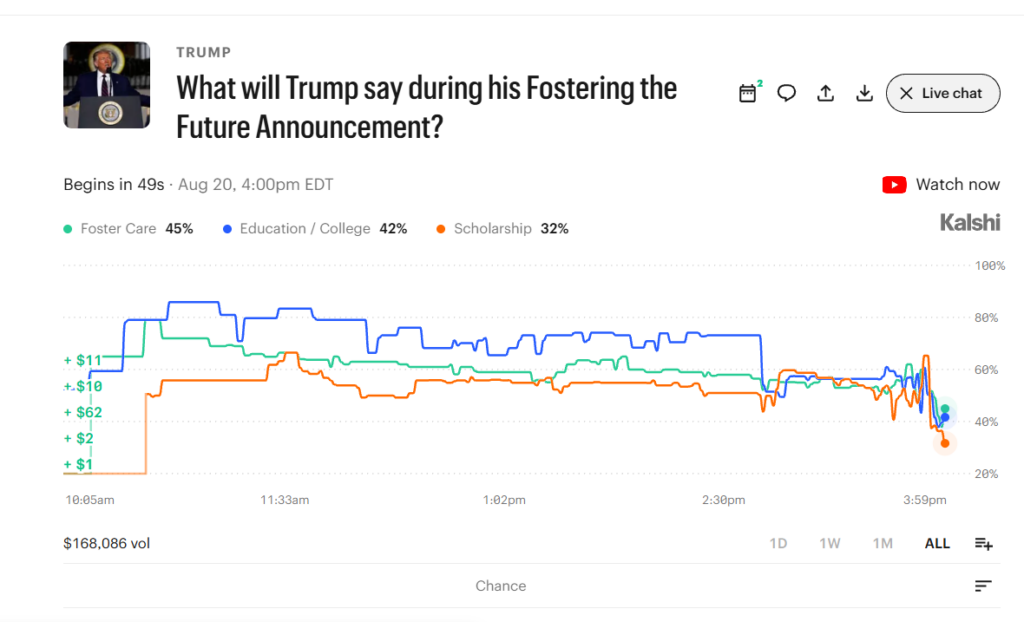
The Trump teleprompter trades took place on Kalshi, whose surveillance team flagged the trades to the CFTC.
Kalshi continues to offer trading on the words said by President Trump, and Lara even referenced those contracts later in the meeting, saying that an upcoming study would show the economic value of contracts based on words the president says.
The Maduro insider trades were on Polymarket’s blockchain-based offshore site, which blocks U.S. IP addresses. However, even in this case, a contract on the then-Venezuelan president leaving office was in fact listed in the United States by Kalshi. There have been no reports or allegations of insider trading on this Kalshi contract, but it is still probably inaccurate to say that the product was never listed in the U.S.
2,500 self-certifications
Duffy argued that the rise of markets that he saw as susceptible to manipulation was due to the fact that too many markets were being certified without proper CFTC oversight.
“There’s been 2,500 self-certifications since this administration took office in January 2025, of which none have been opposed,” he said at the start of his comments.
Selig’s response therefore may have bolstered this point, raising questions about the level of oversight the CFTC can have over such a wide range of products.
Eight months after being confirmed, Selig remains the only CFTC commissioner. The regulatory agency typically has five commissioners, and the five-commissioner group is intended to be bipartisan.
Duffy clashes with Kalshi’s Lara
Duffy at one point in his comments referenced Kalshi by name when referring to contracts about compute pricing. He said it “doesn’t make any sense” that Kalshi could get instant approval for a contract on compute, when CME and trading firm DRW’s effort to get a compute contract listed has to go through a 60-day comment period. His comments about mention markets and sports props were likely implicitly about Kalshi as well, given that it is a leader in offering both of those products.
Lara responded, asking if CME has ever had “any issues with any market manipulation, ever in its history.”
Duffy did not answer directly, instead saying that if Lara wanted a debate he was happy to have one, and that, “I have more people in my regulatory department than you have in your entire company.”
Lara said, “Maybe you should learn about efficiency then.”
Moderator Walter Lukken encouraged both speakers to “keep things productive.”
Other executives question certain contracts
Other speakers were also critical of certain markets being offered that they see as readily susceptible to manipulation. DRW founder Don Wilson pointed to the contracts on former Congressman George Santos attending the State of the Union, which Santos was found to have manipulated.
“Nice work by Kalshi working with the CFTC on the George Santos situation, but the contract, ‘Will George Santos attend the State of the Union?’ was readily susceptible to manipulation and had no real value,” he said. “There are other contracts that just don’t meet the bar and it’s in everybody’s interest that we cut the bottom tier of things out.”
Robinhood CEO Vlad Tenev echoed some of Duffy’s points about mention markets. He said that he personally found the contracts “fun,” but they were probably too easy to manipulate. Robinhood offers many Kalshi contracts, as well as contracts from its own exchange Rothera, but does not offer mention markets.
“On the one hand, they can be very fun,” Tenev said. “On the other hand, certain mention markets can be prone to manipulation. I don’t think it’s always even conscious or intentional, but if someone’s giving a speech you might hear people saying, ‘Say this! Say that!’
“I think it’s something to watch over. It doesn’t feel like we have the right line in how we think about mention markets, and certain ones I’ve seen can be prone to manipulation. Although I do admit that they are very fun.”
On the other hand, Coinbase CEO Brian Armstrong was broadly supportive of a wide range of prediction market contracts and argued that for a contract to be deemed contrary to the public interest, there should be actual harm that can be clearly linked to the offering.
Sports betting CEOs speak
A number of leaders of sports betting companies that have recently become involved in prediction markets also spoke.
Fanatics Betting & Gaming CEO Matt King said, “I would underscore the importance of getting a principles-based approach to consumer protection. I think it’s really important that we set minimum standards for all operators, so No. 1 you protect customers and, 2, you avoid the backlash to these stories.”
DraftKings CEO Jason Robins said that rules should be “identical” for customers trading directly on an exchange and those going through a futures commission merchant (FCM). Currently, FCMs have more rules around protecting customers, as commodity trading laws were not initially written with direct on-exchange trading in mind.
FanDuel CEO Christian Genetski said that “clear rules of the road and a level playing field for more participants” are important.
Polymarket CEO Shayne Coplan also spoke and said that his company’s offshore platform had greater surveillance and enforcement tools than many people realized.
Coplan said that while Polymarket accounts may not require users to provide real names or other direct identifying information, they are all tied to cryptocurrency wallets and all trades on the platform are recorded publicly on the blockchain. This, he said, means that Polymarket’s surveillance team is able to track down those who make suspicious trades.
“First of all, it’s not anonymous,” he said. “It’s all public. It’s all on chain. It’s the least anonymous financial market of all time.”