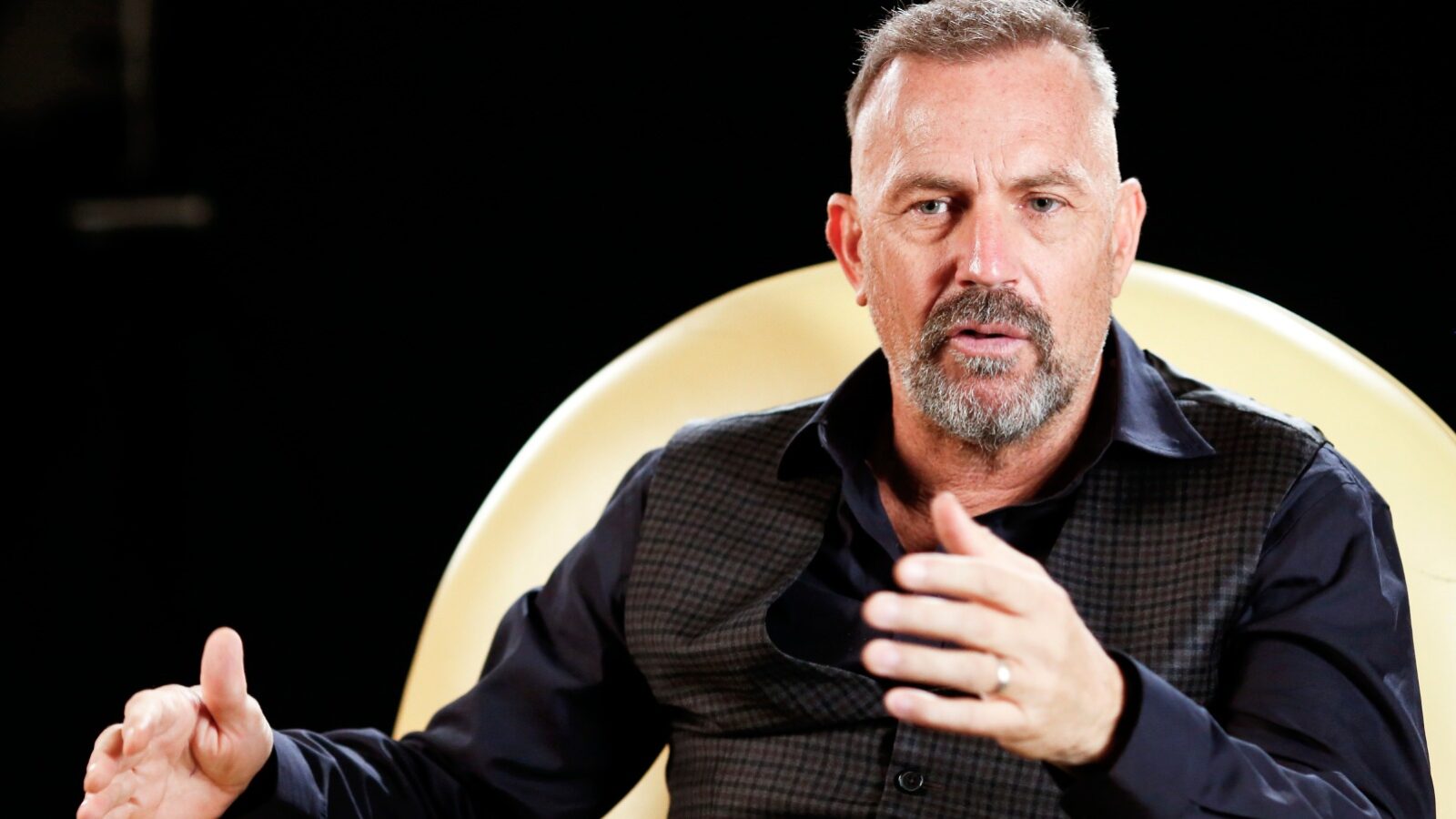
As federal and state courts across the U.S. wrestle with how to define the sports betting-like event contracts offered by prediction markets, actor Kevin Costner is creating a space in which key figures from all sides can try to find a compromise.
Costner told InGame in a phone interview Monday night that while he has no skin in the game, he has friends in both the gambling and tribal worlds and that, once in a while, “like any business, I sometimes find myself in a situation where you find that you need some help.”
This time, he’s the one offering that help. Costner is opening his Dunbar Ranch in Colorado as an off-the-grid location where some of the biggest names in commercial gaming, Indian Country, and prediction markets can have open, honest discussions about how or if sports event contracts fit into the gambling landscape, and if all can benefit.
In a letter written by Costner and obtained by InGame, the actor outlines a closed retreat where he can bring powerful stakeholders together to “give you time, share some meals, and see what’s possible. There’s nothing like being able to sleep on an idea that didn’t strike you at first … only to wake up and see a new path forward for your beloved companies and employees.”
Costner, who owned a casino in Deadwood, South Dakota for 26 years, isn’t a sports bettor, but he likes to problem solve. When entrepreneur and friend Kasey Thompson shared the prediction predicament with Costner, he felt a kind of call to action.
“The Supreme Court is going to make a decision on this,” Costner said. “When I realized it was a pressure situation, and things were building to a moment, and I felt like people I know could be in that thing, I felt like there was a solve [somewhere].”
Embrace the ‘unconventional’
Costner said he considered a more traditional urban meeting “on the 57th floor,” but wasn’t sure stakeholders would go for it — and he said he believes there is value in being together over a longer term and really “drilling down” on an issue. In his letter, he extended a three-night invitation to those who are interested.
“It’s really not very elaborate, what’s happened here,” Costner said during the interview. “I said, ‘I have a place that could make a lot of sense.’ There are a lot of people behind these men [commercial executives and tribal leaders] that have jobs, and jobs aren’t that easy to come by. These men are all smart, they all have a vested interest in getting this done, that’s a really good place to come together.
“What happens here sometimes is you have a meeting and you don’t understand something and you want to walk away. But if you stay, sometimes there is another bite at the apple. If you stay another night, well, they’ll still be there, they won’t be in their G5 driving away. So, I decided I would try to create that space, but only with top decision makers.”
He said the idea may a little “unconventional, what we’re talking about here, but those are my favorite things.”
The list of invitees is a who’s who in U.S. gambling, including CEOs from the biggest gaming companies, top leaders from Indian Country, and some former regulators and “deal advisors.”
In the letter, Costner described the latter group as a “remarkable group of people, many of whom you know, with deep experience in gaming, regulation, law, and transactions.” He continued: “They aren’t there to represent a side. They’re there as a resource to everyone and, if something worth building emerges, to help give us structure.”
Costner’s partner in the retreat is Thompson, a high-stakes poker player and former Pala Interactive executive. Those who have followed attempts at legalizing sports betting in California may remember Thompson from 2023, when he rolled out an online sports betting proposal that was ultimately shot down by Indian Country, which in California has exclusivity for Class III gaming.
Thompson said he has since completely left the gambling world, but continues to work on other ventures. Among them is Big League Wiffle Ball, a 10-team league that debuted in 2025 in which Thompson and Costner each own teams. Thompson is one of the league founders and he owns (along with a laundry list of partners including Warren Buffett’s grandson) the Boston Harbor Hawks. Costner owns the Los Angeles Naturals.
Swaps, sports, and courts
Since Kalshi offered its first sports event contract ahead of the Super Bowl in 2025, prediction verticals have roiled the state-regulated gambling industry across the country. At issue is whether sports event contracts meet the definition of a “swap” under Commodity Futures Trading Commission (CFTC) regulations. The ultimate definition will determine if the contracts continue as federally regulated financial instruments or would be subject to state gambling rules. Kalshi and the CFTC are in court with more than 25 states and tribal entities over the issue.
Also among the issues being addressed in the court cases is whether the Commodities Exchange Act preempts state law or the Indian Gaming Regulatory Act, which allows exclusivity for Class III gaming on tribal land for federally recognized tribes. So far, there is a federal circuit court split on the issue, with the Third Circuit finding in favor of Kalshi and the Ninth Circuit finding in favor of the state of Nevada and a pair of California tribes in two separate cases. Prediction sports event contracts are banned in Michigan, Nevada, and Washington state, where regulators are enforcing their rules, per state court orders.
Costner: ‘Be part of something epic’
The fight between the prediction sector and the regulated gambling industry is contentious. Costner and Thompson are hoping a think tank-like gathering will allow for some outside-the-box ideas.
“States, tribes, gaming companies, prediction platforms, and regulators are confronting questions that could shape this landscape for years,” Costner’s letter reads. “Everyone has a position. Everyone has something worth protecting. But when the stakes are high enough, sometimes, the most important thing you can do is stop talking across the divide, and start talking to each other.”
Costner said he’s heard back from about 70% of invitees. He acknowledges that some might not have been sure his invitation was the real deal, but as they began to understand that it was, many were all-in.
It’s clear that Costner holds Dunbar Ranch close to his heart, and he calls it a “place that settles your mind” away from the daily distractions of business. “The reason I offered this is that I thought, ‘I want to switch it up.'”
Long a lover of sports, baseball in particular, Costner doesn’t bet on games because it “ruins the experience.” But he understands that sports betting and prediction markets are big business that go beyond the game. And he just wants to help.
“There’s nothing nefarious about this,” he said. “There are groups that could be terribly affected by a flip of a coin [a Supreme Court decision], and the tribes have always been really important to me. This is a real chance for these guys to be really smart, and it’s a real chance for them to be part of something epic.”
Costner closed out the letter with these thoughts: “Is there an ecosystem where tribal sovereignty and interests are respected, states can fulfill their responsibilities, established gaming companies have certainty, and emerging prediction platforms can find a workable path forward? The people I have spoken with have shown tremendous enthusiasm for this, so I’m opening my home.
“I don’t know where this will lead. That’s part of the reason to come. Bring your convictions, the difficult questions, and an open mind. Come to Aspen and see what’s possible.”