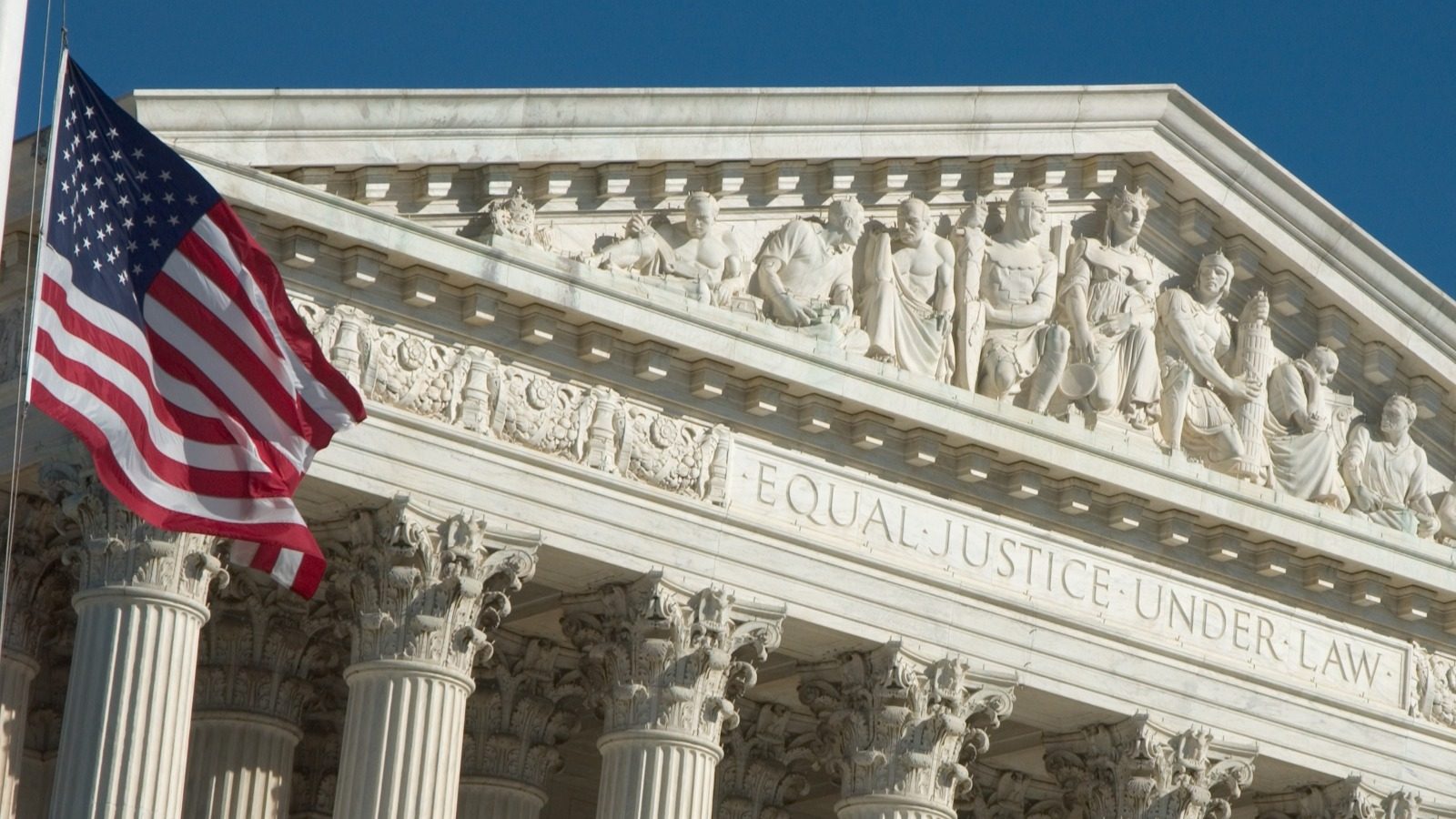
The most powerful sports organization in the country — the NFL — has jumped neck deep into the prediction market fray, urging the U.S. Supreme Court to take on New Jersey’s appeal in its fight with Kalshi.
The NFL is claiming sports prediction contracts are bets, that those bets should fall under state gambling laws, and that they should not be treated as financial products.
In an amicus brief filed Thursday supporting New Jersey regulators, the NFL said federal oversight of sports prediction markets falls far short of the protections provided by state-regulated sports betting. The league is asking the justices to settle the dispute before another NFL season is in the books.
“Billions of dollars will be bet on NFL games through prediction markets each season, and any delay from the Court will result in increasing consumer harm and risk to game integrity,” the NFL wrote.
The league said NFL-related contracts accounted for $1.8 billion of the $3.3 billion in total prediction market trading volume on the first Sunday of this season.
New Jersey originally asked the Supreme Court to step in after the Third Circuit Court of Appeals sided with Kalshi in April, with Kalshi claiming sports event contracts are “swaps” under federal law, putting them under the authority of the Commodity Futures Trading Commission (CFTC) and beyond the reach of state gambling regulators.
The Sixth and Ninth circuits, however, both found in favor of states, allowing that they can enforce their gambling laws against Kalshi. The NFL says those courts got it right: Financial swaps help businesses manage risks they already face, while sports bets create new risks for people choosing to gamble.
“Given that backdrop, it is inconceivable that Congress, responding to the 2008 financial crisis, effectively enabled nationwide legalization of sports bets dressed up as ‘swaps,’” the league wrote.
Rules and regs
A good chunk of the NFL’s brief focuses on what it says is missing from federal regulation.
The league wants prediction markets to prohibit bets that one person can easily manipulate, bets involving injuries or officiating, and bets on outcomes someone can know in advance. Examples include whether a kicker will miss a field goal and whether a team’s first play will be a run or a pass. It also wants a minimum age of 21 to engage with the product.
The NFL has previously warned that prediction markets lack protections required of regulated sportsbooks, including information sharing and restrictions on some wagers.
In Thursday’s brief, the league said operators need to work with the NFL to maintain lists of people banned from betting. Without those lists, the NFL argued, operators can’t identify insiders, such as league employees or medical staff, who could trade on private information.
The brief acknowledges federal insider-trading rules and Kalshi’s partnership with Integrity Compliance 360, but questions how effective those measures can be without cooperation with the league.
The NFL also questioned whether the CFTC has enough staff to oversee sports betting nationwide.
“Without adequate staff engaged in oversight and enforcement, even the best regulations cannot meaningfully ensure game integrity and consumer protection,” the league wrote.
The NFL’s position leaves room for federal oversight if stronger protections follow. The brief says that if the Supreme Court sides with Kalshi, the league could push the CFTC, operators, and Congress to put additional safeguards in place before the 2027 season.
For now, the Supreme Court has not decided whether to hear the case.