Much has been made in the last year about whether the 2010 Dodd-Frank Wall Street Reform and Consumer Act can or should be interpreted to mean that sports event contracts — trades on prediction markets — are legal.
The Commodity Futures Trading Commission (CFTC), which is tasked with enforcing the Commodities Exchange Act (CEA) that the Dodd-Frank amended after the worst financial crisis in a generation, includes a special rule that seems to ban such contracts. Rule 40.11 reads, in part:
(a) Prohibition. A registered entity shall not list for trading or accept for clearing on or through the registered entity any of the following:
(1)An agreement, contract, transaction, or swap based upon an excluded commodity, as defined in Section 1a(19)(iv) of the Act, that involves, relates to, or references terrorism, assassination, war, gaming, or an activity that is unlawful under any State or Federal law
(2) An agreement, contract, transaction, or swap based upon an excluded commodity, as defined in Section 1a(19)(iv) of the Act, which involves, relates to, or references an activity that is similar to an activity enumerated in § 40.11(a)(1) of this part, and that the Commission determines, by rule or regulation, to be contrary to the public interest.
The rule goes on to describe a 90-day review and approval period of certain contracts.
Christopher Dodd, one of the former senators whose name is on the act, says the amendment and regulation leave no room for interpretation — “Congress did not set out to authorize nationwide sports betting through derivatives markets or displace decades of state and tribal primacy over gaming regulation,” he wrote in an amicus brief encouraging the Supreme Court to settle the issue.
Former CFTC Chair Gary Gensler, who also submitted a brief, concurs: “Congress did not transfer jurisdiction over sports betting from the States to the CFTC. When Congress amended the CEA through Dodd-Frank, it was addressing the causes of the recent financial crisis, not undoing federal policy against sports betting and displacing traditional state and tribal regulation. Congress did not include sports-betting contracts within the statutory definition of swap.”
Both were, in fact, boots on the ground when the law in question came into being.
The briefs were two of five filed Thursday in support of the state of New Jersey’s petition to have the Supreme Court hear its case against Kalshi, after the U.S. Third Circuit Court of Appeals ruled in favor of the prediction market. The other three briefs were filed by the NFL, a group of 145 tribes and tribal entities, and the American Gaming Association.
Dodd, Gensler were there
Dodd and Gensler sit in unique positions. Both lived through the savings & loan crisis, the dot-com bubble, and the Great Recession. Dodd was present for the debate, discussion, and ultimate decision to amend the CEA to avoid another financial collapse. Gensler was the chair of the CFTC, and his commission was the first tasked with interpreting and implementing the new law.
In his amicus brief, Dodd states that the Dodd-Frank Act “preserve[s] rather than displace[s] state gaming authority.” He all but calls ludicrous any position that sports event contracts are swaps and that the CEA preempts state law due to exclusive jurisdiction.
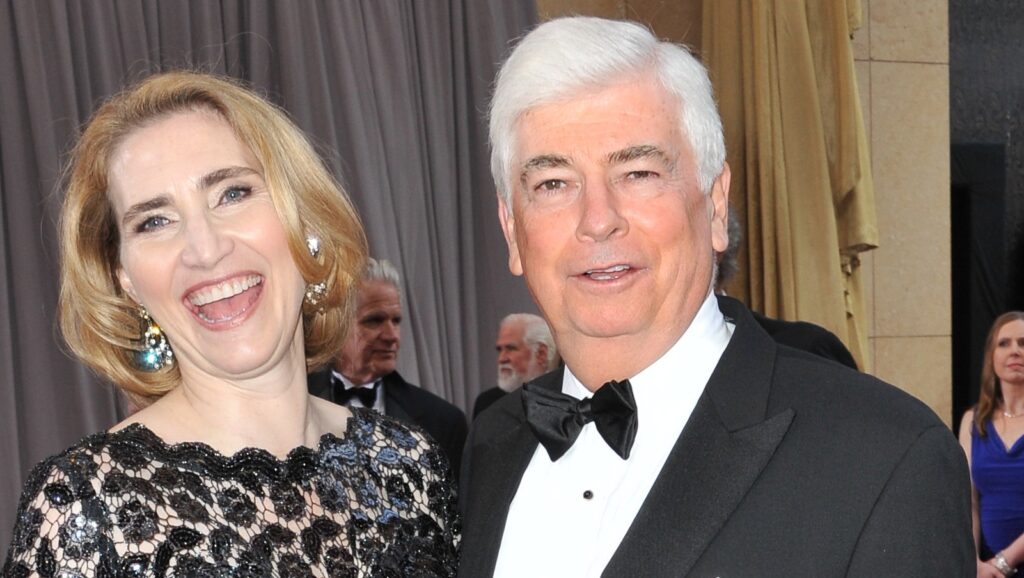
With regard to whether a sports event contract meets the definition of a swap, he wrote, “Traditional derivatives manage preexisting financial or commercial risks. A sports wager creates a risk that did not previously exist.” In addition, he said such contracts are not useful for hedging.
Exclusive jurisdiction, he wrote, is not carte blanche for federal preemption. “Had Congress sought to preempt state or tribal law, it knew how: the CEA expressly preempts certain state gaming laws for identified transactions not at issue here, and the Dodd-Frank Act added a provision prohibiting States from regulating swaps as insurance. See 7 U.S.C. § 16(e)(2), (h). Congress enacted no comparable provision preempting state gaming laws for contracts offered on DCMs.”
Gensler also stated that “Congress knew how to expressly preempt state law when it wished to do so.” And in this case, he said, Congress did not wish to.
Dodd goes on to argue that the special rule “confirms that Congress treated gaming as a subject
for exclusion from derivatives markets, not as a federally authorized product.” He also bluntly argues that “sports betting had nothing to do” with the financial crisis Congress was trying to address.
From Gensler’s perspective, it is critical to consider the ramifications if the Dodd-Frank Act were a wolf in sheep’s clothing.
“To put the argument in the plainest real-world terms: Senate Majority Leader Harry Reid of Nevada
would never have consented to legislation displacing an activity so critical to his state’s economy and politics by permitting sports betting only under CFTC auspices,” he wrote. “No one working on Dodd-Frank was attempting to put a curve ball by the Senate Majority Leader to legalize a national sports-betting regime or preempt the Nevada Gaming Commission, a Commission Majority Leader Reid had chaired (1977–1981). He would not have allowed it. Nor did Congress do so.”
CFTC’s ability to regulate gaming challenged
On balance, Dodd bluntly calls out the Third Circuit Court of Appeals, saying that its interpretation of the CEA would “transform” the CFTC into a gambling regulator and that “it lacks the licensing requirements, minimum-age restrictions, advertising rules, self-exclusion programs, responsible-gaming safeguards, and limitations on permissible wagers that States and Tribes have developed over decades to regulate gambling.”
Gensler agrees, and further pointed out that “If sports bets were swaps, as discussed above, under Section 2(e) all off-exchange sports betting in casinos then allowed under PASPA and IGRA would have been illegal since 2012.” Yet in the years between 2012-25, Gensler wrote, the CFTC and Congress “did not behave” as if such a key change had happened.
In asking the Supreme Court to consider New Jersey’s petition, Dodd wrote that the Third Circuit decision “erases that distinction” in relation to the duties of state and tribal gaming regulators vs. the CFTC, and that the opinion would effectively make any sports wager that did not occur on a designated market contract illegal. In effect, what stands today as legal sports betting (as Gensler pointed out) would be turned on its head and considered illegal.
Tribal amici: Kalshi present-day prospectors
A group of 130 tribes and 15 tribal organizations that signed off on a single brief offer another viewpoint. While many of the arguments are the same as those made by Dodd and Gensler, Indian Country has another wrinkle to add. While Dodd and Gensler argue that the CEA does not preempt state law, tribes aren’t states, so the question becomes whether or not one federal law (the CEA) preempts another (the Indian Gaming Regulatory Act).
Calling Kalshi the contemporary equivalent of prospectors who historically “have encroached on
Indian lands, stealing gold, minerals, and other vital resources,” the tribes wrote that prediction markets threaten their very way of life.
“They compete directly — and unlawfully — with tribal sports betting, siphoning away governmental revenue Tribes need to sustain themselves,” reads the brief. The tribal amici argues that self-government, self-sufficiency, and sovereignty are at risk.
Indian Country argues that by operating on tribal land, Kalshi is violating IGRA, which allows tribes self-determination for gambling — some tribes offer it, and some ban it. In any situation, Kalshi does not have the approval of tribal governments to operate on their land.
AGA: Allowing Kalshi to operate is costly
Saying that Kalshi has upset the concept of a level playing field for gambling operators, the American Gaming Association (AGA) weighed in late Thursday in support of New Jersey. In its brief, the industry trade organization argues that accepting the idea that sports event contracts are swaps and may be offered “has thrown that system into chaos.”
On one hand, the AGA explains, there are state-regulated sportsbooks that are operating under often stringent rules for know-your-customer, responsible gambling, and other infrastructure, and they are paying taxes on their revenue to state governments. On the other, there are prediction markets, beholden to the CFTC, which lacks such safeguards or state-tax requirements.
Much of AGA’s brief mirrors what Dodd and Gensler said — sports event contracts mimic state-regulated sports betting, and the Third Circuit decision to consider them swaps undermines the decades-old state- and tribal-regulated gambling system. But the AGA further argues that allowing Kalshi to operate in the current situation will cause financial harm to both the commercial industry and states.
“There is a bargain at the heart of the state-based framework. Operators are licensed and investigated by the States in which they operate; their systems are audited; and their platforms are built to incorporate geolocation, identity verification, and reporting requirements,” the AGA wrote. “They provide States with revenue, investments, and compliance functions designed to ensure that gaming is a safe, responsible form of entertainment. The States, in return, provide a market in which all competitors are subject to the same standards of integrity, consumer protection, and
responsibility. That level playing field has created settled expectations for regulators and operators
alike.”