As has been the case on Capitol Hill and in statehouses across the U.S. over the last year, prediction markets muddied the waters during a congressional hearing Tuesday about the prevalence of sports betting on college campuses.
Lawmakers queried a witness panel, and from an industry perspective, nothing new was revealed. No members of the commercial or tribal sports betting industry were invited to testify.
But that may not have mattered because lawmakers repeatedly pointed to prediction markets, which are regulated by the federal Commodity Futures Trading Commission (CFTC) and not states, as a key issue. Those on the witness panel agreed, but also said they had no control over prediction platforms, on which sports event contracts mimic gambling.
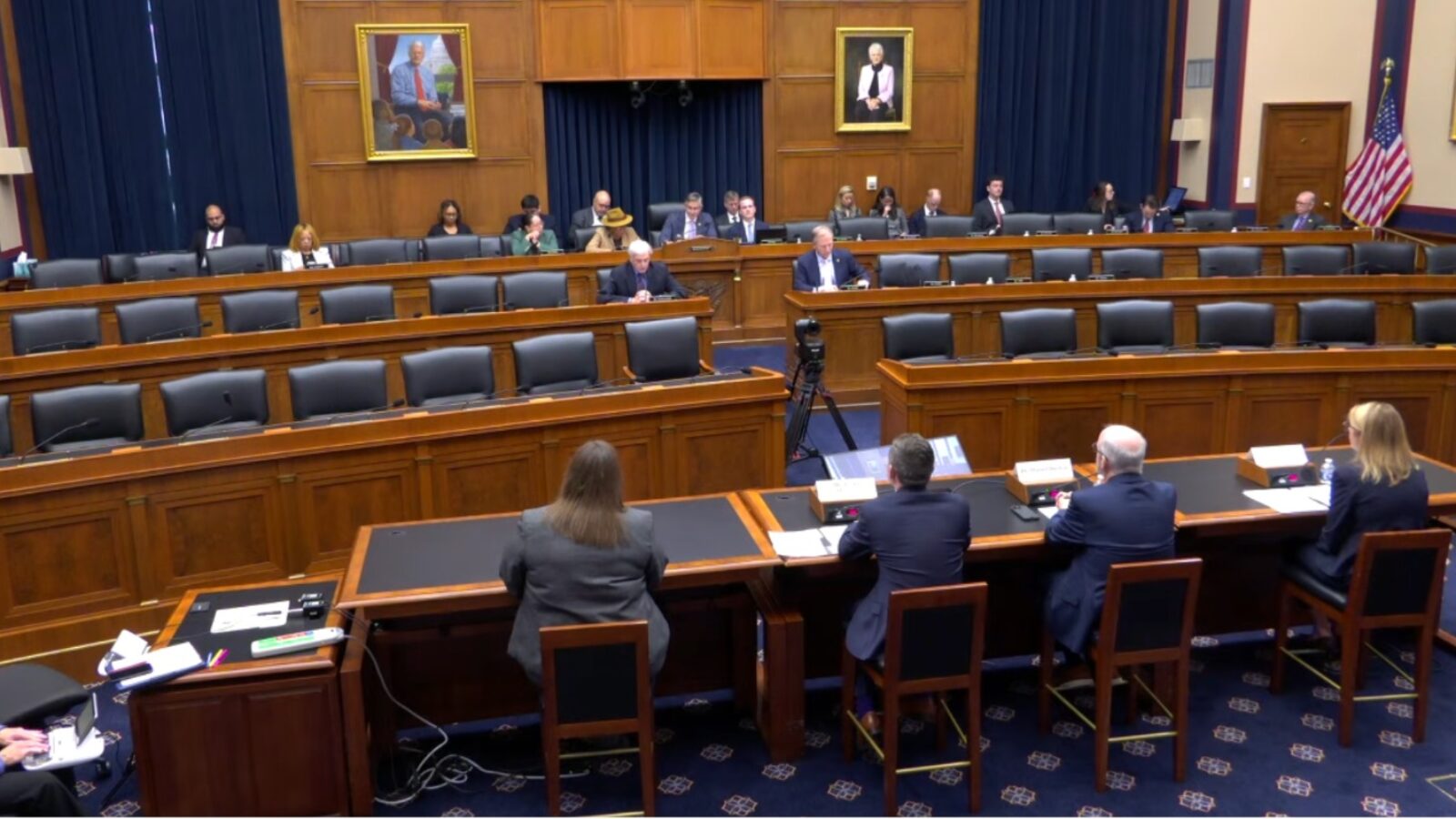
The hearing was held by the U.S. House Subcommittee on Higher Education and Workforce Development and titled “The Rise of Sports Gambling on College Campuses.” Cindy Clouner, MPH, LSW, OCPS, managing director, Higher Education Center for Alcohol and Drug Misuse Prevention and Recovery, The Ohio State University; Dr. Daniel Durkin, associate professor, University of Mississippi; Jordan Maynard, chair, Massachusetts Gaming Commission; and Dr. Lindsey Mortenson, chief mental health officer, clinical assistant professor of psychiatry, and executive director of University Health & Counseling, University of Michigan were the witnesses.
North Carolina lawmakers at odds?
Ranking committee member Alma Adams, a Democrat from North Carolina, said prediction markets had “blown a hole straight through” voter decisions and state laws around legal sports betting. The platforms have fewer consumer protections than most state-licensed sports betting companies, including looser know-your-customer standards and a younger minimum age. Most states have set the legal gambling age at 21, but prediction markets allow financial trades — which is what they say sports event contracts are — at age 18.
Adams told the committee that Congress must make the “CFTC do its job. It should regulate these markets and not look the other way.” She said the House Judicial Committee has asked for “documents and communications regarding deals in this space that directly benefit the president and his family. The American people deserve to see them.” Donald Trump, Jr. is a advisor for both Kalshi (from which he got equity) and Polymarket, and his venture capital firm 1789 Capital is heavily invested in Polymarket.
Ironically, state lawmakers in North Carolina are the only ones in the U.S. to have made prediction products legal, passing a law earlier this year that will tax the platforms but will not require the platforms to be regulated. The new law goes into effect Jan. 1. North Carolina offers legal, state-regulated online sports betting. While Adams was denouncing prediction markets and calling for stronger regulation of them, her state is preparing to benefit from prediction market dollars with no state controls.
Witnesses repeatedly told the committee that college-aged bettors don’t discriminate where they bet, whether that be on a legal platform, a prediction market, or a black-market site. From a public health perspective, where a student bets is not of major concern, as the goal is to treat the addiction, whether it blossomed on a legal or illegal market. But the rise of prediction markets, public-health representatives told the committee, only creates more opportunities.
Durkin told the panel that college-aged people “sometimes use illegal sites without knowing it” or find ways to gamble if they really want to. He also said that it’s not unusual for younger people to find their way to illegal behavior, whether that is drinking or drugs, and that because sports betting is now “frictionless” it moves more quickly, making it more dangerous. Mortenson said that “college students spend their disposable income on a lot of things that as a parents we wouldn’t want.”
Maynard: Products ‘look exactly the same’
While lawmakers were asking for a roadmap and witnesses were explaining how early intervention, education programs, and a real-time or “warm” handoff to a mental health professional would change the equation, the issue of prediction markets continued to crop up.
Maynard told the committee that “we basically have two sets of products that look exactly the same to the end user. We get calls from people about businesses that we don’t regulate” and the state has nothing to offer. Massachusetts has some of the most stringent legal sports betting regulations in the U.S., and is among the states that don’t allow legal sports betting on in-state colleges, ban some college prop bets, and don’t allow sportsbook advertising on college campuses.
The panel shared information about the difficulties in identifying and treating gambling addiction, which is called the “invisible” addiction, and called for further study, more funding, and a bigger workforce that knows how to identify and treat gambling addiction. Clouner, Durkin, and Mortenson all support the idea of federal oversight and funding for gambling addiction.
Maynard was a bit more cautious in inviting the federal government into a states’ rights issue, saying he believes there is “a place for federal interaction, at least.” He said he thought “minimum standards on advertising” or “anywhere we could find a floor” would be useful.
Adams: Students shouldn’t be ‘exploited’
But as Adams repeatedly pointed out, any state gambling regulations won’t apply to prediction markets. Outside of the committee room, some states have made progress — prediction market sports events contracts are banned in Michigan, Nevada, and Washington after state-court decisions, and several circuit-court decisions have opened the door for big swaths of U.S. states to enforce their gambling laws against prediction markets. There are more than 20 federal court cases around the contracts, and the state of New Jersey has requested the Supreme Court consider the issue.
On the regulatory side, the CFTC under Chair Michael Selig has been firmly in the camp that sports event contracts are “swaps,” or financial tools, and he has instructed prediction markets to violate state court orders and offer their products where prohibited.
Selig, a Trump appointee last December, has quickly positioned the agency as a gambling regulator that appears to be doing the bidding of the administration, which, as Adams pointed out, has benefited from the rise of prediction markets.
She said the CFTC should not be able to use a “loophole” to get around state gambling laws, and that the CFTC should respect the law.
“Prediction markets found a way around those rules,” Adams said in closing. “They call a bet an event contract, and they say that state laws on sports betting don’t apply. The agency that is supposed to be the cop on the beat is the CFTC. But the cop has stepped back and the president’s son has money in the game. We cannot ignore that. Students are not a market to be exploited, their mental health is not a revenue stream, and their safety should never take a backseat to someone’s investment portfolio.”