The two nominees to be Commodity Futures Trading Commission (CFTC) commissioners avoided taking stances on sports event contracts when questioned by Senators Tuesday.
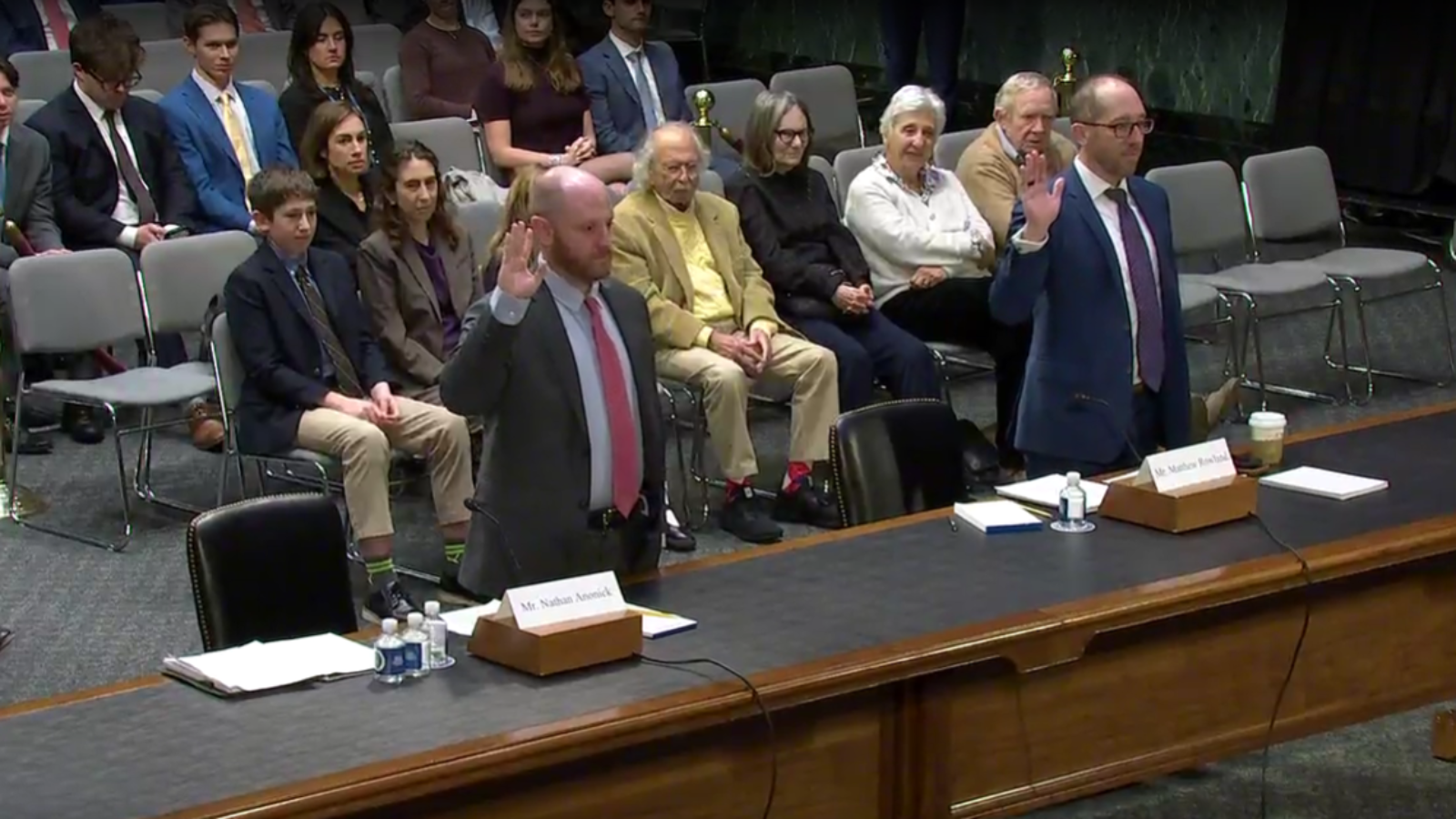
Nathan Anonick and Matthew Rowland were nominated by President Trump to become CFTC commissioners last Thursday. The two appeared in a joint hearing before the Senate Committee on Agriculture, Nutrition, and Forestry which oversees the CFTC, on their nominations Tuesday afternoon.
The pair come from opposite sides of the aisle, with Anonick being a Republican and Rowland a Democrat. They would end the more than a year long stretch of the CFTC being run by a single commissioner — it was designed to operate with five commissioners: three from the president’s party and two from the opposition.
Little clarity on prediction markets
Prediction markets were a major topic during the hearing, but Senators and observers got little clarity on where the two potential commissioners stand on the topic.
Sen. Adam Schiff asked Anonick whether a prediction market contract on the Buffalo Bills winning their next game was a sports bet. Schiff noted that he had asked current CFTC Chair Michael Selig a similar question in his own hearing, and that Selig said he would defer to the courts. After Selig became chair, the CFTC sued states that attempted to enforce their gambling laws against prediction markets.
Answering the question about the Bills contract, Anonick said, “I do think that question from a legal perspective is complex and that federal courts have disagreed on that.”
Anonick added that he would take all stakeholders on the topic seriously, but said it would be “irresponsible” to make a decision now.
“If I was confirmed and there was a matter before me, I would take the role as commissioner seriously. I think that means a robust, thorough fact finding process,” he said. “That means talking to the Office of General Counsel, that means talking to outside counsel, that means talking to the tribes and the states and all of the stakeholders, and anything before me would be my own decision, and I would own that.
“But out of respect for the seriousness that I think being a commissioner requires and going through that robust process, I don’t have a preconceived position because it would be irresponsible of me to make that position until I’ve gone through that process.”
Rowland also avoided directly answering questions on sports event contracts, though at times suggested he had some level of sympathy for the arguments of states and tribes that sports contracts should be regulated as gambling products.
In response to another question about whether sports event contracts were bets, this time from Sen. Tina Smith, Rowland again said he was sympathetic to the arguments of tribes and states, but also avoided taking a clear stance one way or the other.
“It’s hard for me to comment on the active litigation that the CFTC is engaged in, but I’m certainly very sympathetic to the concerns that the states and tribes have raised and would want to work with them further if I were confirmed,” he said.
Rowland supports some tighter regs
Rowland did seem to support tighter regulations on certain aspects of prediction markets’ operations. He said that he would back conflict-of-interest rules that address “vertically integrated entities.” Though he did not provide more specifics, this likely refers to rules about in-house market-making arms from companies that also own exchanges. DraftKings and Kalshi are among the companies that own both an exchange and a market-making arm.
“I think that the increasing participation of retail participants is really one of the kind of most significant changes or developments in the derivatives markets over the past few years, and I think it really has raised questions about whether the CFTC should take a closer look at updating its regulations,” Rowland said.
“I do think, as I said, in response to a previous question that the core principles are flexible and broad, but the CFTC needs to adapt the rules that implement those.
“Core principles, and I think in particular strengthening customer protections, and rules against conflicts of interests, in particular as we see increasingly vertically integrated entities operating in these markets are really important things that I would be in favor of, and marketing and advertising rules as well.”
Questions on CFTC staffing
The nominees also faced questions about CFTC staffing, both in terms of nominating two more commissioners to bring the commission back up to five, and its number of regular staffers, after significant job cuts since the start of 2025, while the agency’s scope grew.
In response to a question from Sen. Raphael Warnock, both nominees said they would support the addition of two more nominees, one from each party.
In response to a question from the committee’s minority leader, Sen. Amy Klobuchar, about staffing cuts, Anonick said he would look into the agency’s staffing needs.
“If confirmed, I would take a deep dive and get fulsome briefings into exactly what the staffing numbers are, what the plans moving forward are, and where the folks in the building that are privy to that kind of information think there needs to be additional technical expertise or changes. “Ultimately funding of the agency is up to the discretion of Congress, but I’d certainly support an appropriately resourced commission in order to fulfil its mission.”
Next step is committee vote
With the hearings complete, the next step will be for the committee to vote on whether to recommend Anonick’s and Rowland’s nominations. No date for that vote has been scheduled yet.
If approved, the nominations would then go to the whole Senate for a vote.
The hearings were held just five days after Anonick and Rowland were nominated, suggesting that the committee Chair John Boozman may be hoping to get the two nominees confirmed before the new class of senators is sworn in on Jan. 3. At that point, control of the Senate, and its committees, will switch from Republicans to Democrats.