Sports bettors could soon be able to trade the performances of teams like a stock, and use borrowed funds to do so, with commodities giant CME set to roll out futures contracts for indices that track sports teams’ performances.
In a press release Wednesday, CME said that the indices, which would be regulated by the Commodity Futures Trading Commission (CFTC), will launch this summer, “pending regulatory review.”
CME partners with FutureSports
The products will launch in partnership with FutureSports, which says that it “transform[s] team and athlete performance into continuous index values that rise or fall over the course of a season — in professional and collegiate sports.”
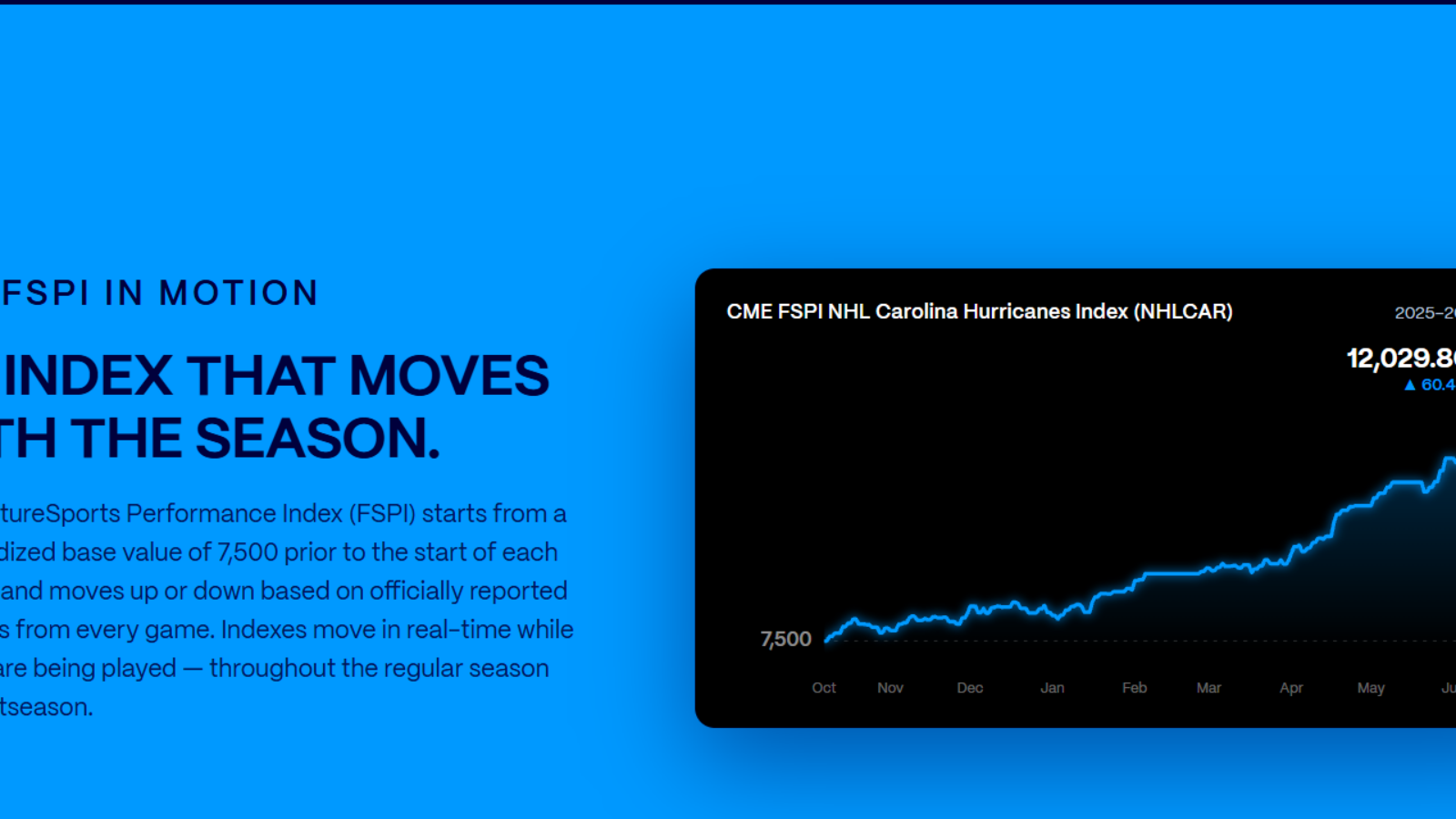
FutureSports offers indices on teams that start trading at 7,500 at the start of a season and move up or down based on in-game statistics. FutureSports says that it will “unveil its first series of exclusive partnerships with major sports leagues” soon.
Both FutureSports and CME advertised the hedging value of the new indices. For example, FutureSports said in its description of the products, “Potential market participants will include league broadcasting partners, team and athlete sponsors and endorsers, insurers, stadium owners and operators, private equity investors, lenders, and apparel manufacturers.” It added that “asset managers, pension funds, and professional trading firms are expected to participate” in trading. However, retail investors will also be able to trade and CME’s information page on the futures also said fans can “turn your fandom into a long or short position on your favorite teams to capture shifting performance.”
“CME Group is where the world comes to manage risk, and that’s exactly what we’re bringing to the business of sports leagues,” CME Group Chairman and CEO Terry Duffy said in a press release. “The contracts we’re developing with FutureSports are built on rigorous indexes and backed by the transparency and integrity that only exchange-traded products deliver.
“This isn’t just a new product — it’s about bringing real price discovery and risk management discipline to an industry that’s ready for it.”
Trading on margin allowed
As a futures product, the indices would face less strict regulations than event contracts, which are classed as swaps. The futures are set to be available on margin, which means that traders will be able to use borrowed funds. It is not yet clear what level of access to margin retail traders might have.
CME advertised that the setup as futures are “capital efficient” and allow “low-cost” exposure. “Trade on margin using less capital to control a larger position,” its page on the new products said.
The products are set to trade 24/7, including during games.
“We’re seeing incredible demand for these unique new contracts as hedging instruments from a broad range of potential participants, from stadium owners and operators, to sports sponsors and endorsers, insurers, sports apparel manufacturers, and league broadcasting partners, among others,” FutureSports co-founder Leigh Taylforth said in the press release. “The ideal trading venue for these first-of-their-kind instruments on a $650 billion global industry is CME Group, where there is already a vast community of institutional market participants and liquidity providers eager to trade innovative futures contracts.”
CME finding its place in new landscape
The new launch comes as CME — the dominant exchange in traditional commodities trading — aims to figure out its place in the world of prediction markets.
In August, CME agreed to form a joint venture with FanDuel to launch the sportsbook’s prediction market product. It later also made an agreement with DraftKings, allowing DraftKings to also offer its customers CME contracts. However, volume on its exchange remains fairly low, at under $10 million a day. DraftKings soon started offering contracts from Crypto.com, and later its in-house exchange DKeX, while FanDuel started offering Crypto.com contracts last month and also has a new application to become a futures commission merchant (FCM) independent of CME.
This week, CME was among the parties submitting a comment on the CFTC’s notice of proposed rulemaking on event contracts. CME’s response took issue with some types of prediction market contract offered by other exchanges, arguing that certain contracts have no economic utility and therefore shouldn’t be classed as swaps. The comment named so-called “mention markets” as one example of a contract that it believed did not meet the definition of a swap.
Last week, Duffy — who is set to step down as CEO next year — said on a company earnings call that certain sports contracts are at risk of manipulation and shouldn’t be offered.
“I think a lot of these contracts are susceptible to manipulation when they list some of these small parlays and things of that nature,” he said. “And those are not markets, those are gambling.”
CME has self-certified parlays, but does not appear to have actually offered them.