The U.S. sports betting world moves quickly and unpredictably in 2026. In order to properly take stock of it all, we offer InGame’s “EndGame,” an end-of-week compilation of the top storylines, some overlooked items, and all the other news bits from this past week that we found interesting.
Southern California tribe opens sportsbook
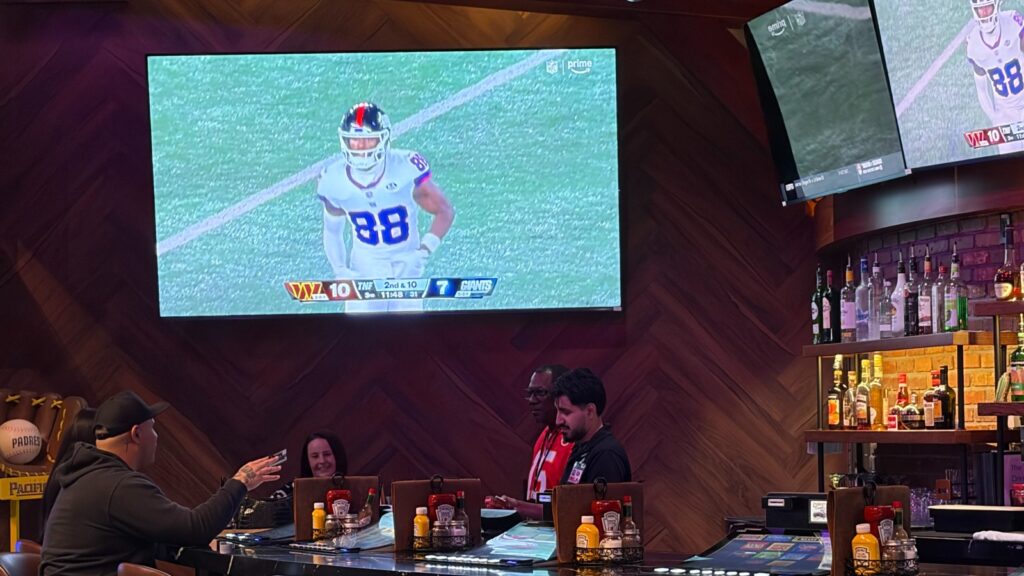
VALLEY CENTER, Calif. — A Southern California tribe opened the state’s first retail sportsbook Thursday, despite no new legislative or regulatory changes that would seem to make it legal. The Pauma Band of Luiseno Indians debuted its “Grove Sportsbook” at Casino Pauma, a repurposed sports bar with a wall of televisions and six betting kiosks nearby. Bettors can wager on all of the major professional and college team sports as well as MMA, boxing, golf, soccer, and tennis. The kiosks also have an in-game betting option. Betting is by kiosk the only method, as there are no teller windows.
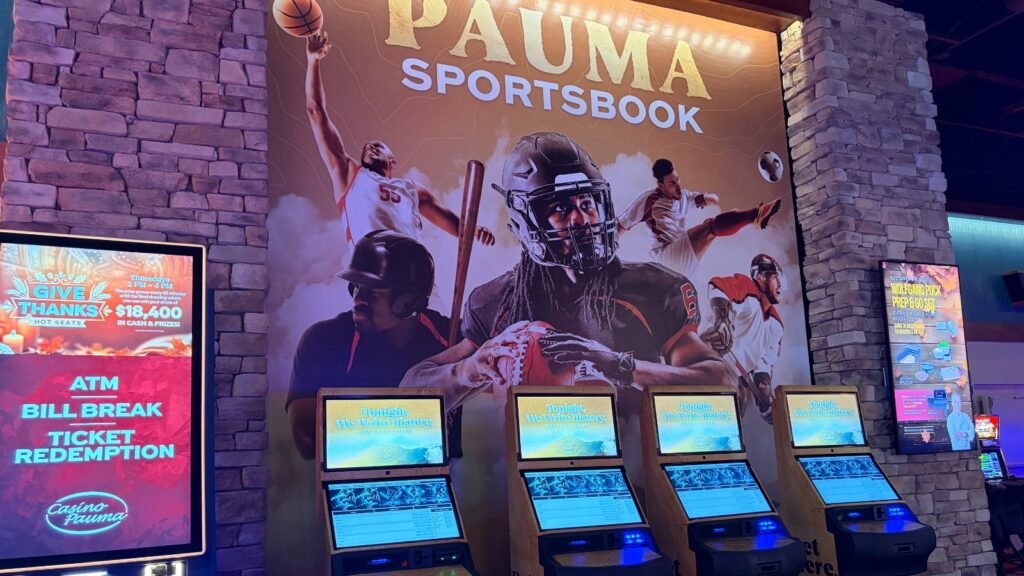
The tribe partnered with SCCG for the sportsbook. SCCG founder Stephen Crystal posted on LinkedIn earlier Thursday: “Today is the day! A ‘first’ to beat all other ‘firsts’ in the USA gambling industry … and will be a living testimony to tribal sovereignty. “
Billed as an “historic night for the Tribe,” former San Diego Chargers linebacker Shawne Merriman made the first bet. The tribe plans to launch on-reservation mobile sports betting in the future.
Sports betting isn’t legal in California, but the state’s tribes are aiming to put an initiative on the 2028 ballot that would legalize digital and in-person wagering. The Pauma tribe offers Class III gaming — like many other California tribes — and has a casino on its reservation under the Indian Gaming Regulatory Act (IGRA).
Sports betting is not explicitly included in the definition of Class III gaming in IGRA, which is why federally recognized tribes across the country traditionally re-compact before offering it. It’s also generally accepted that a state must legalize wagering before a tribe can offer it. for The Pauma tribe operates under “secretarial procedures” rather than a tribal-state compact, according to the California Gambling Control Commission website.
—Jill R. Dorson
Democrats rail against Trump, predictions
U.S. Sen. Catherine Cortez Masto of Nevada called out the Trump family Monday in an anti-prediction market tweet, and the following morning, U.S. Rep. Ro Khanna of California said the platforms “must be banned.” Some Democratic members of Congress have been calling for either a ban or more comprehensive federal regulation of prediction markets all year.
In her tweet, Cortez Masto said, “Let’s be clear about what’s happening: the Trump family is heavily invested in prediction market platforms. This move to undermine Tribal and state sovereignty is intended to create profits for the President’s family. That should outrage all of us.” The comments were in response to the Commodity Futures Trading Commission’s latest guidance on impartial access.
Given the Democratic outcry against prediction markets, in particular sports event contracts, over the last year, those in the gambling industry are predicting more meaningful congressional activity on the subject once the party is in control of both the House and Senate next year. Federal courts have also been weighing whether sports event contracts are, in fact, gambling, and three circuit decisions have found in favor of states or tribes. One has found in Kalshi’s favor. There is currently a petition before the Supreme Court to consider the issue.
— Jill R. Dorson
Tribal faction that signed Kalshi deal sued
The leadership dispute in Oklahoma Alabama-Quassarte Tribal Town was elevated to a court matter in late October, MVSKOKE Media reported last Friday. Sam Marshall, who claims he is the tribal chief, and the tribe filed a complaint against Wilson Yargee, Kalshi, and others. Yargee, who also claims he is the tribal chief, signed a deal with Kalshi in October to operate a prediction market platform.
The plaintiffs, who say that Yargee is not the rightful tribal chief, are seeking an injunction to keep the prediction platform off their lands. They also seek monetary compensation, both for the tribe and for Marshall for “damage to his reputation.” The complaint was filed in the district court of the Muscogee (Creek) Nation for the Omkulgee District.
The tribe is one of five that have signed deals with Kalshi to run prediction platforms under tribal branding.
— Jill R. Dorson
Odds and ends
- Texas is generating some buzz about legalized sports betting possibilities as a result of change in its top statewide offices in last week’s elections, and Dallas Cowboys owner Jerry Jones is certainly all for it. He said in a radio interview a week ago that he’s “apolitical,” but he’s all about what will benefit the Cowboys, and he counts the possibility of legal sports betting as one potential asset boosted by the results of the midterm elections in Texas.
- While most of the legal focus of prediction market sports event contract controversy centers around objections from states and tribal governments, one case in Washington state is based on complaints from a Kalshi customer. Ars Technica reported this week that Scott Bright has sued the company over more than $308,000 he lost on sports trades. Kalshi denies responsibility for any restitution, and at the very least, contends the case should be heard in federal instead of state court.
- ESPN has added a caution about prediction markets to its guidelines for employees to stay away from any possibility of insider trading based on their work-related knowledge, according to a memo obtained by Front Office Sports. As ESPN previously stressed to its employees about use of sportsbooks, they were told not to use any non-public information they gained access to for purposes of betting on such possibilities as player personnel decisions, league awards, and sports media deals.
ICYMI
Democrats Win The Gavel, But Not The Veto
Prediction Markets Once Again Complicate Congressional Hearing
CFTC Reportedly Warns Kalshi Of Impending Charges
Arkansas And MIssouri As Polymarket, Underdog, Robinhood, And Crypto.com Sue States
Kalshi Market Makers Record Big Profits As Takers Lose On Midterm Elections
The Smartest People In The Room Are Having The Dumbest Argument
There Won’t Be Any Online Sports Betting In Wisconsin This Year
Gambler Wants To Win His Friends’ Money, So He Built Them A Website
Clase-Ortiz Prosecution Witness: ‘Insider Information’ Ceased After Mizuhara Indictment