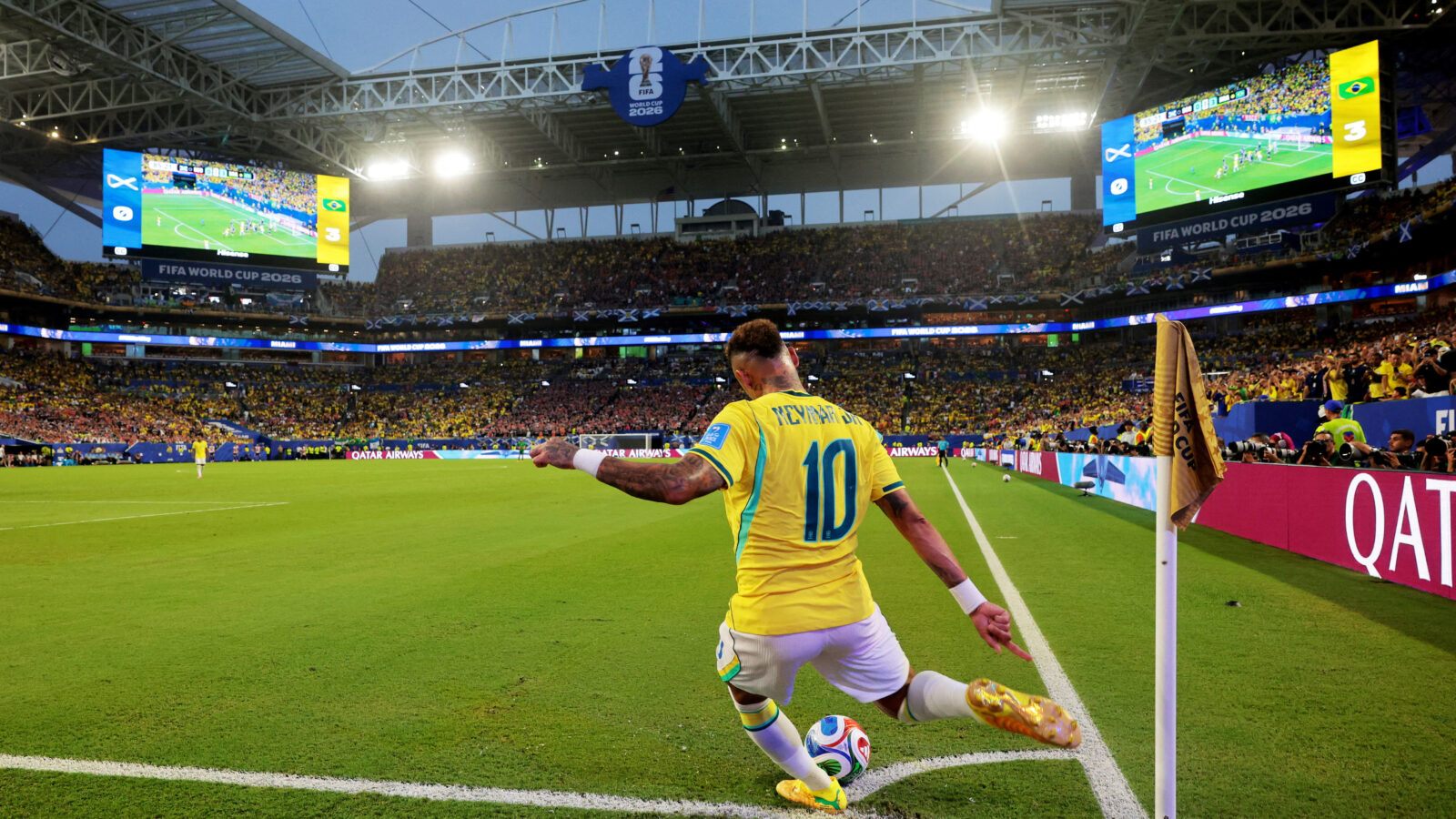
Kalshi hit another record high in volume Wednesday, with trading more than double that of the Super Bowl. The prediction market has now processed more than $17 billion in volume during the first two weeks of the 2026 FIFA World Cup.
Before June 13, volume had never even come close to one billion dollars in a single day. However, it has now exceeded that figure every single day since June 13.
The growth has been primarily driven by parlays, though non-parlay volume is also at record highs. Since June 11, parlays have made up almost half of Kalshi’s volume, topping half a billion dollars in volume on some days.
Parlays can arguably inflate volume when compared to sportsbook volume, as prediction markets count both sides of the trade in volume and the maker side of the trade for parlays is usually a professional or institutional market maker that typically puts up the majority of the money due to parlays being at long odds.
Looking just at the takers betting yes on parlays presents a more comparable figure to handle. Retail Kalshi users have been staking a little over $30 million per day on parlays in recent days — high, but still below major sportsbooks.
Parlays of World Cup match results have been the most popular, with six different multi-game parlays on match winners each attracting more than 20,000 separate trades.
Even without parlays, volume has been breaking records. Volume excluding parlays on June 24 topped the billion-dollar mark.
Overall, yes-side takers on Kalshi — a conservative proxy for sportsbook handle equivalent — bet $329.1 million on June 23 and have averaged more than $250 million in volume in the past week. Averaged out over a year, those figures would be nearly double DraftKings’ sportsbook handle.
Overall taker volume — a more generous estimate of handle equivalent — topped $500 million on June 24 and averaged more than $400 million a day over the past week.
Taker losses
Retail trader performance has been up and down during the tournament, but as usual, takers generally end up with less than they bet. Total taker losses over the last two weeks are almost $150 million, with the majority of that coming on fees.
Takers have more or less broken even before fees on non-parlay bets, but they paid more than $100 million in fees. On parlays, though, they have lost $21 million before fees over the last two weeks, plus another $15 million in fees.
The surge in volume unsurprisingly translated to record revenue for Kalshi too, albeit not as dramatically as volume, as Kalshi’s fee formula means that fees are a lower percentage of volume on parlays.
Kalshi fees
InGame analysis of Kalshi trades show that on June 24, Kalshi made $13.5 million in fees, a new high, and its fee revenue topped $75 million over the last week. A year at that level would mean $4 billion in fee revenue. At the start of 2025, Kalshi’s fee revenue was less than $50,000 per day.
Kalshi has now made $1.15 billion in fee revenue since launching, with $850 million of that coming in 2026. Fee revenue from sports contracts alone should hit $1 billion before the end of the day Friday.
Parlays alone have brought in a little over $90 million in fee revenue for Kalshi since launching.
Growth comes despite losing Robinhood flow
The rise in volume comes despite Kalshi losing much of its flow from one of its largest sources of customers — Robinhood, which now routes a large portion of its user base to its in-house exchange Rothera.
Volume on Rothera topped $100 million per day during the World Cup and hit $125.4 million on June 24. That means that Kalshi’s volume may have approached $2 billion in a day if not for the loss of Robinhood customers.