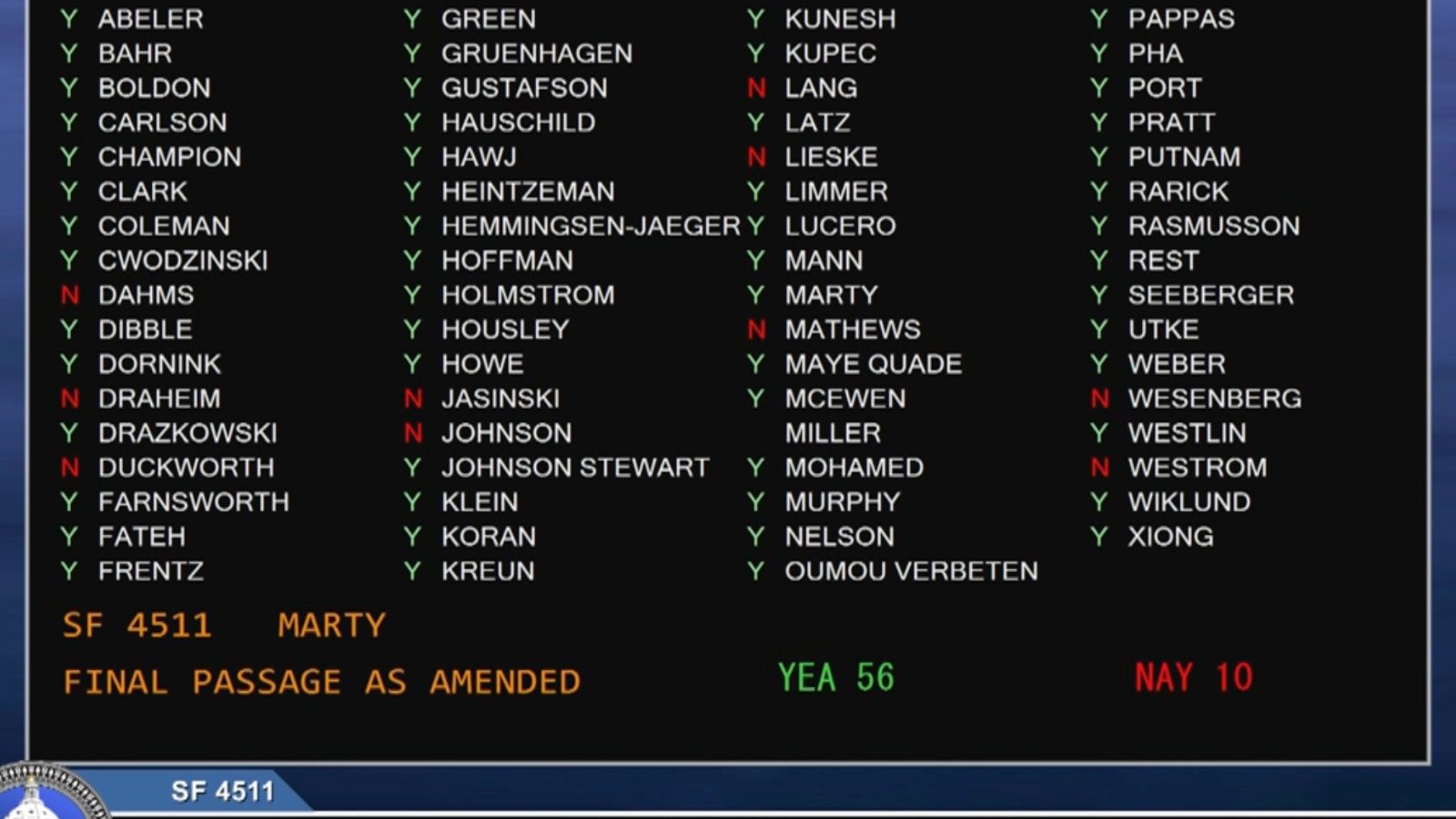
Minnesota’s Senate approved on Thursday SF 4511, the bill that would ban prediction markets in the state. Sen. John Marty introduced the bill late in the session and has been pushing for it to be passed this session because he fears “given the damage this is doing … a year or two will be too late.”
Several other states are considering similar legislation, but none have passed it. The Minnesota bill passed, 56-10, and the House will have about two weeks to take action as the session is scheduled to close May 18. According to MPR News, the House later Thursday inserted the text into a public safety bill.
During the hour-long Senate floor debate, there was much discussion about whether or not passing the legislation would open the state to legal action. In addition, some senators voiced concern about the scope of the bill and whether or not it would limit some forms of more traditional futures trading. Marty repeatedly assured his peers that the bill is focused on not allowing sports event contracts and online gaming. Sports betting is currently not legal in Minnesota, and a bill to legalize it is stalled.
Since Kalshi first began offering sports event contracts in January 2025, the platform and others have been offering trades on everything from weather to sports to traditional commodities or interest rates. The trades are currently classified as financial tools, and are not subject to state gambling regulation.
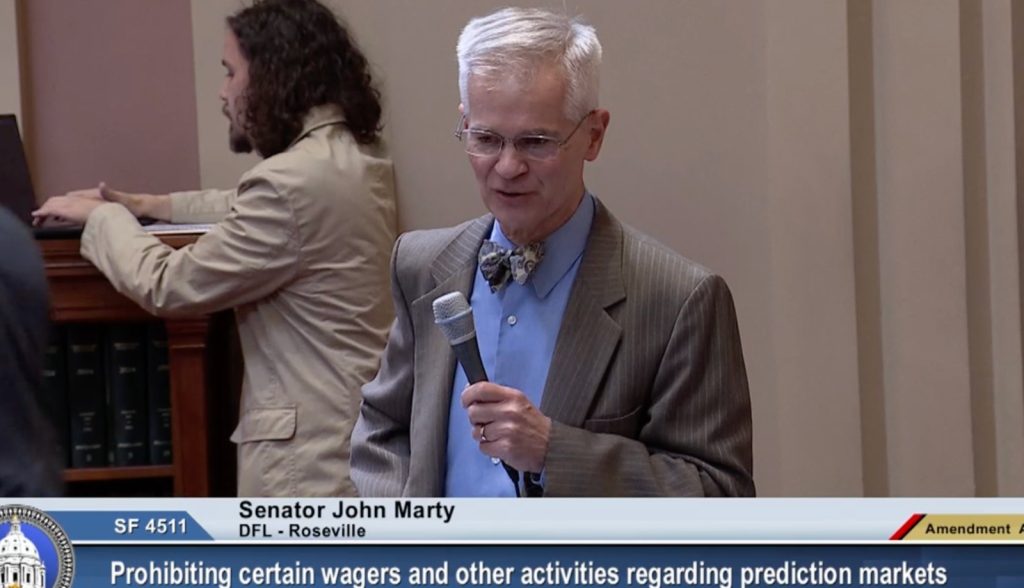
Senate Minority Leader Mark Johnson offered the A-10 amendment, voicing his concern that passing the bill would cost the taxpayers money due to potential lawsuits. Via the amendment, he proposed adding language to the bill that would have made clear that if it is determined that the federal Commodity Futures Trading Commission (CFTC) has jurisdiction over prediction markets, then the state would not be able to regulate it.
Johnson said he wanted to wait until current court cases — there are about a dozen across the U.S. — between prediction markets, the CFTC, states, and Indian Country are resolved. Marty argued that the language would neuter the bill, and after significant pushback from others, Johnson withdrew the amendment.
The bill does carve out securities and more traditional commodities, which is critical in an agricultural state like Minnesota where farmers, for example, can hedge risk with futures contracts. The section of the bill dealing with contracts on weather was amended to allow for futures trades.
In other news …
Here’s a look at movement of other bills across the country:
Colorado: The Senate approved on Tuesday SB 131, which would ban some push notifications and set a cap on deposits. It was heavily amended on second reading and passed on third reading, 20-14. It’s been assigned to the House Finance Committee with 12 days left before the session ends.
Iowa: The legislature was initially scheduled to adjourn April 21, but remains in session as it tries to hash out budget bills. A Senate bill that would put a regulatory structure around prediction markets moved out of a House subcommittee Monday. SF 2470 would impose a $20 million licensing fee and require prediction market platforms to pay taxes either on “adjusted revenues or amounts traded.” The proposal sets the tax rate on either at 20%. The bill passed out of the Senate March 31 and had been stalled in the House Ways and Means Committee.
Ohio: A bill that would create a regulatory framework for prediction platforms and designate them as sports betting was introduced Monday. Should SB 430 pass, prediction platforms would be subject to the same rigorous standards as state-licensed sports betting operators, including obtaining a license and paying a 20% tax on adjusted gross revenue. Ohio’s legislature runs year-round.