SAN DIEGO — California tribal leaders said Thursday they are still aiming to run a tribal-led online sports betting initiative in 2028. Between now and then, they will continue to fight prediction markets, which some view as the biggest threat to sovereignty and exclusivity since before the Indian Gaming Regulatory Act (IGRA) was passed in 1988.
When asked directly if California Indian Country was still planning a 2028 run at the ballot, California Nations Indian Gaming Association (CNIGA) Chair James Siva replied, “Yes, yes, we’re still very much looking at 2028 as the date that tribes are preparing to move forward with a tribally led initiative for an online sports betting market.”
California’s tribes have compacts that give them exclusivity to Class III gaming, including sports betting, and any expansion of gaming in California must go before the voters.
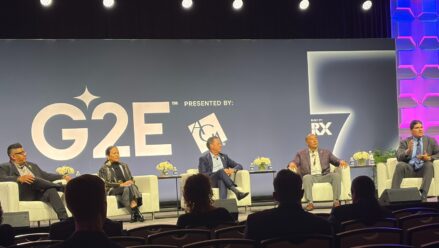
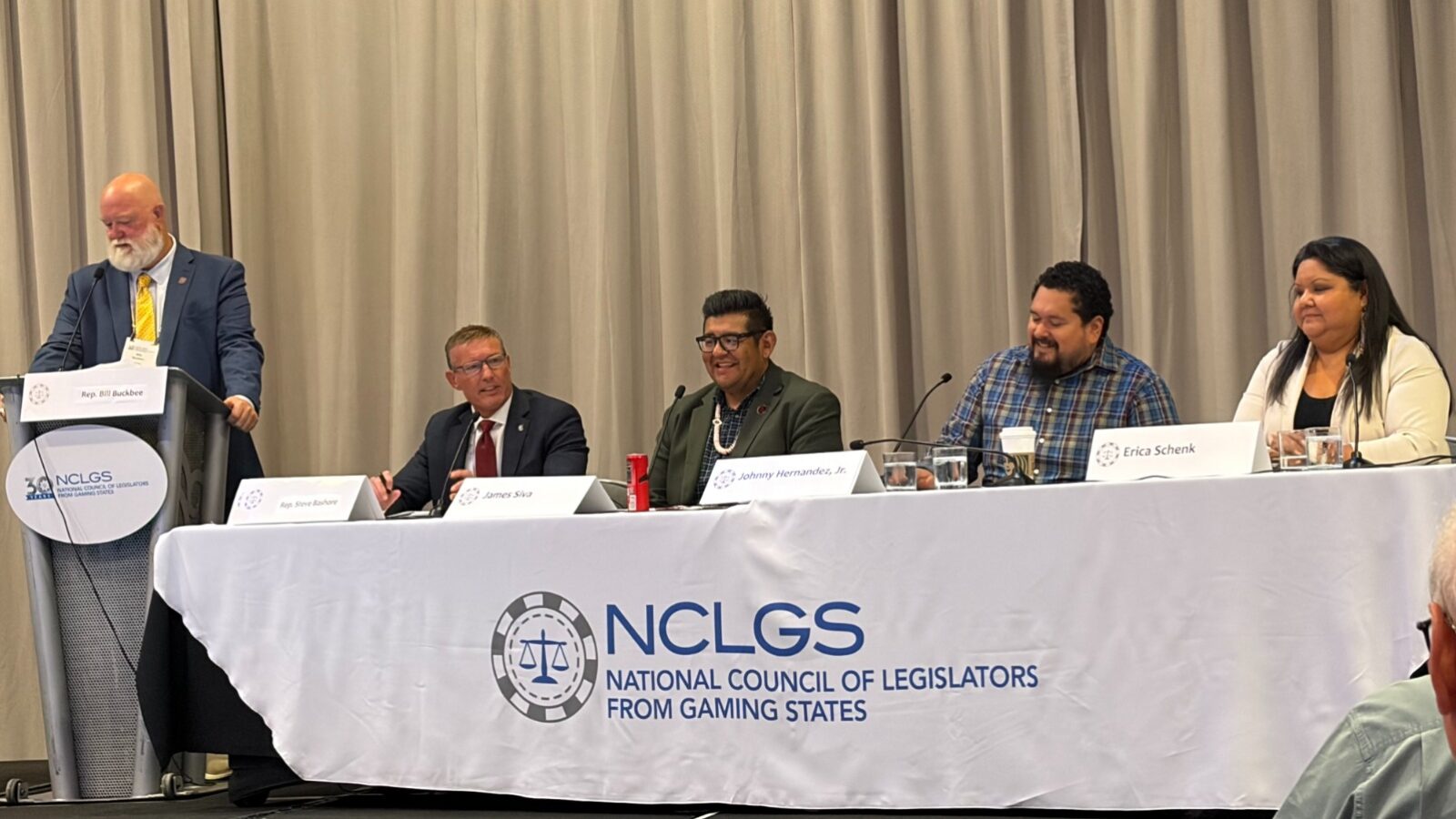
Tribal leaders made the comments during a panel at the National Council of Legislators from Gaming States (NCLGS) Summer Meeting at the Hard Rock Hotel. Cahuilla Band of Indians Chair Erica Schenk and Yuhaaviatam of San Manuel Nation Vice Chair Johnny Hernandez Jr. joined Siva on the panel, which was moderated by Connecticut Rep. Bill Buckbee and Oklahoma Rep. Steve Bashore.
The legalization of sports betting has been a contentious issue in California, and in 2022, the tribes killed their own initiative that would have allowed for in-person wagering and focused on opposing a commercial-led initiative. More than 80% of voters sided with the tribes, resulting in one of the most lopsided initiative votes in state history.
Tribes looking for predictions ‘kill shot’
Of interest is what the tribes will — or won’t — do between now and November 2028. While legislatures in other states are starting to take action regarding prediction markets — Illinois lawmakers banned the platforms last month while North Carolina lawmakers decided this month to tax but not regulate them — Siva said California Indian Country has killed bills relating to prediction markets this session.
“Any bill that codifies a piece of this action just helps their argument,” he said. “If we say, ‘Oh, we believe it’s illegal, and we’re going to say it’s illegal for this group to participate,’ then we’re saying that ‘the rest of you are legal to participate.’ We are looking for a complete outlaw of them as an industry, that’s what we’re looking for.
“It’s that kind of kill shot. Anything short of that is going to be hard pressed to find tribal support.”
Schenk and Hernandez seconded Siva’s strong words. Schenk said her tribe’s top priority is “sovereignty protection” no matter the opponent. She said the sports event contracts offered by prediction markets are “taking the food literally out of our tribal members’ mouths,” because online prediction markets draw them “away from the physical casino.”
Hernandez, representing one of the richest gaming tribes in California, said the last initiative result proved that Californians “trust the tribes” and the “fight continues on.” He said that he and others in Indian Country monitor developments around the U.S. as they continue to plot strategy. Hernandez specifically noted the latest bill in Ohio, which would ban legal online sports betting, and monitoring of how compact negotiations move forward in Wisconsin under its new betting law.
In April, Wisconsin became the second state in the nation to give its tribes complete exclusivity. The law calls for a hub-and-spoke online wagering setup that will allow Wisconsin tribes, like the Seminoles in Florida, to offer statewide mobile sports betting under an IGRA model. That means the tribes control the licenses, and a commercial partner must pay a tribe 60% of revenue.
“We look at the votes, polling, when is the right time to bring it forward to the voters,” Hernandez said. “We’re closely watching in Wisconsin to see what’s going on, and we saw those bad actors, those who are against IGRA, those are the ones to watch.”
Unity, equity priorities
For now, California tribal leaders will continue to unite and seek consensus among the state’s 109 tribes. Of those, 73 are non-gaming tribes, though Siva said they also benefit from gaming via a first-of-its-kind Revenue Sharing Trust Fund created to ensure equity and that all tribes get a piece of the gaming pie.
It’s been a long road since 2022, and Siva is among the tribal leaders who have traveled across the state to educate peers. The rise of prediction markets has helped ignite that process. He said that prediction platforms are already siphoning up to 5% of gaming revenue from tribes. Should that number reach 10%, things for California Indian Country could become catastrophic.
“We look at the prediction markets that have absorbed so much of our time,” Siva said. “It’s the largest threat we face. Tribal and state sovereignty are at issue. It’s another instance of federal overreach.
“As we look at next 5-10 years, it’s about protecting what we built and … and preserving our situation so we are not set back by 30 years.”