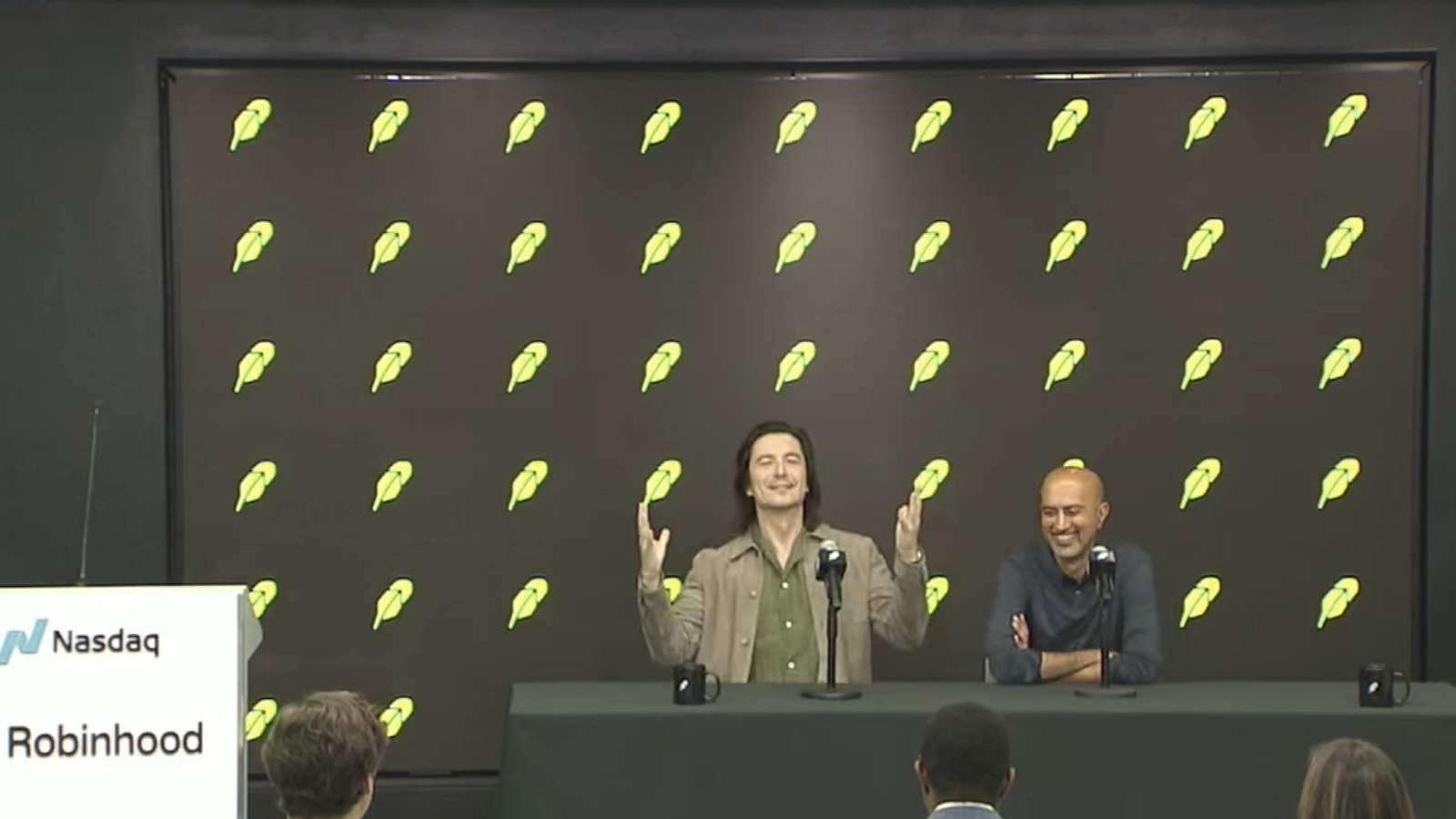
Robinhood executives reverted Wednesday to talking about the stock trading app as a channel to multiple prediction market exchanges, not just in-house exchange Rothera.
CEO Vlad Tenev said on Robinhood’s earnings call that the company’s goal should be to ensure customers are routed to where they would get the best value. The comments came after Robinhood published its second quarter results.
During the quarter, Robinhood launched its in-house exchange, Rothera, via a joint exchange with market maker Susquehanna International Group.
Robinhood said it made $156 million in revenue from prediction markets during the quarter.
Users traded 13.6 billion event contracts, which are priced at a dollar each.
That means Robinhood made more than a cent per contract. Robinhood charges exactly 1 cent for each Kalshi or ForecastEx contract its users trade, so the additional revenue is a sign of the impact of Rothera.
In June, after Rothera had launched, Robinhood traded 6.4 billion event contracts, easily breaking its previous records. Regulatory filings show that around 2.1 billion contracts were traded on Rothera in June, meaning around 4.3 billion contracts executed on Robinhood were traded on other exchanges, virtually all Kalshi. That is in line with InGame’s estimates from earlier this month.
Volume on Rothera has dipped back down below $10 million per day since the 2026 FIFA World Cup ended. During the tournament, virtually all non-parlay World Cup trades executed via Robinhood went through Rothera, as did most trades on Wimbledon, but most other traffic went through Kalshi.
Tenev said “the World Cup was really a proof-of-concept there,” suggesting the business never planned to keep ramping up volume to Rothera immediately after the tournament ended.
When Robinhood and Susquehanna formed the joint venture that became Rothera and bought a designated contract market, a spokesperson told InGame that the business would continue to support access for its customers to multiple exchanges.
Just before the launch of Rothera, however, Verma talked up the prospect of Rothera being responsible for almost all volume from Robinhood and of other exchanges existing as a “backup.”
Now, it appears that Robinhood is leaning back toward more of a multi-exchange setup, even if the majority of activity goes to Rothera.
Directing customers to best exchange
Tenev said that part of Robinhood’s value proposition would be that it could direct customers to whichever venue provided them the best deal, rather than being tied to one exchange.
“Can we route to multiple venues with the goal of making sure as a customer you get the best deal on Robinhood?” he asked.
Chief Financial Officer Shiv Verma said that Robinhood would continue to increase the share of volume that goes to Rothera in the “near to medium term.” However, he stopped short of saying that trades would be overwhelmingly directed toward Rothera.
“You should expect in the near to medium term, more than the majority — or a good portion — will flow to Rothera,” Verma said. “We’re still making sure it can scale, and after one month it’s already doing tremendous volume, but you should expect that more and more should go through there.”
Tenev expressed a similar sentiment.
“I think we’re invested in Rothera and we think the economics there are great, and we intend to push more flow there,” he said. “At the same time, we’ve always connected to other counterparties. We connected first to ForecastEx, then to Kalshi, and then Rothera.”
Despite the strong prediction market performance, Robinhood cut its full-year earnings guidance amid a slow performance in crypto trading. That led to its shares falling 3.3% in early trading to $86.62 as of 9:40 a.m. Thursday, a 27% decline since July 6.