
What is the Polymarket promo code?
The current Polymarket US welcome offer is Deposit $10 & get a $20 trading bonus. Use invite code INGAME during registration to unlock the offer.
When I tested the offer, the $20 bonus showed up shortly after my qualifying deposit cleared. I used mine on markets I already understood, which is how I’d suggest treating any trading bonus here. The credits are not withdrawable cash, but eligible profits made with those credits can be withdrawn once your account clears verification.
The catch I’d flag before you sign up: this is still a regulated trading app, so eligibility checks matter. You may need to complete identity verification, sanctions screening, and other account checks before you can fully use the app or withdraw eligible profits. Promo terms can also change, so use the bonus while it’s active instead of assuming it will sit there forever.
Polymarket Promo Code at a glance
| 💰 Welcome Bonus | Deposit $10 & get a $20 trading bonus |
| 🎟️ Promo / Invite Code | INGAME |
| 💵 Minimum Deposit | $10 to qualify for the bonus |
| 📊 Bonus Type | Fixed trading bonus credits; bonus credits are non-withdrawable, but eligible winnings may be withdrawn after verification |
| 🔞 Legal Age | 18+; higher age rules may apply |
| 🌎 U.S. Availability | U.S. Availability: iOS app live for eligible users; Android coming soon/not broadly available |
| 📱 Mobile App | iOS (4.6/5 ⭐) |
| 💲 Trading Fees (U.S.) | Taker: 5% coefficient (parabolic); Maker: rebate (1.25% coefficient) |
| 🏛️ Regulator (U.S.) | CFTC (via QCEX acquisition, Designated Contract Market) |
| ⏰ Bonus Expiry | 7-30 days after activation |
| 💰 Valuation | Reportedly discussed at around $15B; ICE is a major backer |
Claim Your $20 Polymarket Trading Bonus with Code INGAME →
18+ Only. Restrictions and eligibility requirements apply. Not available in all jurisdictions. Trading involves high risk and may result in loss of your entire investment. See polymarket.us/tos for more information. The Polymarket US App serves as an independent software provider and affiliate of Polymarket US and Polymarket Clearing, the CFTC-regulated derivatives exchange and clearing organization.
What Is Polymarket?
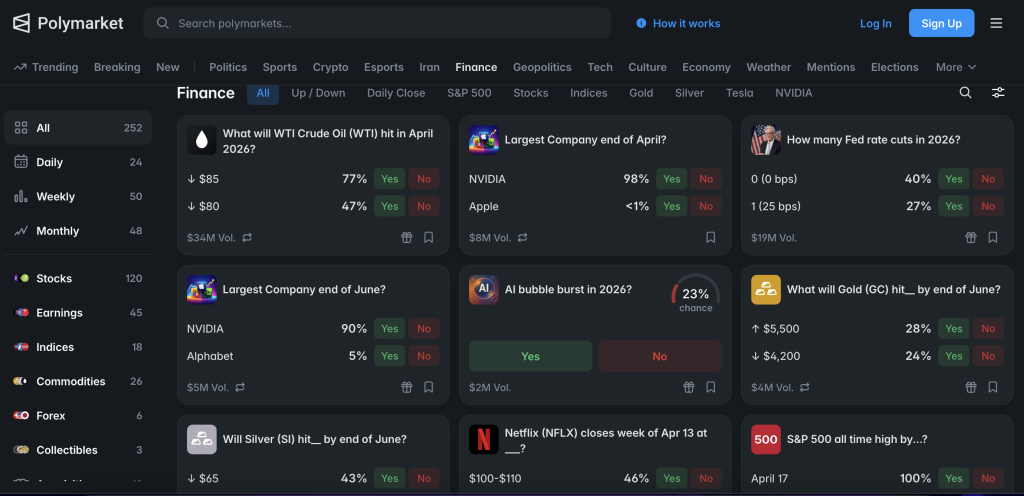
Polymarket is one of the biggest names in prediction markets, and it’s the platform that made event-contract trading feel mainstream during the 2024 election cycle. Founded in 2020 by Shayne Coplan, Polymarket lets users trade event contracts, which are yes/no markets tied to real-world outcomes. That can mean presidential elections, Bitcoin price targets, Fed rate decisions, weather markets, or, increasingly, sports.
There are now two versions worth separating. The international Polymarket site is the crypto-native version built on Polygon, with markets settled in USDC. That’s the product most longtime Polymarket users know. U.S. users, however, now access Polymarket through the separate Polymarket US App, which connects to Polymarket US and Polymarket Clearing, the CFTC-regulated exchange and clearing entities behind the U.S. product.
Intercontinental Exchange (ICE), the company that owns the New York Stock Exchange, became one of Polymarket’s biggest backers through an investment agreement worth up to $2 billion. ICE announced the deal in October 2025 at an approximately $8 billion pre-investment valuation, then followed with another $600 million direct investment in March 2026 as part of Polymarket’s broader fundraising. For a sports prediction market that was still fighting its way back into the U.S. at the time, that was a serious stamp of credibility.
Polymarket has also moved aggressively into sports, announcing deals with the NHL, UFC, PrizePicks, MLS, MLB, and LaLiga between late 2025 and spring 2026. The point is not just brand exposure. These deals give Polymarket more league data, integrity guardrails, and fan-facing credibility as event contracts push closer to the sports betting mainstream.
Polymarket U.S. Status: Key info
I got onto Polymarket’s U.S. beta in late January, back when you still needed an invite code and a little patience. That is no longer the iOS experience. Polymarket removed the U.S. iOS waitlist in May 2026, so eligible users can now download the app and sign up without waiting for a code. Just don’t expect the full international Polymarket experience. The U.S. product is a separate, regulated version of the platform, connected to Polymarket US and Polymarket Clearing. It has more markets than it did during the early sports-only beta, but it still feels leaner than the crypto-native Polymarket people remember from the 2024 election cycle.
Here’s the short version of developments to date:
- 2020: Polymarket launches as a crypto-native prediction market and quickly becomes one of the best-known names in event-contract trading.
- 2022: Polymarket settles with the CFTC for operating an unregistered platform in the U.S. and shuts off U.S. access. The international platform continues to operate outside the U.S.
- July 2025: Polymarket acquires QCEX, a CFTC-regulated exchange and clearinghouse, clearing the legal path for a U.S. return.
- September 2025: The CFTC publishes a no-action letter formally granting Polymarket permission to re-enter the U.S. market.
- December 2025: Polymarket begins a limited rollout, invite-only, sports markets only, via the mobile app.
- April 8, 2026: Polymarket expands U.S. offerings to include economics and elections markets, timed to the midterm primary cycle.
- May 12, 2026: Polymarket removes the U.S. iOS waitlist. Eligible iPhone users can download the app and sign up without an invite code.
- Mid-2026: The Android app appears on Google Play, though access and trading availability can still vary by user, device, and jurisdiction.
The practical implication: Polymarket US is much easier to access than it was during the beta, especially on iOS. But it is still not the same thing as the international Polymarket site. U.S. users should expect a more regulated app experience, a smaller market menu, identity checks, and jurisdiction limits.
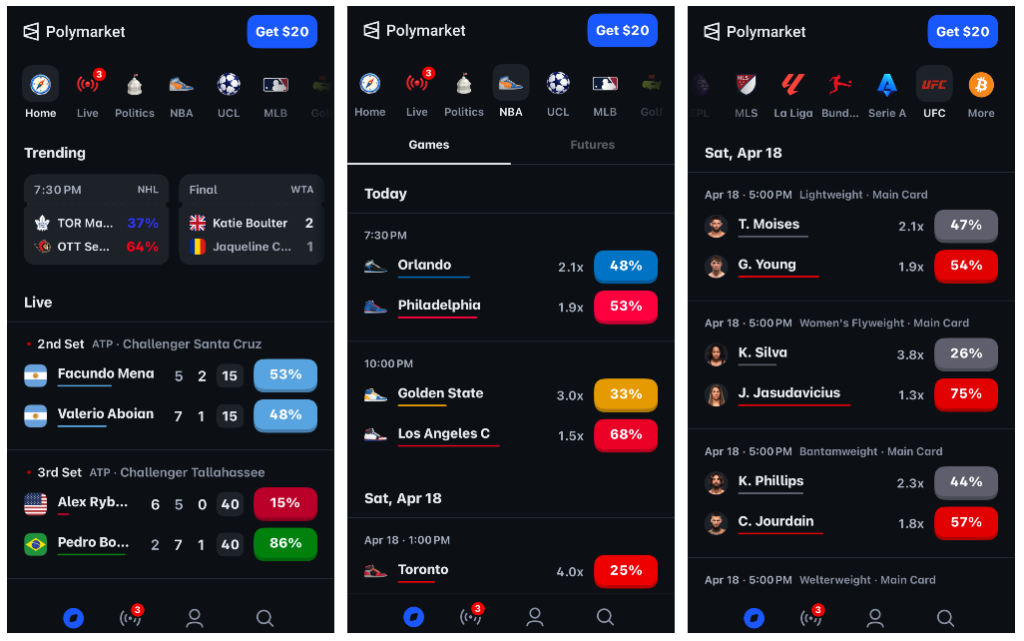
Meanwhile, the international version of Polymarket still carries the deeper menu of politics, crypto, sports, and global event markets. U.S. users may be able to view some of those markets, but they cannot legally trade on the international platform. Trying to get around those restrictions can violate Polymarket’s terms of service, so U.S. users should stick with the separate Polymarket US App.
How to Sign Up & Claim the Polymarket Promo Code
Getting onto Polymarket’s U.S. platform means using the Polymarket US App. The web version is useful for browsing, but U.S. trading runs through the app experience. Here’s how the signup process works:
- Download the Polymarket app from the Apple App Store, or from Google Play if you’re on Android (Android access is still rolling out).
- If prompted, enter code INGAME to apply the welcome bonus. That is the code tied to the current “Deposit $10 & get a $20 trading bonus” offer.
- Create your account using your email address or Google login.
- Complete identity verification (KYC). Because Polymarket US connects to CFTC-regulated exchange and clearing entities, you should expect KYC checks, and eligibility or sanctions screening may apply.
- Fund your account. Deposit at least $10 using a credit or debit card, bank transfer, or crypto (USDC). The U.S. version handles fiat-to-USDC conversion behind the scenes, so no crypto wallet required.
- Claim your $20 trading bonus. Once the qualifying deposit clears and the promo is applied, the bonus is credited as trading credits.
- Start trading. Browse available markets (sports, elections, economics) and buy or sell contracts.
When I tested the signup flow, verification took about 90 minutes, which was faster than I expected. I would not count on that every time, though. ID quality, account checks, and demand can all slow things down, so give yourself some room if you’re signing up before a specific game or market closes.
Claim Your $20 Polymarket Trading Bonus with Code INGAME →
Promo Code Terms & Conditions
- Must be 18 years or older (19+ or 21+ depending on your state’s specific laws).
- Must have a legal U.S. residential address and be physically located in an eligible state.
- Invite code INGAME must be entered during registration to activate the bonus.
- Requires identity verification (government-issued photo ID).
- Minimum qualifying deposit of $10.
- The $20 bonus is credited as non-withdrawable trading credits. Profits earned from trading with bonus credits can be withdrawn.
- Bonus must be used within 7-30 days of activation or it expires.
- One bonus per customer. First-time users only.
- Polymarket reserves the right to change, pause, or end the promotion at any time.
Polymarket vs. Kalshi vs. Novig vs. Crypto.com (CDNA): Promo Comparison
Polymarket’s $20 trading bonus is one of the easiest prediction-market promos to understand: deposit $10, get a $20 trading bonus. Kalshi has the bigger ceiling with “Trade $25 and get up to $500,” but it requires more trading to unlock. Whether that makes it the better offer depends on how much friction you’re willing to tolerate. Here’s the full landscape:
| Polymarket | Kalshi | Novig Prediction | Crypto.com (CDNA) | |
|---|---|---|---|---|
| Welcome Bonus | $20 Trading Bonus | Trade $25 and get up to $500 | Deposit $10, get $25 in Trade Credits | Up to $50 in CRO (crypto trading only, not prediction markets) |
| Bonus Type | Trading bonus credits | Trade & get | Trade Credits | Task-based crypto bonus |
| Min. Trade | $10 to get the bonus | $25 to unlock the offer | $10 qualifying deposit | Varies ($100-$500 crypto trade required) |
| Regulator | CFTC (U.S. version) | CFTC | CFTC through Ludlow Exchange, LLC | CFTC (via CDNA) |
| U.S. Availability | 49 states + DC (Nevada restricted) | 49 states + DC (Nevada restricted) | Eligible U.S. states; restricted in AZ, MI, NV | 49 states (not NY; sports restricted in additional states) |
| Trading Fees | 5% taker coefficient; maker rebates | 7% taker coefficient; 1.75% maker coefficient | Pre-game straight trades and maker fills free; live taker/parlay fees apply | $0.10 exchange + $0.10 tech fee per $10 contract |
| Markets Beyond Sports | ✅ Politics, crypto, economics, culture, geopolitics | ✅ Politics, economics, weather, culture | ❌ Sports-focused | ✅ Politics, economics, culture, finance |
| Interest on Balance | No | Yes (~3-4% APY) | No | No |
| Currency | USD | USD | USD / Trade Credits for promotions | USD and crypto |
Bottom line: Polymarket’s $20 trading bonus is guaranteed on a $10 deposit, while Kalshi’s offer requires a $25 trade to unlock up to $500 – a bigger ceiling, but conditional. Polymarket is only available for iPhone users, which is the bigger practical gap right now
Two Platforms, one name: Polymarket International vs. Polymarket US
There are effectively two different products operating under the same brand, and the confusion between them trips up some users. Here’s the short breakdown:
| Polymarket International | Polymarket U.S. | |
|---|---|---|
| Status | Fully live (180+ countries) | iOS app live for eligible U.S. users; Android coming soon |
| Regulator | Unregulated (decentralized, crypto-native) | CFTC (Designated Contract Market via QCEX) |
| Settlement | UMA Optimistic Oracle (decentralized, token-weighted voting) | Markets team determines outcomes |
| Markets | Everything (politics, crypto, geopolitics, sports, culture, economics) | Sports (since Dec 2025); economics & elections added April 2026, more to come |
| Fees | Varies (Sports ~0.75%, Crypto ~1.80%); many markets fee-free | 5% taker coefficient; maker rebates (1.25% coefficient) |
| Funding | USDC only (crypto wallet required) | Credit/debit card, bank transfer, or crypto |
| KYC Required? | No | Yes (gov’t ID) |
When most people talk about “Polymarket,” they’re usually referring to the international version. That’s the one that went viral during the 2024 election (remember the French whale) and processes billions in monthly volume. The U.S. version is a separate, regulated product that’s still ramping up. If you’re a U.S. resident, the U.S. version is the only legal way to trade on Polymarket.
Is Polymarket Legal in the U.S.?
Yes, the U.S. version of Polymarket is legal. The platform acquired QCEX, a CFTC-licensed exchange and clearinghouse, in July 2025, and the CFTC published a no-action letter in September 2025 authorizing Polymarket’s U.S. return. The U.S. platform operates as a Designated Contract Market under federal oversight, just like Kalshi.
Because it is federally regulated, Polymarket is authorized to operate in all 50 U.S. states, though that status is being actively contested. Like Kalshi, Polymarket now faces state-level pushback — most notably Minnesota’s outright ban on prediction markets (effective August 1, 2026), which the CFTC and Kalshi are both suing to block. Polymarket hasn’t drawn as much individual enforcement attention as Kalshi so far, but the two platforms are increasingly named together in state actions.
When volume scales up, the state attorneys general currently hammering Kalshi will notice. Polymarket has ICE money, major sports league deals, and a million-plus users waiting. It will become a target. The question isn’t whether, but when. For a deep look at that legal battle, see our coverage of the states vs. federal prediction markets conflict and check the news section for frequent updates and reporting.
The international version of Polymarket has a different legal status. It’s not regulated by the CFTC and was previously found to have operated unlawfully in the U.S. (resulting in the 2022 settlement). U.S. residents cannot trade on the international platform. Technically. Some users access it via VPN anyway, which violates Polymarket’s terms of service and, depending on your state, may raise other legal questions.
Markets available on Polymarket
Polymarket has the widest variety of prediction markets of any platform in the world, but most of that variety lives on the international side. The U.S. version started with sports only (December 2025) and expanded to include economics and elections in April 2026.
Sports (U.S. version, live now)
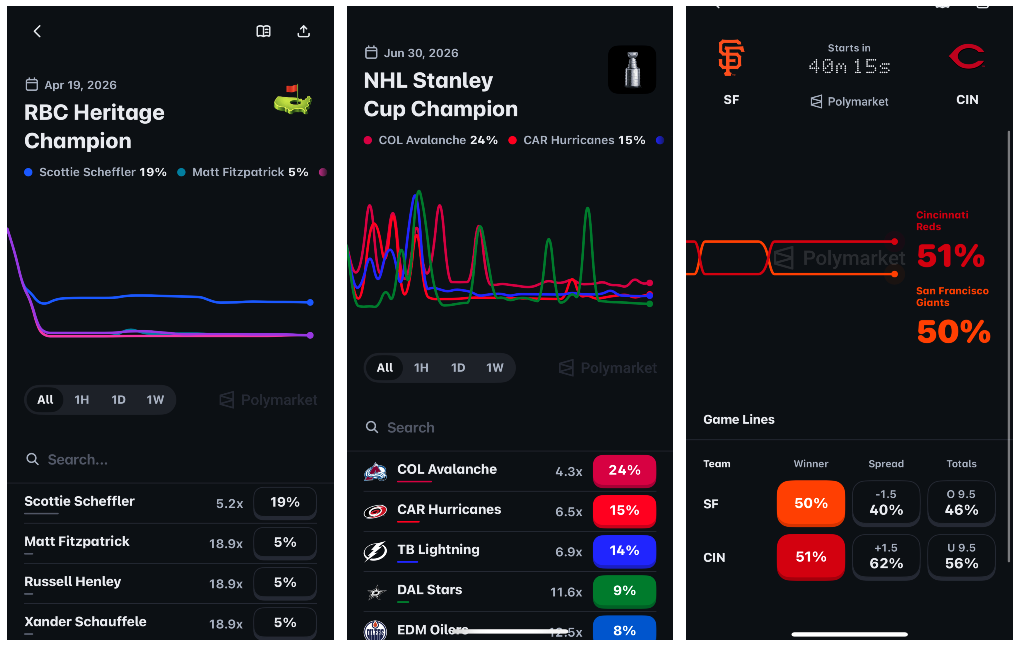
NBA, NFL, MLB, NHL, NCAA Basketball, NCAA Football, soccer (Premier League, La Liga, MLS), tennis, golf, MMA, boxing, motorsports, esports, cricket, and chess. Hundreds of events are listed daily, with contract types including moneylines, player props, and futures.
Economics & Elections (U.S. Version, Added April 2026)
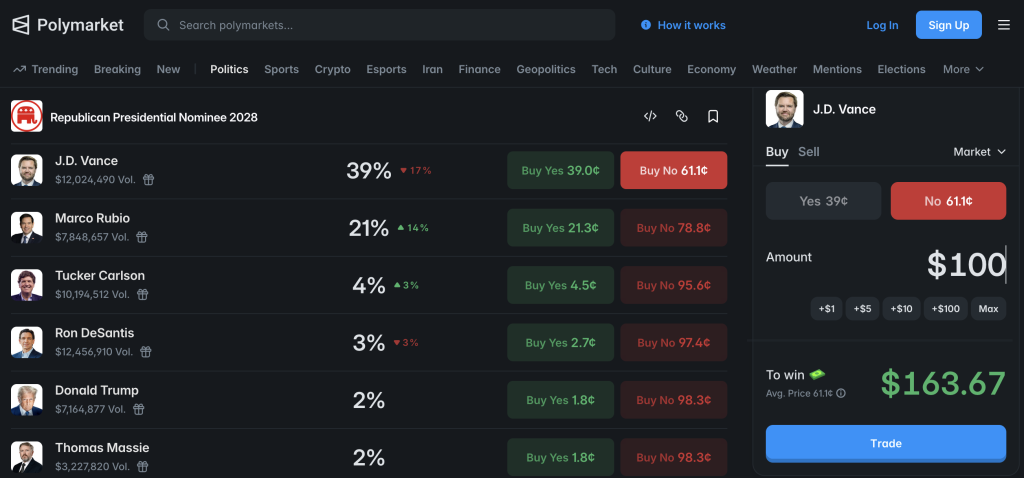
Polymarket expanded the U.S. platform to include economics markets (Fed rate decisions, inflation, employment data) and election markets (2026 midterm primaries, governor races, Senate races) in April 2026, timed to the primary election cycle. This was overdue. The international platform built its reputation on election markets, and Polymarket shipping a U.S. sports-only product for four months while the best use case sat unavailable was a strange choice.
International version (viewable in ‘observer mode’)
The international platform covers politics (elections worldwide, government actions, legislation), crypto (Bitcoin/Ethereum price targets, regulatory decisions), geopolitics (foreign conflicts, international diplomacy), culture (awards shows, movie box office, music), weather, health, companies, and much more. U.S. users can view these markets but cannot trade on them legally.
Polymarket App review
I’ve been using the Polymarket iOS app daily since getting off the waitlist. It works. The order book is easy to read, deposits are quick, and pulling up a market takes maybe two taps from the home screen. That said, the app feels sparse compared to what Polymarket’s international web version offers. You can tell they stripped it down for regulatory reasons and haven’t built back all the discovery tools yet.
| Apple App Store Rating | 4.8/5 ⭐ (29K+ reviews) |
| Google Play Store Rating | Not available in the U.S. |
| U.S. Access | iOS app only (Android and web versions do not support U.S. trading accounts) |
The Polymarket iOS app is the only way to access the U.S. platform. The web browser version puts U.S. users into observer mode. On iOS, the app is highly rated. Polymarket has acknowledged the Android issues and is working on rolling it out on the app, though we couldn’t confirm a specific timeline for those fixes.
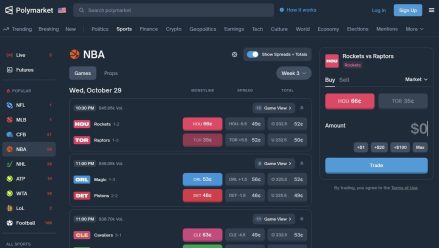
The U.S. version of the app displays contract prices using American odds format (familiar to sports bettors), with options to switch to percentage or price views. You can enter the invite code INGAME directly in the app during registration.
Understanding Polymarket’s fee structure
Polymarket’s fee story has two chapters. For years, the platform was celebrated as fee-free. No trading fees, no deposit fees, no withdrawal fees. That was a massive competitive advantage over Kalshi, and it’s the reason a lot of professional traders moved to the international platform during the 2024 cycle. In 2026, Polymarket began introducing fees on select markets, and the picture is now more nuanced.
Polymarket U.S. Fees
As of April 3, 2026, the U.S. platform uses a parabolic taker fee formula that’s structurally similar to Kalshi’s: Fee = Θ × C × p × (1 – p), where C is the number of contracts and p is the trade price. The taker fee coefficient (Θ) is 0.05, which produces a maximum fee of $1.25 per 100 contracts at the $0.50 price point (where uncertainty is highest). At price extremes near $0.01 or $0.99, fees drop to almost nothing.
Makers don’t just pay zero. They actually get paid. Polymarket rebates makers at a coefficient of 0.0125 (25% of taker fees), applied at the point of trade. There’s also a promotional 50% taker rebate running through April 30, 2026, applied weekly to all trades on all markets. No deposit or withdrawal fees.
How’s this compare to Kalshi? Kalshi’s taker coefficient is 0.07 versus Polymarket’s 0.05, making Polymarket roughly 29% cheaper per trade on an equivalent contract. That gap is real but it is not the 5-6x advantage that existed under the old flat fee model. Kalshi also lacks maker rebates on most markets (for now), while Polymarket actively pays makers for adding liquidity. For a trader who uses limit orders consistently, the effective cost difference is wider than the headline numbers suggest.
Polymarket International Fees
The international platform rolled out taker fees broadly on March 30, 2026, after initially introducing them on 15-minute crypto markets earlier that year. The formula follows the same parabolic curve as the U.S. version (highest at the 50-cent mark, lowest at extremes) but with different coefficients by category. As of April 2026, peak effective rates at the $0.50 midpoint are: Crypto 1.80%, Mentions 1.56%, Economics 1.50%, Culture 1.25%, Weather 1.25%, Finance 1.00%, Politics 1.00%, Tech 1.00%, and Sports 0.75%. Geopolitics and world events markets remain completely fee-free. Maker fees are 0% across the board, and makers earn daily USDC rebates from the liquidity rewards program (20-50% of taker fees depending on the category, with Finance offering the highest rebate at 50%).
What Is a Maker vs. a Taker?
A taker is someone who executes a trade at the current market price. You’re taking an existing offer off the order book. Taker orders fill immediately.
A maker is someone who places a limit order that doesn’t fill right away. It rests on the order book and waits for another user to match it. Makers add liquidity, which is why exchanges incentivize them with lower (or zero) fees.
On Polymarket, if you’re willing to set a limit order and wait, you don’t just trade for free. You get paid for it through maker rebates. If you want instant execution, you’ll pay the taker fee. For casual users trading small positions, the difference is negligible. For active traders, the maker advantage adds up fast.
Fee comparison across the prediction market ecosystem
Fee structures across prediction markets vary wildly in both magnitude and format, which makes apples-to-apples comparisons tough. I’ve traded on all four of these platforms, and the table below reflects real-world cost (based on latest information), not marketing claims:
| Platform | Taker Fee | Maker Fee | Deposit/Withdrawal Fees | Interest on Balance |
|---|---|---|---|---|
| Polymarket (U.S.) | Taker: 5% coefficient (parabolic) | Rebate: 1.25% coefficient for maker | No Polymarket fees; third-party processor fees may apply | No |
| Kalshi | 7% coefficient (max ~1.75¢/contract at $0.50) | 1.75% coefficient (many markets: $0) | 2% on debit card; free ACH/wire/USDC | ~3-4% APY |
| Novig Prediction | Pre-game straight trades: $0; live straight takers: 3% coefficient; parlays: 10% coefficient | $0 on filled maker orders | Varies by payment method; supported bank-transfer methods are generally fee-free, while some card/digital wallet deposits may carry processing fees | No |
| Crypto.com (CDNA) | $0.02/contract ($1 value); $0.20/contract ($10 value) | Same as taker (no maker discount) | Free deposits; $15-$45 for fiat withdrawals | No |
| Traditional Sportsbook | Built into odds (vig/juice, typically ~4.5-5%) | N/A | Varies; many free options | No |
Key takeaway: Polymarket uses a relatively low taker-fee coefficient, while Novig Prediction can be cheaper for certain sports trades. Novig currently charges no trading fee on pre-game straight trades or maker fills, although live taker orders and parlays carry variable fees. Kalshi’s fees are higher on standard taker trades but are partly offset for some users by interest earned on account balances.
Live Trading: Buying & Selling Positions
Like all prediction market exchanges, Polymarket lets you buy and sell contracts at any time before they resolve. You’re never locked into a position. If the price moves in your favor, you can sell for a profit. If new information changes your outlook, you can cut losses.
Polymarket supports both market orders (instant execution at the best available price) and limit orders (you set the price you want, and it fills only when someone matches). Limit orders are free on Polymarket (maker fee is $0), which creates a strong incentive to be patient rather than paying the taker fee for instant execution.
One important limitation for sports bettors: Unlike Kalshi, Polymarket doesn’t currently offer real-time in-game trading on the U.S. platform. Sports contracts are generally structured as pre-game positions you hold through settlement. If you want to react to a live game, adjust to an injury in the second quarter, or flip your position at halftime, Kalshi is the better option right now. This should change as Polymarket’s U.S. product matures, but there’s no announced timeline.
Institutional activity & market making on Polymarket
Polymarket’s international platform has attracted significant institutional and professional trading activity, particularly since the 2024 election cycle. The zero-maker-fee policy is a major draw for professional market makers, who can post resting orders and earn the spread without paying fees, while also earning rebates through Polymarket’s Liquidity Rewards program.
ICE’s $2 billion investment is the real signal here. ICE isn’t a venture fund throwing darts at speculative the board. It owns the NYSE. That investment positions Polymarket as potential financial market infrastructure, not just a consumer app.
On the international platform, professional traders have been active since at least 2024. The most-discussed example: a single trader, identified in media reports as a French national nicknamed the “French Whale,” reportedly made $50 million in profits on the 2024 presidential election markets. Not bad. That’s the scale of sophistication and conviction you’re sometimes trading against.
For retail users, the implication is similar to Kalshi. You’re often trading against professionals with better data, faster execution, and more experience. The one genuine benefit: the zero-maker-fee structure attracts more passive liquidity to Polymarket than to Kalshi, which usually means tighter spreads on comparable markets. That’s real money back in your pocket, especially if you’re trading size.
How Polymarket settles contracts
Contract settlement is where Polymarket gets complicated, and where most of its highest-profile controversies have happened. Understand how this works before you put real money down, especially on novel or geopolitical markets where outcomes may not be simple or binary.
International Platform: The UMA Oracle
On the international version, contracts are settled through a decentralized system called the UMA Optimistic Oracle. When a market is ready to resolve, a “proposer” stakes a bond (typically $750 in USDC) and submits an outcome. If nobody challenges the proposal within a 2-hour window, the outcome is finalized. If someone challenges it (by posting their own $750 bond), the dispute escalates to a vote among UMA token holders, who decide the outcome.
This system is designed to be trustless. No single company decides the outcome. In practice, it has significant flaws:
- Token-weighted voting means whoever holds more UMA tokens gets more votes. This creates a vulnerability to manipulation by “whales” with large token holdings. UMA’s circulating market cap is approximately $44 million, meaning control of 51% of voting power costs roughly $22 million, a fraction of the capital sometimes at risk in Polymarket’s markets.
- The Ukraine mineral deal manipulation (March 2025): A single UMA token holder used 5 million tokens (25% of total votes) across three accounts to force a “Yes” resolution on a $7 million market about whether Ukraine would agree to a Trump mineral deal, even though no official agreement existed. Polymarket itself later confirmed the UMA oracle reached the incorrect outcome.
- The UFO declassification controversy (December 2025): A $16 million market on whether the Trump administration would declassify UFO files resolved as “Yes” through the UMA oracle, despite no public federal declassification notice. Late-session buying near $0.99 and the two-day voting window raised manipulation questions. We couldn’t confirm whether any UMA token holders have been formally identified in that case.
U.S. Platform: centralized resolution
The U.S. version takes a fundamentally different approach. Instead of the UMA oracle, Polymarket’s internal Markets Team determines outcomes directly. This is closer to how Kalshi operates. The company itself decides, based on pre-specified resolution criteria and data sources.
The upside: outcomes are determined quickly and without the manipulation risks inherent to token-weighted voting. The downside: there’s no publicly confirmed dispute process on the U.S. platform. If you disagree with how a contract was settled, it’s unclear what recourse you have beyond contacting customer support. As the U.S. platform matures and handles more high-stakes contracts, the absence of a formal appeals mechanism is going to matter more.
Polymarket banking options
The U.S. platform offers accessible payment options that the international version lacks. Internationally, you need a crypto wallet and USDC. In the U.S., the fiat-to-USDC conversion happens behind the scenes:
| Method | Deposit | Withdrawal | Polymarket Fees |
|---|---|---|---|
| Credit / Debit Card | ✅ | ❌ | No Polymarket fee (processor fees may apply) |
| Bank Transfer | ✅ | ✅ | No Polymarket fee |
| Crypto (USDC) | ✅ | ✅ | No Polymarket fee (network gas fees apply) |
All trading on Polymarket is ultimately denominated in USDC, a stablecoin pegged to the U.S. dollar. On the U.S. platform, fiat-to-USDC conversion happens behind the scenes when you deposit via card or bank transfer, so you don’t need to buy crypto separately. A genuine improvement over the international platform, where you have to maintain an existing crypto wallet and acquire USDC on a separate exchange before depositing.
Polymarket ongoing promotions & rewards
Beyond the welcome bonus, Polymarket offers a handful of ongoing programs. Most are built for active and sophisticated traders rather than casual users.
Liquidity Rewards Program: Polymarket pays users who provide liquidity by placing resting limit orders on selected markets. Rewards are calculated daily and the minimum payout is $1. Polymarket distributed over $5 million in liquidity incentives for April 2026 alone across sports and esports markets. That’s a serious pool. But it’s primarily valuable to traders who are comfortable posting competitive maker orders rather than taking existing prices.
Holding Rewards are where things get interesting for long-term political traders. Certain longer-dated markets qualify for a 4.00% annualized holding reward based on your total position value, sampled hourly and paid out daily from the Polymarket Treasury. Eligible markets are mostly political and geopolitical: the 2028 presidential election, 2026 midterms, leadership outcomes in countries like Russia, China, and Ukraine. Roughly a dozen markets qualify at any given time. It’s real yield in USDC, though the limited universe means it won’t be a primary income source for most users.
Leaderboard: Polymarket publishes a public leaderboard ranking top traders by profit over daily, weekly, monthly, and all-time periods. No monetary reward attached. It provides visibility into which accounts are trading well on the platform and has spawned a whole cottage industry of third-party analytics tools tracking wallet performance.
Compared to competitors, Polymarket’s incentive structure is built for a different user. Novig Prediction takes a more gamified approach, using Novig Points, monthly tiers, trading challenges, referral rewards and Trade Credits. Polymarket’s incentives are more heavily tilted toward liquidity providers and active market makers. Kalshi’s Refer-a-Friend and Volume Incentive programs similarly target broader user acquisition. Polymarket’s rewards, by contrast, are real USDC and tilted heavily toward market makers and active traders who provide genuine liquidity. If you’re a sophisticated trader, Polymarket’s economic incentives are arguably stronger than any competitor’s.
Polymarket vs. Kalshi: head-to-head
These are the two biggest names in U.S. prediction markets, and people ask which one to use constantly. The honest answer: use both.
The browser versions of both platforms look quite similar, by the way:


Nearly identical interface, different dynamics underneath.
| Polymarket (U.S.) | Kalshi | |
|---|---|---|
| Accessibility | Open to all iPhone users (49 states + DC) | Open to all (49 states + DC) |
| Trading Fees | 5% taker coefficient; maker rebates (1.25% coefficient) | Higher (7% coefficient taker, 1.75% maker) |
| Interest on Balance | No | Yes (~3-4% APY) |
| Live In-Game Trading | Yes | Yes |
| Market Variety (U.S.) | Growing (sports, economics, elections as of April 2026) | Extensive (sports, politics, economics, weather, culture, etc.) |
| Welcome Bonus | Deposit $10 & get a $20 trading bonus | Trade $25 and get up to $500 |
| Parlays / Combos | Not available yet | Yes (Combos) |
| Brand Partnerships | NHL, UFC, MLB, La Liga, PrizePicks | Robinhood, Coinbase, CNN, CNBC, Bryson DeChambeau |
Choose Polymarket if: You prioritize low fees, you’re comfortable with a beta product, and you plan to trade mostly pre-game sports positions, elections, or economics. The fee advantage is real, especially for active traders posting limit orders.
Choose Kalshi if: You want immediate access (no waitlist), you value live in-game trading, you want the widest possible market selection, or you maintain a significant balance and want to earn interest. Kalshi’s product is more mature, its market variety is deeper, and the 3-4% APY on deposits is a real quiet advantage that compounds.
If you’re semi-serious about trading or just like to get available value, have accounts on both shop for the best price. For a detailed Kalshi breakdown, see our Kalshi promo code page.
Why States are fighting prediction markets
Polymarket has so far avoided the state-level legal firestorm that Kalshi is navigating, but the broader regulatory battle over prediction markets affects every platform in the ecosystem, Polymarket included.
The core dispute is about federalism, states’ rights, and money. States argue that sports event contracts are functionally identical to sports bets and should be regulated (and taxed) under state gambling laws. Prediction market platforms argue they’re federally regulated financial derivatives under the CFTC’s exclusive jurisdiction and shouldn’t need 50 state licenses.
The financial stakes are enormous. The American Gaming Association estimates that states have lost over $600 million in tax revenue (and counting) rom wagers placed on prediction markets that bypass state gaming tax structures. State sports betting tax rates range from about 8% to 51%, while prediction market operators pay no gaming taxes. The Trump administration’s CFTC and Chairman Michael Selig (below) have taken the prediction industry’s side, filing lawsuits against Arizona, Connecticut, and Illinois to block state enforcement actions.
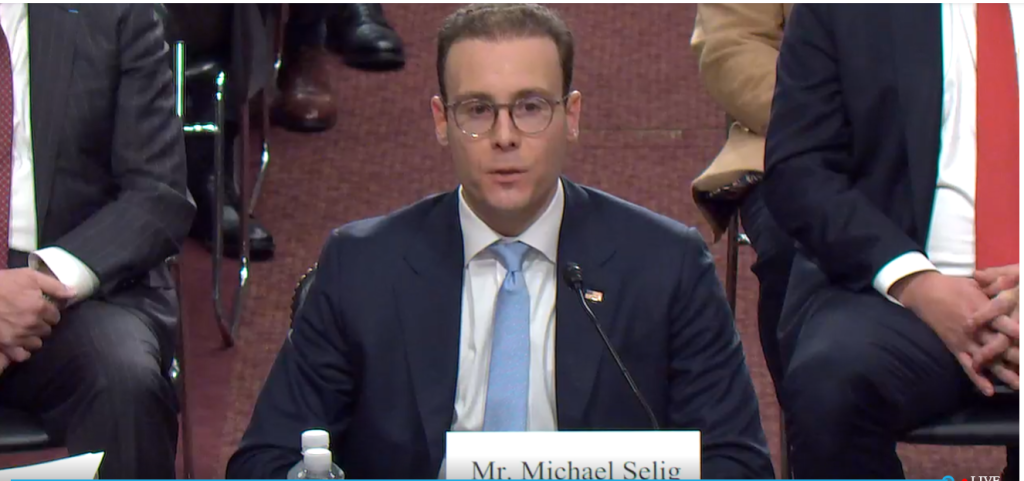
For Polymarket specifically, state-level pushback is no longer hypothetical. Minnesota passed a law banning prediction markets outright (effective August 1, 2026), prompting the CFTC to sue the state to block it; Kalshi filed its own suit over the same law. At least 11 states have now issued cease-and-desist orders or litigation against prediction-market platforms. With ICE’s $2 billion investment, major sports league partnerships, and a multi-billion-dollar international audience ready to migrate, Polymarket is a visible target alongside Kalshi in this fight, not a future one. For deeper coverage, see our analysis of states’ rights vs. federalism in prediction markets.
What We Like & Don’t Like About Polymarket
✅ What We Like
- Lowest fees in the regulated U.S. market. A 5% taker coefficient is tops right now among CFTC-regulated platforms. For active traders, that translates to meaningful savings.
- The brand and international liquidity give Polymarket a credibility advantage no competitor can match right now. ICE’s completed $2 billion investment (which helped push Polymarket’s valuation to roughly $15B) and the 180-country international footprint are worth something, even if U.S. users can’t directly access most of it yet.
- Widest variety of markets globally. Once the U.S. version catches up to the international platform, the breadth should be enormous: politics, crypto, economics, culture, geopolitics.
- No crypto wallet required for U.S. users. The international version makes you deal with a wallet and a separate exchange just to fund your account. The U.S. version handles the fiat-to-USDC conversion behind the scenes. You don’t need to know a thing about crypto.
- Blockchain transparency. Every trade on Polymarket is recorded on-chain, giving you a level of auditability that centralized platforms can’t offer.
- The sports league partnerships (NHL, UFC, MLB, La Liga) signal long-term legitimacy and will likely bring dedicated market creation for those sports.
❌ What We Don’t Like
- Android access is still pending. Polymarket US is live for eligible iOS users, while Android is still coming soon and is not broadly available.
- Limited U.S. market selection. Sports, economics, and elections are now available, but the U.S. version still lacks the breadth of the international platform. No crypto markets, culture markets, or geopolitical markets yet for U.S. users.
- Settlement dispute concerns. The international platform’s UMA oracle has been manipulated multiple times, and the U.S. platform’s centralized resolution process has no publicly confirmed dispute mechanism.
- No interest on deposits. Kalshi pays 3-4% APY on your balance. Polymarket pays nothing. For users who maintain a significant balance, that’s a real ongoing cost.
- Bonus credits expire. Bonus terms can change. Check the current promo terms before claiming or using the credits.
Polymarket Customer Support
| [email protected] | |
| Discord | discord.gg/Polymarket (recommended: open a ticket for fastest response) |
| Online Chat | Available on the platform |
| X (Twitter) | @Polymarket |
| @polymarket | |
| TikTok | @polymarket |
Tip: Discord is easily the fastest way to get a real answer. The server also has active community channels where traders discuss markets, share analysis, and report bugs.
Recent Polymarket news & updates
Bookmark this page (and our news section!) and check back for the latest Polymarket developments.
Apr. 8, 2026: Polymarket expands U.S. offerings to include economics and elections betting, timed to the 2026 midterm primary cycle.
Apr. 6, 2026: Polymarket announces a “full exchange upgrade” including a new 1:1 USDC-backed collateral token called Polymarket USD, a rebuilt trading engine, and updated smart contracts. A major infrastructure overhaul as Polymarket continued expanding its U.S. product.
Apr. 3, 2026: Polymarket and La Liga announce a multi-year partnership in the U.S. and Canada.
Mar. 27, 2026: Intercontinental Exchange (ICE), owner of the NYSE, completes a $2 billion investment in Polymarket, valuing the company at over $20 billion.
Mar. 2026: MLB announces a strategic partnership with Polymarket, making it the official prediction market partner of Major League Baseball.
Jan. 2026: Polymarket completes initial U.S. relaunch with sports markets, operating in invite-only beta mode via the mobile app.
Dec. 3, 2025: Polymarket begins limited U.S. rollout, sending invite codes to waitlist users on a rolling basis. Apple Store users get access first; Android access follows.
Sep. 2025: CFTC publishes no-action letter formally granting Polymarket permission to re-enter the U.S. market.
Jul. 2025: Polymarket acquires QCEX, a CFTC-regulated exchange and clearinghouse, clearing the legal path for its U.S. return.
Polymarket Promo Code FAQ
What is the Polymarket promo code?
Code INGAME activates the current offer: deposit $10 and get a $20 trading bonus.
Is Polymarket fully live in the U.S.?
Yes. Polymarket US is live for eligible users through its iOS app. Android is still coming soon and is not broadly available.
Is Polymarket legal?
Yes. The U.S. version is CFTC-regulated through its DCM license. The international version is separate and unregulated.
Does Polymarket have trading fees?
The U.S. platform uses a parabolic taker fee formula with a 5% coefficient (maximum $1.25 per 100 contracts at the $0.50 midpoint). Makers receive rebates rather than paying fees. No deposit or withdrawal fees. Still the lowest cost among CFTC-regulated prediction markets. The international platform has variable fees by category; geopolitics remains fee-free.
How is Polymarket different from Kalshi?
Polymarket has lower fees and strong international brand recognition, while its U.S. product is currently live on iOS for eligible users. Android access is still coming soon. Kalshi is fully live, has wider market selection, offers live in-game sports trading, and pays 3-4% APY on deposits. See the full comparison above.
Do I need a crypto wallet to use Polymarket?
Not for the U.S. version. Deposit via card, debit, or bank transfer. The platform handles fiat-to-USDC conversion. The international version requires a crypto wallet and USDC.
Which sports are available on Polymarket?
NBA, NFL, MLB, NHL, NCAA Basketball, NCAA Football, soccer (Premier League, La Liga, MLS), tennis, golf, MMA, boxing, motorsports, esports, cricket, and chess. Economics and election markets were added April 2026.
Is Polymarket legit?
Yes. CFTC-regulated U.S. platform, $2 billion ICE investment, major sports league partnerships. The international version has had settlement controversies through the UMA oracle that users should understand before trading there.
Related InGame Coverage
- Polymarket Review: Is It Legal, How It Works, and What You Can Trade
- Kalshi Promo Code: Everything You Need to Know
- U.S. Prediction Markets: A Modern Timeline
- Prediction Market vs. Sportsbook: What’s the Difference?
- Peer-to-Peer Sports Betting: How Does It Work?
- NYSE Owner ICE Invests $2 Billion in Polymarket
- Polymarket Gets CFTC Green Light for U.S. Return
- The Race for DCM Licenses in the Prediction Market Industry
- States Rights vs. Federalism: Can Prediction Markets Be Kept at Bay?
Get Your $20 Polymarket Trading Bonus with Code INGAME →
18+ Only. Restrictions and eligibility requirements apply. Not available in all jurisdictions. Trading involves high risk and may result in loss of your entire investment. See polymarket.us/tos for more information. The Polymarket US App serves as an independent software provider and affiliate of Polymarket US and Polymarket Clearing, the CFTC-regulated derivatives exchange and clearing organization.