Last updated: September 3, 2026 | Last verified: September 3, 2026
Prediction markets and sportsbooks both let you put money on the outcome of a game. Both run on your phone. Both pay you if you’re right. But once I started using both products side by side, I realized they don’t have much more in common than that.
The most important difference isn’t price or product menu. It’s the structure of the deal. At a sportsbook, you’re betting against the house. On a prediction market, you’re trading a contract with another person. That distinction shapes how prices move, how (and whether) you can exit a position, who regulates the product, how you’re taxed, and what protections apply if something goes sideways.
I’ve had active accounts on Kalshi, Polymarket US, DraftKings Sportsbook, and FanDuel Sportsbook (among others) with hands-on experience using both prediction markets and sportsbooks. I’ve placed trades and bets on the same events across both product types. What follows is a direct comparison across the differences that actually matter to your wallet and your experience.
⚖️ Prediction markets vs. sportsbooks at a glance
| Prediction Market | Sportsbook | |
|---|---|---|
| 🤝 Counterparty | Another trader | The house |
| 💰 Pricing format | Contracts priced $0.01 to $0.99 | American odds (-110, +300, etc.) |
| 📊 How you pay | Per-contract or volume-based fees (0-7%) | Vig built into the line (~4.5-5%) |
| 🔄 Mid-event exit | Yes, sell contracts anytime at market price | Limited (cash-out at operator’s discretion) |
| 🏈 Sports depth | Growing; mostly win/loss, spreads, totals, futures | Extensive (props, parlays, live, player markets) |
| 🌍 Non-sports markets | Yes (politics, economics, court rulings, culture) | Limited to big events/awards like Oscars |
| ⚖️ U.S. regulator | CFTC (federal) | State gaming commissions |
| 📍 U.S. availability | Nationwide under federal jurisdiction (contested in some states) | 39 states + DC (state-by-state licensing) |
| 🔞 Minimum age | 18+ | 21+ (most states) |
| 🧾 Tax treatment | Unsettled (possibly Section 1256, possibly ordinary income) | Gambling income (well-understood) |
🔑 The structural difference that drives everything else
When you place a bet at DraftKings or FanDuel, you’re entering a deal with the operator. The sportsbook sets the price, takes your money, and pays you if you win. It earns by building a commission (the “vig”) into the price. Two parties: you and the house.
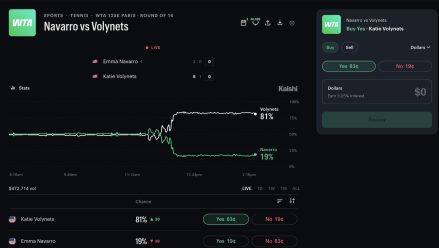
When I buy a contract on Kalshi or Polymarket, the platform isn’t my counterparty. Another trader is. The exchange matches my buy or sell with someone willing to take the other side and collects a fee for making the match. Prices come from what other traders will pay, not from an oddsmaker.
That’s also why prediction market contracts trade continuously. As long as buyers and sellers are willing to trade, you can move in or out of a position at the going price. I’ve sold positions mid-game on Kalshi to lock in profit before settlement. A sportsbook bet, by comparison, is locked once placed. Some books offer cash-out opportunities, but those are proprietary, often unfavorable, and entirely at the operator’s discretion.
💡 But note: DraftKings, FanDuel, Fanatics and other online sportsbook and online casino operators have entered the prediction market arena with new apps and platforms suitable for the ecosystem. They will further these products and expand access in certain key states like Texas and California, while maintaining robust sportsbook operations state-by-state.
🔑 Bottom Line: The house-vs-peer distinction isn’t academic. It shapes pricing, exit options, regulation, and taxes. Every other difference on this page flows from it.
💰 Price and fees
Sportsbooks (usually) quote prices as American odds. A line of -110 means risking $110 to win $100, plus your stake back. The vig (typically ~5 percent on a balanced two-way market) is baked into the price. There’s no separate fee.
Prediction market contracts trade in 1-cent increments between $0.01 and $0.99. Each winning contract pays out $1; losing contracts pay $0. A 50-cent contract is a coin flip. A 90-cent contract is a heavy favorite. A 5-cent contract is a longshot. Fees vary by platform: some charge per-contract, some use a formula, some charge by volume, some run promotional periods with no fees at all.
💡 Pro Tip: A contract’s price is roughly its implied probability. A $0.65 contract means “65 percent chance.” Sportsbook math is less intuitive. You need to break out a calculator. (For the record, 65% at a sportsbook would be posted at -186.)
Whether one product is actually cheaper depends on the market price and how fees stack. The examples below use simplified fee structures, but the logic holds across most models.
Coin-flip outcomes
A -110 sportsbook line implies a 52.4 percent probability. A 50-cent contract with a $0.02 per-contract fee implies about 52 percent. The same contract with a 6 percent volume commission implies about 53 percent. Same neighborhood. Slight edge to the prediction market on the lower fee structure, slight edge to the sportsbook on the higher one.
Favorites
A -300 sportsbook line implies 75 percent probability. If a prediction market also prices the favorite at $0.75, any added fee pushes the effective price above 75 percent, making the prediction market more expensive on the same outcome. To beat the sportsbook line, the market price would need to drop below $0.75. Whether that happens depends on what other traders are willing to sell at.
Longshots
This is where per-contract fees get expensive. A +4300 sportsbook line implies about 2.3 percent probability. A 2-cent contract implies 2 percent. Add a 1-cent per-contract fee and the effective cost is 3 cents, which implies 3 percent. The fee is half the price of the contract. For volume bettors hunting heavy underdogs, prediction market fees can quietly chew up the edge.
| Scenario | Sportsbook (implied %) | Prediction market (implied %) | Cheaper? |
|---|---|---|---|
| Coin flip (-110) | 52.4% | ~52-53% (fee dependent) | Roughly equal |
| Favorite (-300) | 75% | 75%+ with any fee added | Sportsbook (unless market price drops) |
| Longshot (+4300) | ~2.3% | ~3% with $0.01 per-contract fee | Sportsbook (per-contract fees hurt longshots) |
Live trading and position sizing
Because contracts trade continuously, you can scale into or out of a position as the price moves. I bought 200 contracts at $0.50 during an NBA game on Kalshi, watched the price climb to $0.65 after a run in the third quarter, and sold half the position to lock in profit before the outcome settled. You can also average down by buying more contracts at a lower price. Sportsbooks rarely allow either, except through cash-out terms set by the house.
⚠️ Watch Out: Prediction markets can be cheaper than sportsbooks, and they can also be more expensive. Where the market prices a contract, and how fees are charged, decides which way it falls. Don’t assume one product is always the better deal.
💧 Liquidity
A sportsbook doesn’t need other bettors to take the other side. The operator is the counterparty. As long as the book is willing to write the bet, the bet exists.
A prediction market needs someone on the other side of every transaction. If no one will sell at your price, you can’t buy. If no one will buy at your price, you can’t exit. Thinly traded markets have wide spreads, slow fills, or no fills at all.
The biggest platforms have deep liquidity in major sports, political, and economic markets. Kalshi commands roughly 89% of U.S. prediction market volume (as of May 2026) and fills fast on anything popular. But I’ve hit the wall on smaller markets. I once tried to exit a position on a mid-tier soccer contract and sat with an open sell order for two days before someone took the other side.
The price you see on a thinly traded prediction market isn’t always the price you can trade at. That’s a real limitation sportsbooks don’t have.
🏈 Market availability
Sportsbooks win on sports depth, and it isn’t close. The largest U.S. sportsbooks list dozens of leagues and dozens of bet types per game: moneylines, spreads, totals, player props, team props, parlays, all sorts of alternates, live wagering. Some books, depending on the state, list a small number of non-sports markets such as awards shows. Those are the exception.
Prediction markets started as non-sports products. The original use case was political and economic events: who wins the next election, will the Fed cut rates, will inflation print above expectations. Sports came later and have become the major volume driver on the largest U.S. platforms.
Even so, the non-sports menu is the real point of differentiation. Prediction markets list contracts on elections, court rulings, geopolitical events, monetary policy, corporate earnings, and a long, seemingly endless, list of cultural and economic outcomes. If you want to put money on something that isn’t a game, prediction markets are usually the only legal option in the U.S.
💡 My Take: If your main interest is NFL player props or parlay builders, a sportsbook is better built for that. If you want to trade on the next Fed rate decision or a Supreme Court ruling, prediction markets are the only game in town. Both products are expanding toward each other, but neither has fully closed the gap.
⚖️ Regulatory framework
The two products answer to different regulators at different levels of government, and the gap matters.
Sportsbooks are regulated state by state. No federal sports betting regulator exists, although Congress could and might one day act to impose minimum requirements for states. Each of the 39 states (plus DC) that have legalized sports betting sets its own rules on licensing, taxation, advertising, responsible gambling, and consumer protection. To place a wager, you must be physically located in a state where the operator is licensed. Minimum age is 21 in most states; a cople set it at 18.
Prediction markets operating as designated contract markets are regulated by the Commodity Futures Trading Commission (CFTC), the federal agency that oversees U.S. derivatives. CFTC-regulated platforms take the position that they can offer their products nationwide under federal jurisdiction, regardless of state gaming law. Several states are challenging that position in court. Minimum age on most platforms is 18.
That age difference matters. For users between 18 and 20, prediction markets may be the only legal venue for real-money sports wagering. It’s one of the most consistent reasons younger users choose prediction markets when sportsbooks are also available locally. This is also controversial, as problem gambling and public health advocates believe 21+ is more appropriate for activities that are essentially gambling.
State access and legal battles
Online sportsbooks are unavailable or limited in some states; the 39-plus-DC count covers legal sports betting generally. Prediction markets, in theory, are available everywhere under federal jurisdiction, but several states have issued cease-and-desist letters or sued, and likewise Kalshi and the CFTC have brought legal actions in multiple states.
On April 6, 2026, the Third Circuit ruled 2-1 in Kalshi’s favor in its New Jersey case, upholding a preliminary injunction favoring Kalshi, finding that sports event contracts on CFTC-registered exchanges are “swaps” under the Commodity Exchange Act and that federal law preempts state gambling enforcement. The ruling is precedential in the Third Circuit (New Jersey, Pennsylvania, Delaware, and the Virgin Islands). The Ninth Circuit heard arguments in parallel cases involving Kalshi, Robinhood, and Crypto.com on April 16; a ruling is expected within months. The Fourth Circuit hears a Maryland case in May. If the circuits split, the Supreme Court is the likely next stop at some point.
Account opening and KYC
Both products require identity verification. The user experience is similar: government ID, address, Social Security number, sometimes a selfie. Standards differ under the hood. CFTC-regulated platforms apply financial-market-style compliance checks, while sportsbooks apply state gaming standards.
Position limits
This is one that matters more than most people realize. Sportsbooks routinely cap (limit or ban) winning customers, and how much they cap is entirely up to the operator. I’ve heard from sharp bettors who got limited to $5 max bets after showing some competence and edge. Prediction markets generally have contract-level position limits that are rule-based, disclosed in advance, and filed under the CFTC framework. They’re not imposed customer-by-customer at the operator’s discretion.
🧾 Taxes
Tax treatment is one of the most practical differences and one of the least settled.
Sportsbook winnings are taxable gambling income. Report winnings; losses are handled separately and only deductible if you itemize. Beginning in 2026, under Public Law 119-21, deductible wagering losses are limited to 90 percent of losses, capped by gambling winnings. Even itemizers can no longer fully offset their winnings with losses. Sportsbooks issue W-2G forms when payouts cross specified thresholds.
Prediction market tax treatment is genuinely ambiguous. CFTC-regulated event contracts are derivatives, but the IRS has not issued definitive guidance on how to characterize gains and losses. Some practitioners treat them as Section 1256 contracts, which receive 60/40 long-term and short-term capital gains treatment. Others treat them as ordinary income. The form a platform sends does not by itself determine the right tax answer.
⚠️ Watch Out: If you trade prediction markets at any meaningful scale, do not assume the rules look like sportsbook rules. Treatment may be better, may be worse, and may require record-keeping that sportsbook bettors don’t typically do. Talk to a tax professional.
🏛️ Settlement and disputes
Sportsbooks settle bets quickly and definitively. The official outcome is determined by the league or governing body, the book applies its house rules to edge cases, and winners are paid. Disputes happen (rule interpretations on canceled games, voided bets, rare scoring corrections), but they’re handled internally by the operator, with state regulators as the appeal of last resort.
Prediction markets settle through resolution rules written into each contract. The contract specifies the resolution source, the criteria for “yes” and “no,” and how to handle ambiguous outcomes. Most sports markets settle cleanly off official league results. Some non-sports markets, particularly geopolitical events, court rulings, and statistical releases, require interpretation, and that interpretation can be contested.
When a contract resolution is contested, the platform’s published rules govern. Some platforms reserve the right to make final calls; others use committee-based resolution. The CFTC oversees customer dispute procedures at regulated platforms but doesn’t typically rule on the substance of individual settlements.
✅ Pros and cons
The comparison table above gives you the feature-level view. What follows is the editorial take on what each product actually delivers in practice, based on using both for over a year.
✅ Prediction markets: what works
- $1 fixed payout per winning contract makes return calculation dead simple. No odds conversion needed.
- You can read implied probability directly from the contract price. A 65-cent contract means 65%. Try getting that from -186 odds without a calculator.
- Mid-event trading is a real tool. I’ve scaled into positions, taken partial profits, and cut losses mid-game. Sportsbooks don’t offer that flexibility.
- Federally regulated under the CFTC, with standardized position limits and customer protections.
- Non-sports markets (politics, economics, culture) available alongside sports. No sportsbook comes close here.
- Position limits are rule-based and disclosed in advance. No surprise account restrictions after a winning week.
- 18+ minimum age on most platforms.
❌ Prediction markets: what doesn’t
- Per-contract fees can quietly destroy longshot value. A 1-cent fee on a 2-cent contract is a 50% tax.
- Liquidity is a real constraint outside the most popular markets. Thin order books mean wide spreads and slow fills.
- Tax treatment is unsettled. You may need a tax professional who understands derivatives, not just gambling income.
- State-level access is contested and changing. The legal map might look different by the time you read this.
- Limited promotional activity compared to sportsbooks. Don’t expect deposit-match bonuses or odds boosts.
✅ Sportsbooks: what works
- Deep, instant liquidity in every market the operator posts. Your bet exists the moment you place it. No waiting for a counterparty.
- The widest menu of sports markets available: extensive props, live betting, parlays, player markets. If it happens in a game, someone has a line on it.
- Tax treatment is well-understood gambling income. No ambiguity.
- Promotional offers, deposit bonuses, odds boosts, and loyalty programs that prediction markets can’t match.
- Mature responsible gambling tools and consumer protections at the state level.
❌ Sportsbooks: what doesn’t
- The price you see is the price you get. No mid-event exit except through cash-out terms the operator controls.
- Vig is built into every line, often producing higher effective costs on coin-flip outcomes.
- Operators can and do limit winning customers’ bet sizes, sometimes aggressively and without explanation.
- Online sports betting is unavailable or limited in some states.
🎯 Who each product is best for
The casual fan who wants to bet on this weekend’s NFL slate, plus the occasional parlay. A sportsbook fits better. The interface is built for it, the markets run deeper, the promos reward casual play, and the tax picture is uncomplicated.
The disciplined bettor who studies prices, hunts for value, and bets enough that operator limits become a real concern. A prediction market is likely the better fit. Position limits are disclosed, not discretionary. Mid-event exit and scale-in flexibility are real tools. If you’ve ever had a sportsbook cut your max bet to $10 after a winning streak, you know why this matters.
The user who wants to wager on non-sports outcomes. Elections, court rulings, monetary policy, geopolitical events. A prediction market is the only real option. Sportsbooks don’t offer these markets in any meaningful way.
For a side-by-side comparison of specific platforms, see our U.S. prediction market comparison page.
🔑 Bottom Line: The most important distinction isn’t fees, markets, or promos. It’s structure. A sportsbook bet is a deal between you and the house. A prediction market trade is a deal between you and other traders. Which is better depends on who you are and what you want to do.
Frequently asked questions
Can I use both prediction markets and sportsbooks?
Yes. They’re different products with different accounts, different regulators, and different strengths. I use both. Sportsbooks for player props and parlays, prediction markets for mid-event trading and non-sports positions. There’s no exclusivity requirement on either side.
Are prediction markets cheaper than sportsbooks?
Sometimes. On coin-flip outcomes, the effective costs are similar. On favorites, sportsbooks can be cheaper depending on how the market prices the contract. On longshots, per-contract prediction market fees can be surprisingly expensive relative to the contract price. It depends on the specific market and fee model. See our fee comparison page for the math.
Why is the minimum age different?
Sportsbooks are licensed under state gambling law, which sets the minimum at 21 in most states. Prediction markets are regulated as derivatives under the CFTC, and the minimum age for opening a futures/derivatives account is 18. I couldn’t confirm whether any state has tried to impose a higher age requirement on prediction market users specifically.
Will prediction markets replace sportsbooks?
Not anytime soon. Sportsbooks have deeper sports markets, more polished apps for casual bettors, better promos, and established state-level regulatory frameworks. Prediction markets are expanding fast, but the products serve overlapping, not identical, audiences. The more likely outcome is coexistence, with some users choosing one, some choosing the other, and a growing number using both.
Related InGame coverage
- Prediction markets explained
- Prediction market fees compared
- Prediction market liquidity
- Kalshi vs. Polymarket
- Best prediction market sites for 2026
- Prediction market tax guide (U.S.)
- States vs. CFTC: the prediction market legal battle
- Peer-to-peer sports betting explained
- U.S. prediction markets: a modern timeline
🛡️ Responsible gambling
Both prediction markets and sportsbooks are negative-expectation activities for most participants. Set personal limits before you start. Track your spending. If the losses stop feeling like entertainment, step back.
🛡️ Responsible Gambling Resources: If you or someone you know needs help, contact the National Council on Problem Gambling or call 1-800-GAMBLER for free, confidential support available 24/7.