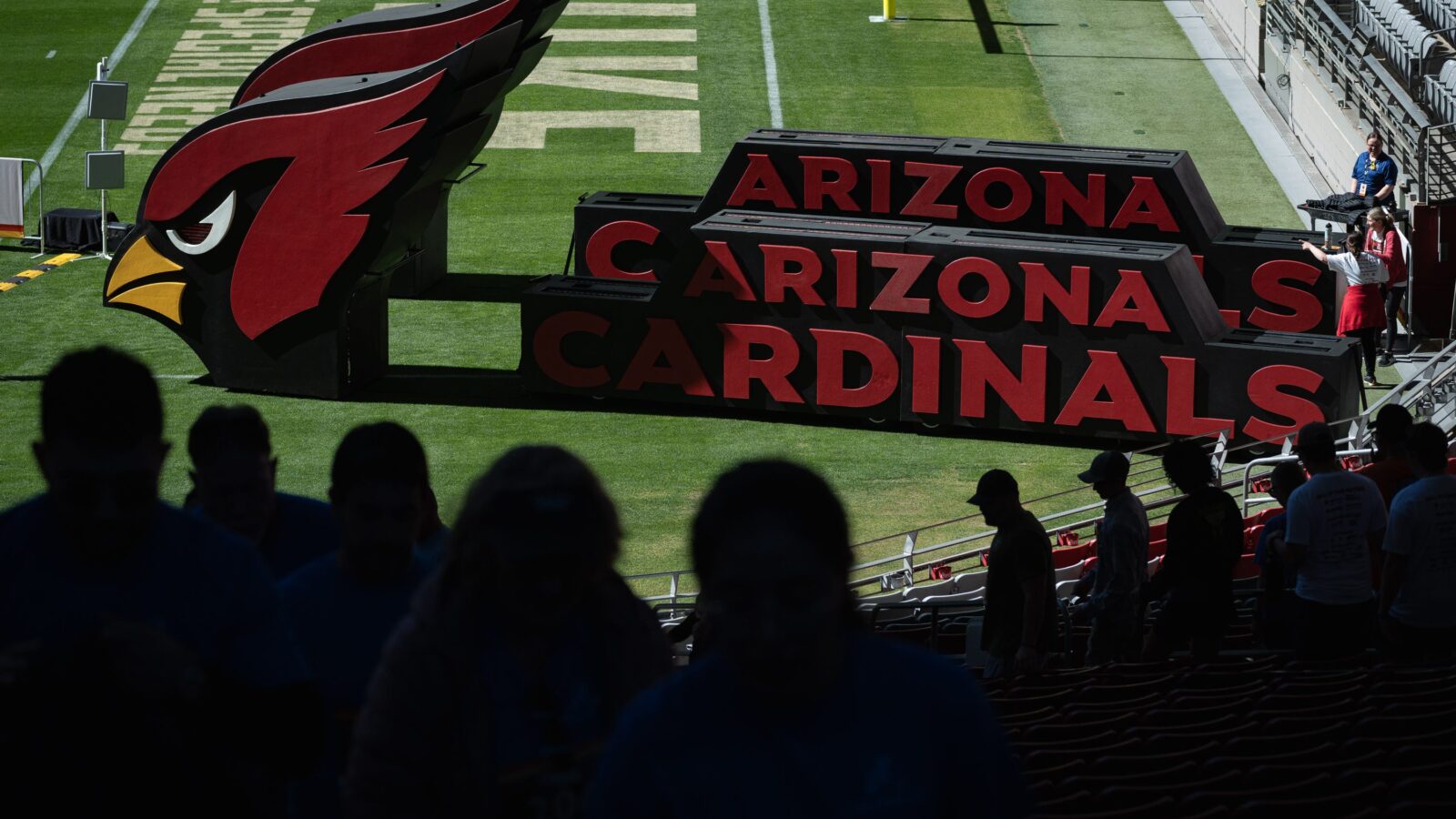
The NFL engaged in some summer Friday late-afternoon news-dumping last week, announcing that Ryan Gold, the Arizona Cardinals’ director of player scouting, had been suspended on gambling allegations.
Per the NFL, Gold bet some parlays on NFL and college action and — more damaging — provided intelligence and information as to who the Cards were planning on taking in the 2026 NFL draft.
“The Gambling Policy, which is annually reviewed with all NFL personnel, strictly prohibits anyone in the NFL from participating in or facilitating any form of sports gambling, and from providing third parties non-public information,” read an NFL statement. “Although there is no reason to believe the integrity of any NFL game was affected, the League takes any violation of the Gambling Policy with the utmost seriousness.”
Not to be outdone, Gold and his lawyers engaged in an even more questionable news-breaking strategy: On Sunday — while the world was preparing to watch the Spain-Argentina World Cup final — Gold’s lawyer communicated with ESPN and told a different story than the one the NFL was pitching.
“Ryan Gold has been an outstanding NFL executive for over a decade,” Mike Caspino, Gold’s attorney, said. “The accusations made by the league regarding his participation in prohibited gambling activities are blatantly false. We have demanded an appeal, and we look forward to clearing his good name.”
Juicy.
According to Caspino, Gold did not bet on any NFL games. Instead, it was his wife, making a series of $10 weekly parlay bets with friends from high school.
Additionally, Caspino said Gold could not provide information concerning who the Cardinals were taking in the draft, for what appears on the surface to be a pretty good reason: He had no idea. According to Caspino, the only people in the organization with that knowledge were owner Michael Bidwill and General Manager Monti Ossenfort.
As a result, Gold is appealing his suspension. This, despite the Cardinals issuing a statement that fully sides with the NFL’s decision.
“The NFL’s policies and expectations for all employees are clear, comprehensive, and consistently communicated,” the team’s statement read. “We fully support the league’s decision in this matter, which involves a single employee. Our focus remains on preparing for the start of training camp next week and the 2026 season.”
Thoughts and prayers
Two things here: One, the NFL’s gambling policy is stupid, and two, of course the NFL draft markets are ripe for tomfoolery.
Let’s start with the policy: No one attached to the NFL can bet on any NFL games. Makes sense. Good policy.
But where it falls apart is here: NFL players can bet on other sports. NFL employees cannot. To be clear: If you’re the assistant to the traveling secretary for an NFL team, you can’t bet on the Yankees. Or the Knicks. Or the Rangers. Or on a horse race, Olympic event, or … anything.
So if Gold did actually bet on college football games, he’d be breaking the rule.
This rule needs amending.
As for the draft markets? They — and other information markets, such as the Oscars — are not exactly the most fun for the house.
“Information markets are tough because usually those on the other side of the counter have the info first,” Jeff Benson, the director of operations and race and sportsbook for Circa, told InGame. “These are hung as low-limit niche markets as a courtesy for recreational bettors.”
And if the limits aren’t low, many of America’s sportsbooks have made it clear to people picking off winners in the draft markets: You will be limited to pennies if you demonstrate an ability to get these markets right.
These markets, for obvious reasons, live and breathe on inside information. When a reporter tweets out something like, “The Colts are eyeing Joe Smith with their first round pick,” it’s not coming from the reporter’s brain. It’s coming from someone with inside knowledge.
Clearly, some insiders spill the beans. If they didn’t, the reporters would have nothing to report.
What Gold is alleged to have done, per the NFL, isn’t clear. Did he slip a reporter a juicy nugget? Or did he give a bettor direct information? These are two different things, and the NFL hasn’t been forthcoming as to what happened. Again, though, Gold’s lawyer says nothing happened.
At the moment, we don’t know. It does seem like one man against The Shield is an unfair fight, but while that plays out, for now it shines a light on some very big holes in the NFL’s gambling policy.