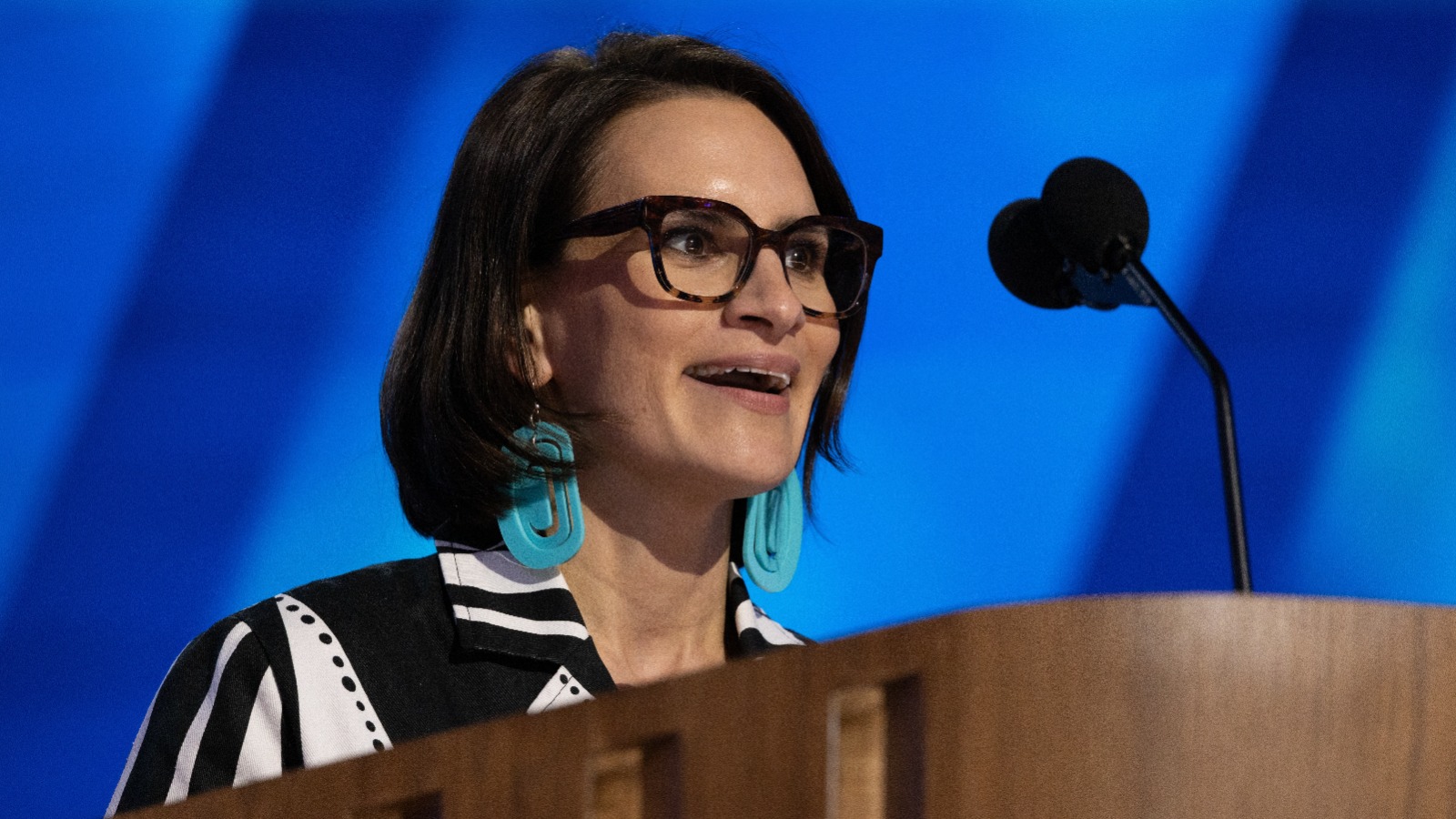
Indian Country got a political bump Tuesday night when Peggy Flanagan won the Minnesota Democratic Senate primary. Should Flanagan — who defeated sitting Rep. Angie Craig — win the seat in November, she would become the fifth tribal member to get to Congress. Dept. of Homeland Security Chief Markwayne Mullin of Oklahoma was the only native senator before he was confirmed in March.
Flanagan is a member of the White Earth Band of Ojibwe.
The victory is significant, not just because Flanagan is from Indian Country, but because Craig took $15,000 in contributions from Kalshi employees through March 31, and Flanagan took none. In recent months, Minnesota has become a prediction market battleground — lawmakers there were the first to pass a law severely restricting the platforms and their sports events contracts and the state has been sued by both Kalshi and its regulator, the Commodity Futures Trading Commission (CFTC).
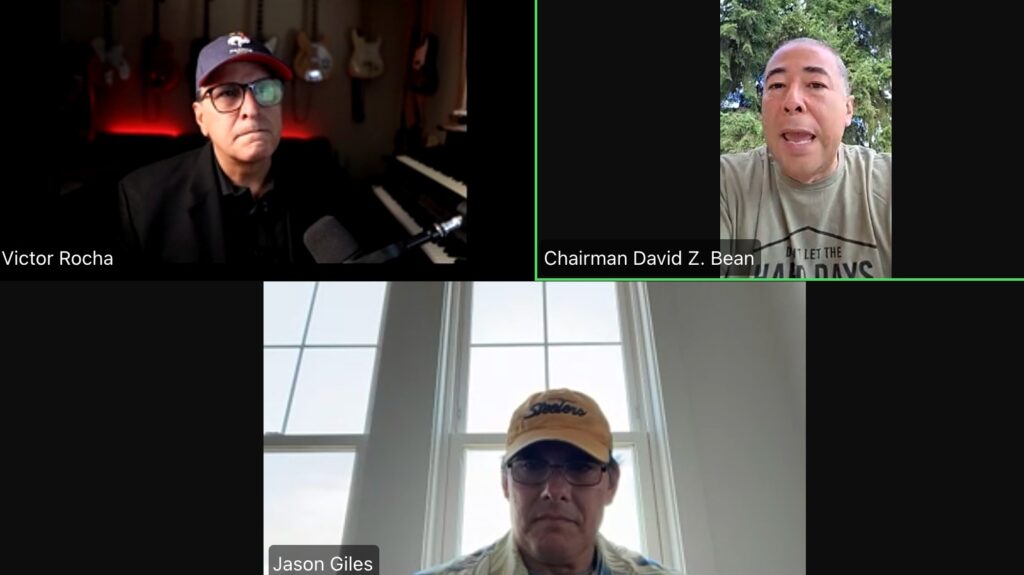
On Wednesday’s edition of the New Normal webcast, titled “The Chairman’s Report: Fighting Back Against Prediction Markets,” co-host Victor Rocha called the Flanagan win “a real bellwether. … She was the real outsider candidate and people flocked to her.”
Flanagan’s win was one of a handful of topics Rocha, the Indian Gaming Association (IGA) conference chair, co-host and IGA Executive Director Jason Giles, and IGA Chair David Z. Bean touched on as Indian Country continues to ramp up its fight against prediction markets. They said national tribal leaders will continue to travel the U.S. educating local tribal and state leaders and backing states in court cases against prediction markets. Giles said the IGA also has plans to support the state of New Jersey when it files its Supreme Court appeal in a case against Kalshi, and will “urge” the court to take the case.
Clarity Act delay ‘brilliant’
On a more immediate note, Rocha called the delay on the vote of the Clarity Act, the cryptocurrency bill that has been making its way through Congress, “brilliant.” Why? Donors will continue to pour funds into the campaigns of politicians who they believe will support it despite the Senate delaying action until September.
“It was a great political move,” Rocha said, “when you start to look at it and what the implications are and how you can wring out a couple more million dollars out of everyone.”
Giles, who lobbies regularly on Capitol Hill, said Indian Country “doesn’t have a problem with crypto or prediction markets, as long as they don’t have sports contracts.” IGA has been rallying against the current iteration of the Clarity Act, which Bean said has the potential to “subvert” tribal sovereignty. Indian leaders told a Senate committee earlier this month that removing any language that would allow for sports betting or casino-style gambling is on their wish list.
Gambling stakeholders have been closely watching the bill, which could potentially dramatically alter the landscape.
Giles said that as the Clarity Act vote moves forward, and prediction market court cases continue to work their way through the system, there has been a palpable change in attitude in D.C. with regard to the platforms. Just last week, the CFTC sent out a letter to its licensees telling them not to use American-style betting odds on their platforms, and Tuesday, for the second time, the CFTC indicated that it would instruct Kalshi to ignore a court order.
Giles called the actions “unprecedented. … It just shows they are grasping at straws, and they are really getting rolled up in courts. It’s all really amateur hour.”
Alongside the CFTC actions, Giles said there has been a “Clarity shift in Congress,” where members are now saying they must study more before voting on the Clarity Act. Such a stance, he said, “usually means you’re not getting any more favors from Congress.”
There’s also been a tonal shift at the CFTC since Chair Michael Selig was sworn in last December. Giles said that while Kalshi initially used the word “bet” prominently and repeatedly in advertising, there’s been a clear change to “trade.” He also said it’s unusual for a regulatory agency to be as vocal in protecting or going to bat for its licensees, but that all of the actions point to the CFTC “coding” its message ahead of a potential Supreme Court case.
We support those who support us
As summer gives way to fall, Bean said his expectation is that activity in D.C. will slow, particularly with an election on the horizon. In the last several months, the IGA has already had to pivot from a focus on bipartisan bills in Congress to lobbying against the current iteration of the Clarity Act.
From here, Bean said the IGA will return to a more grassroots campaign and will educate and encourage tribes across the U.S. to “get their stories about how this has negatively impacted them, and encourage them to tell their story to Congress.”
“We cannot take our foot off the pedal here,” Bean said. “If anything, press the pedal even harder and show up in numbers back to D.C. and let them know that you’re trouncing on tribal sovereignty, each and every one of you who come to us during this time of the year and early in the year for campaign contributions, talking about how you understand, support, and respect tribal sovereignty and then allow this type of activity to undermine tribal sovereignty. Not only tribal sovereignty, but state sovereignty, as well. The Indian Gaming Regulatory Act,” too.
“Make sure,” Bean continued, “you let those candidates know that we contribute our resources with people who share our values — and not just sometimes, but all the time.”